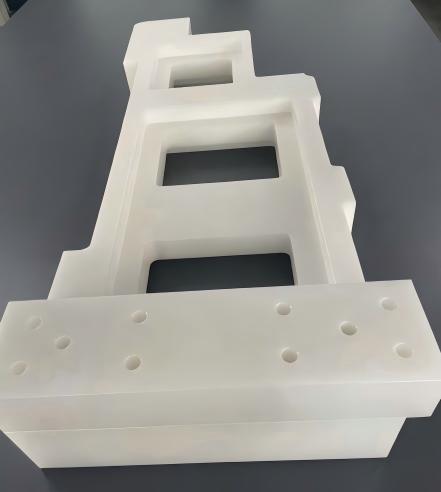
Why Long Plastic Parts Warp After Machining
A long plastic part can meet dimensions while supported and move after unclamping, storage or shipment. Long plastic part warping depends on the stock, material removed, feature stiffness and temperature history. That makes free-state geometry and measurement conditions as important as the dimensions recorded during machining.
Residual Stress and Uneven Stock Removal
Extruded, cast and compression-molded stock can retain manufacturing stress. Removing more material from one face changes the stress balance; deep pockets and thin webs can then bow or twist. In long plastic part machining, stock condition and machining sequence need to be considered together. Intermediate checks reveal movement before finishing critical surfaces. The correct response may involve balanced roughing, additional support or a material-specific stress-relief cycle, depending on the drawing and grade.
Cutting Heat, Clamping and Service Conditions
Engineering plastics generally transfer cutting heat less readily than metals and can deform under tool or fixture loads. A dimension measured under clamping pressure may change when the part is released. Temperature changes also affect length, while moisture uptake can alter some grades. Plastic CNC machining therefore needs suitable tool geometry, chip evacuation, controlled support and inspection conditions that reflect the part's actual assembly, especially for flexible channels and long mating surfaces.
During DFM, identify unsupported walls, deep slots, one-sided pockets and the datums used in assembly. A tightly toleranced local bore and the straightness of a one-meter rail are different requirements; each needs its own acceptance criterion. Stating both on the drawing helps prevent a part from passing one check while failing to fit.
To reduce the risk of plastic warping in CNC machining, start with the material grade, removal sequence, support and inspection of the released part. The HDPE and POM cases below show how those decisions affected two long components.

POM, PP and HDPE Plastic Parts Machining
See KTM machining POM, PP and HDPE components. When reviewing your own part, mark the datum faces, thin sections and long spans that need support. Our DFM review connects those features to the machining sequence and inspection plan.
Two CNC Plastic Machining Cases with Measured Results
A 1,100 mm HDPE channel and a 1,250 mm POM component needed stable geometry after machining. These customer projects show how changes to stock removal, stress control and support addressed assembly problems. Results apply to the stated parts; each new drawing requires its own acceptance plan.
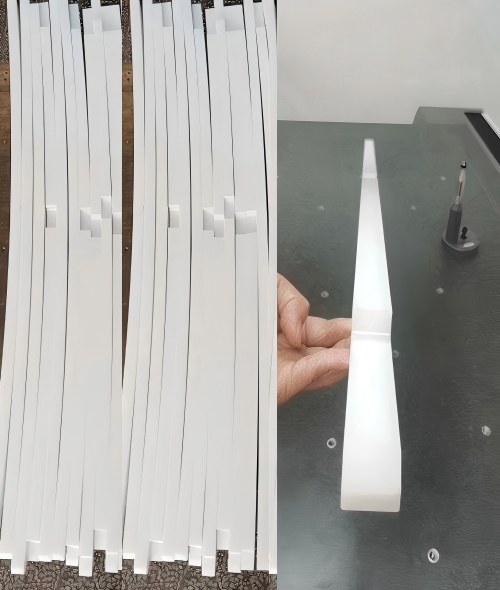
These examples lead to five practical controls for precision plastic machining. The appropriate combination depends on material grade, stock history, wall stiffness and the drawing requirements.
Our Anti-Warp Engineering Approach
Unsure whether your thin walls, deep pockets or long spans can be machined reliably? Send the drawing for a DFM review of CNC feasibility, difficult features and deformation risks.


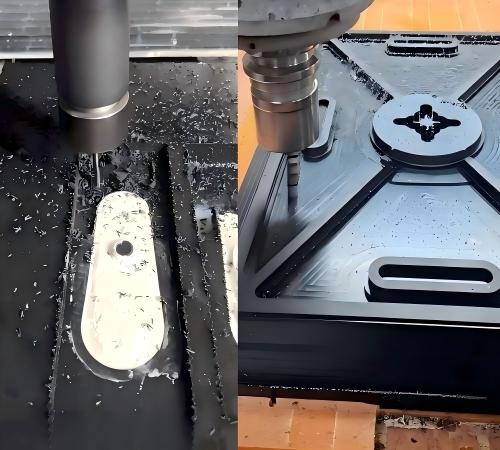
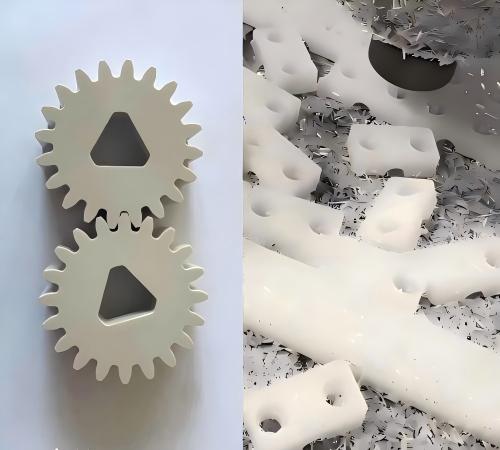
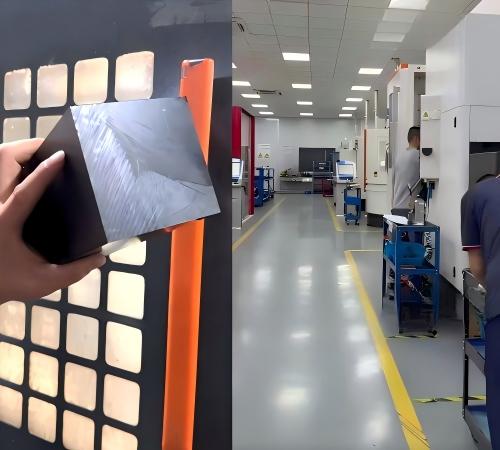
These controls help manage distortion; the drawing defines the required result. Next, compare the material grade, service conditions and achievable tolerances for your part. ↓
Review My Part's Machining Risks →Plastics We CNC Machine — Materials, Tolerances and Selection
Compare ten engineering plastics for custom CNC plastic machining. Start with the service environment and critical features, then confirm the exact grade and drawing tolerances. The table links material selection to the machining and inspection decisions that matter for your part.
| Material | Selection Consideration | Machining Focus | Grade / Condition | Typical Parts |
|---|---|---|---|---|
| POM / Acetal / Delrin | Low friction; specify POM-C or POM-H grade | Stress balance in pockets | Specify POM-C or POM-H | Gears, rollers, guide blocks |
| PEEK | Elevated-temperature capability; check grade and load | Tool wear and thermal control | Unfilled or specified filled grade | Bushings, carriers, precision fixtures |
| PTFE / Teflon | Chemical resistance; allow for creep and low stiffness | Deflection and measuring force | Virgin or approved filled grade | Valve seats, seals, insulating parts |
| HDPE | Low moisture uptake; temperature-sensitive dimensions | Support and thermal expansion | Named grade for food contact | Channels, guides, scrapers |
| PP | Chemical resistance; flexible thin sections | Flexible walls and chip clearance | Specify chemical/service conditions | Lab fittings, process components |
| ABS | Tough housings; moderate-temperature applications | Cosmetic faces and edge quality | Confirm color and finish | Enclosures, brackets, prototype parts |
| PC | Impact resistance; machining stress needs attention | Machining stress and cracking | Confirm optical/impact requirement | Protective covers, transparent parts |
| Nylon / PA6 / PA66 | Wear performance; moisture affects dimensions | Fits after moisture exposure | Agree moisture condition | Bearings, bushings, gears |
| UHMW-PE | Wear resistance; flexible features need support | Compliant walls and edges | Confirm wear grade and clearances | Wear strips, chain guides |
| PMMA / Acrylic | Clarity; distinguish appearance from optical requirements | Chipping and clear surfaces | Specify cast/extruded stock and finish | Windows, display components |
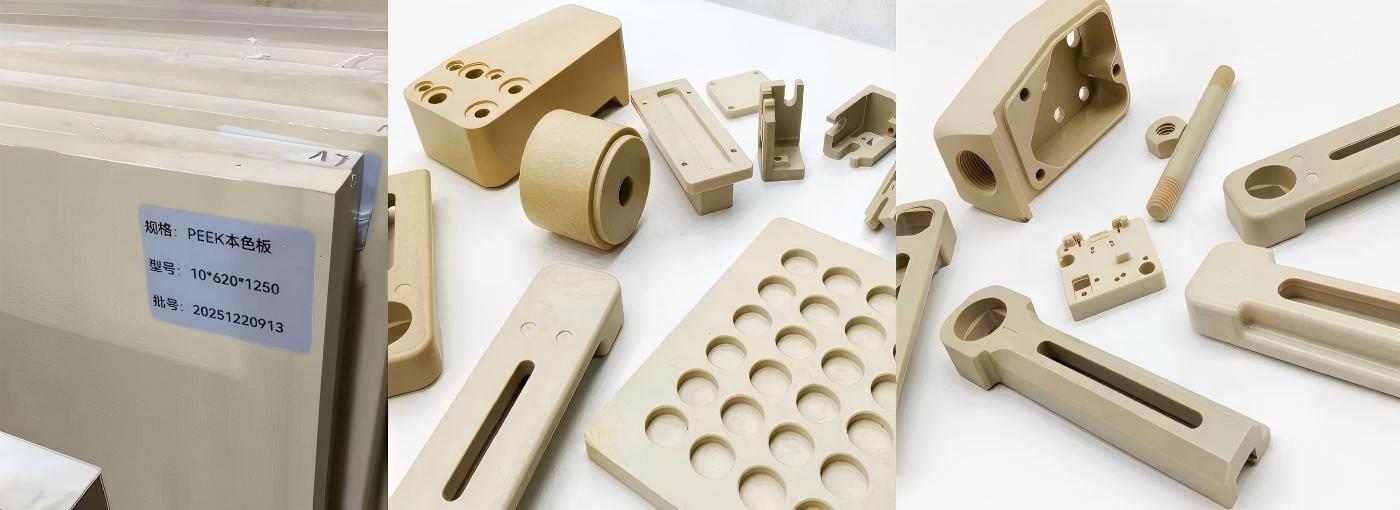
Drawing-based tolerance review: selected POM / PEEK features can reach ±0.05 mm and PTFE features ±0.13 mm. These capabilities depend on feature size, grade, geometry and measurement conditions. A local feature tolerance does not define accuracy over a 1,500 mm part. Specify overall length, straightness, flatness and critical fits separately; thin walls, small holes and deep features need individual DFM review.
POM / Delrin / Acetal Machining
Acetal machining is a practical option for low-friction guides, gears and repeatable mechanical fits. For POM CNC machining, specify POM-C copolymer or POM-H homopolymer: Delrin is a POM-H brand. Delrin CNC machining requires the exact grade, critical dimensions and supplier conditioning guidance. Deep pockets and long asymmetric sections need stress and workholding review. Compare moisture exposure, sliding load and mating clearances before selecting a grade; an approved POM-C component should not be substituted with Delrin solely because both are acetal.
PEEK Machining
PEEK machining suits demanding components when its temperature, chemical and mechanical properties justify the material cost. Unfilled, glass-filled and carbon-filled grades need separate review because fillers affect stiffness, abrasion and machining behavior. When requesting PEEK machining services, specify the grade, service load and operating temperature. Tool selection, cooling, finishing allowance and first-article requirements should reflect the part. For loaded bushings or fixtures, review creep and contact pressure as well as dimensional tolerance; a temperature rating alone cannot establish application suitability.
PTFE / Teflon Machining
PTFE machining requires attention to low stiffness, thermal expansion and creep, often called cold flow under sustained load. Thin sections can deflect during cutting and measurement, so sharp tools, distributed support and controlled measuring force matter. For Teflon machining or another specified PTFE grade, identify seal faces, interference fits, operating temperature and contact pressure. Filled grades may change wear or deformation behavior and require approval before substitution. A tighter machining tolerance alone will not prevent deformation under sustained assembly loads.
HDPE Machining
HDPE machining is useful for conveyor guides, channels and impact-resistant machine components. Thermal expansion matters over long spans: define installation temperature and assembly clearance rather than adopting a metal-part fit. Support flexible webs and review stock removal on open sections. For food contact, specify a documented compliant grade for the intended conditions. In HDPE CNC machining, a drawing should distinguish local hole tolerances from channel straightness, and identify support positions so inspection reflects how the component will fit in service.
Polypropylene (PP) Machining
Polypropylene machining is often considered for chemical-handling fittings and lightweight components. PP is relatively compliant, so narrow walls, threaded features and clamped faces need careful support. Use sharp tools and effective chip clearance to limit rubbing and heat buildup. For PP machining, specify chemical concentration, temperature, exposure duration and loading. Review thread engagement and sealing requirements before cutting; flexible walls can distort under fastening loads. Allow for dimensional movement where the component mates with metal, especially across changing service temperatures.
ABS, PC, Nylon, UHMW and PMMA
ABS CNC machining suits functional housings; polycarbonate machining suits impact-resistant transparent components. When machining nylon, agree the moisture condition for close fits. UHMW machining favors wear strips with suitable clearances. CNC machining acrylic can produce clear PMMA parts, but viewing areas and optical acceptance need specification. Review polishing and cleaning compatibility before finishing. Thin bosses, intersecting holes and fastening features need particular attention: material stiffness, cracking sensitivity and moisture response can change which grade and geometry work in your assembly.
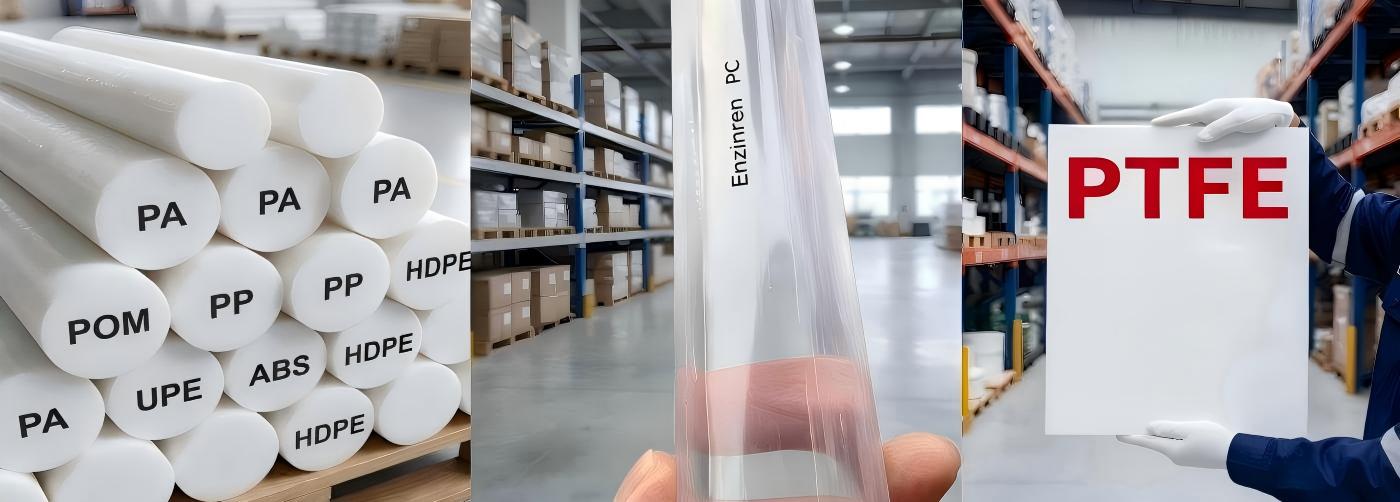
Plastic Material Selection for CNC Machining
Start with the part's function, then confirm the exact grade, load, temperature, chemical exposure and required service life.
| Design Priority | Materials to Review | Decision to Confirm |
|---|---|---|
| Sliding contact and mechanical fits | POM, Nylon, PEEK | Load, wear, lubrication and moisture condition |
| Chemical exposure | PTFE, PP, HDPE, PEEK | Chemical identity, concentration and temperature |
| Long guides and wear strips | HDPE, UHMW-PE, POM | Support spacing, expansion and free-state geometry |
| Transparency | PC, PMMA | Impact needs, surface finish and optical acceptance |
| Elevated temperature | PEEK; PTFE for appropriate loads | Grade rating, creep, duration and mechanical load |
Share the operating temperature, mating material and most critical feature if the grade is still undecided. That information makes the material recommendation and quotation more useful.
Technical references: Ensinger engineering plastics machining guidance · Victrex PEEK machining and finishing guidance. Material guidance informs the grade and process review; it does not replace the supplier data for your specified stock or the agreed drawing requirements.
Our 6-Step CNC Plastic Machining Process
From drawing to delivery, each stage resolves a different purchasing decision: feasibility, scope, material, machining, acceptance and shipment. Your approved drawing and quotation provide the reference for the order.
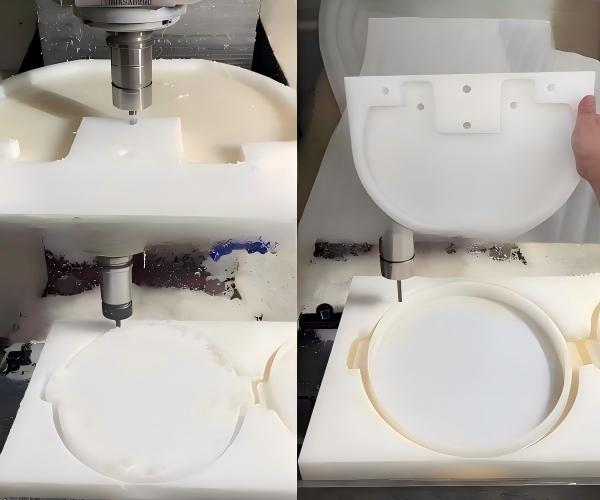
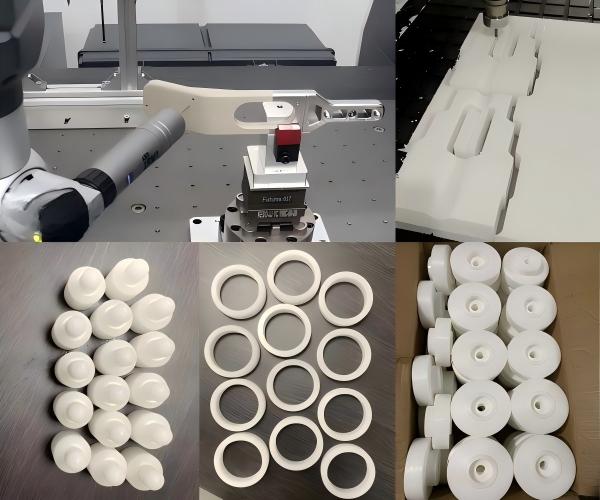

Process illustrations explain the workflow; project records define the agreed production and inspection scope.
Finish and inspection requirements belong in the original quotation. The next section explains which surfaces need functional control and which treatments require a separate review.
Surface Finishing for Machined Plastic Parts
Surface requirements for machined plastic parts should follow their function. A sliding face, seal seat, transparent window and cosmetic housing have different acceptance criteria. Specify critical surfaces on the drawing so machining and any secondary finishing can be planned together.
Machined Finish, Deburring and Edge Control
A machined finish can retain visible tool marks while meeting the specified dimensional and surface requirements. Deburring removes loose material; edge breaking should follow the drawing and preserve sealing lips, sharp functional edges and thread entrances. Avoid unnecessary polishing on a dimensionally critical fit, because removing material can change its size and geometry.
For soft grades such as PTFE, HDPE and UHMW, define an acceptable edge condition and use methods suited to flexible features. If a roughness value matters, identify the surface, measurement location and acceptance method rather than requesting a single finish for the whole component.
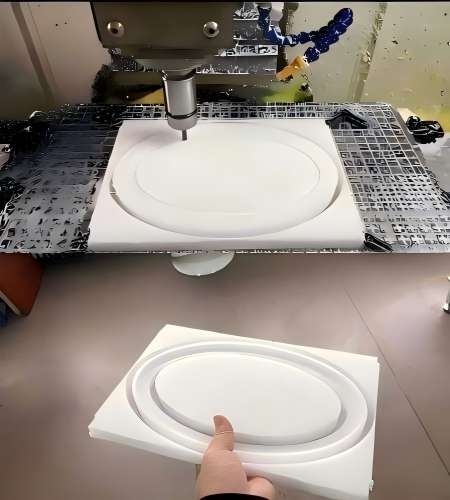
Optional Finishes Reviewed for Your Material
- •Mechanical polishing: review visible surfaces, dimensional allowance and edge rounding.
- •PC vapor polishing: assess grade, geometry, residual stress and the required visual result.
- •PMMA edge polishing: review mechanical or flame polishing and any stress-relief requirements.
- •Bead blasting: confirm material suitability, texture and protection of critical features.
- •Painting or printing: specify appearance, adhesion, masking and service conditions.
- •Laser marking: confirm contrast and legibility on the specified grade and color.
Availability and process suitability are confirmed during quotation. For optical parts, define clarity, viewing area and optical specifications; a polished appearance alone is not an optical performance guarantee.
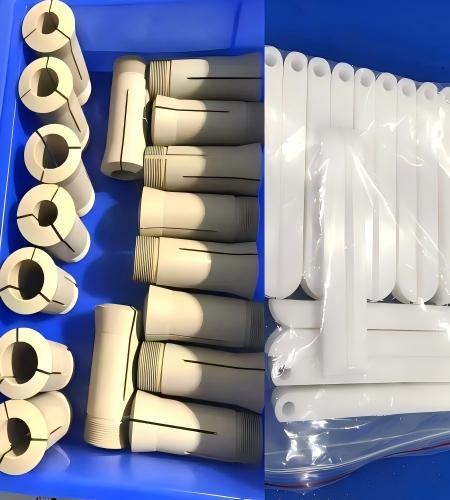
Include the intended use with the finish specification. Contact with food, cleaning chemicals, mating seals or moving components can change the material and surface requirements.
Custom Plastic Machined Parts by Application
Tell us how the component will be used. The examples below show the material, machining and inspection requirements to include with your drawing.
| Application | Typical Parts | Materials to Review | Requirements to Specify |
|---|---|---|---|
| Food and packaging equipment | Guides, scrapers, channels, wear strips | HDPE, UHMW-PE, PP, POM | Exact food-contact grade where needed; cleaning chemicals, temperature and supported geometry |
| Automotive equipment and fixtures | Sensor housings, locating jigs, brackets | ABS, PC, POM, Nylon | Temperature, moisture, fastening loads and critical locating features |
| Automation and robotics | Gripper parts, guide blocks, rollers, vacuum components | POM, PEEK, Nylon | Weight, friction, mating fits, datum relationships and repeatability requirements |
| Chemical processing equipment | Valve seats, pump components, insulating fittings | PTFE, PP, HDPE, PEEK | Media, concentration, exposure time, temperature, pressure and creep-sensitive fits |
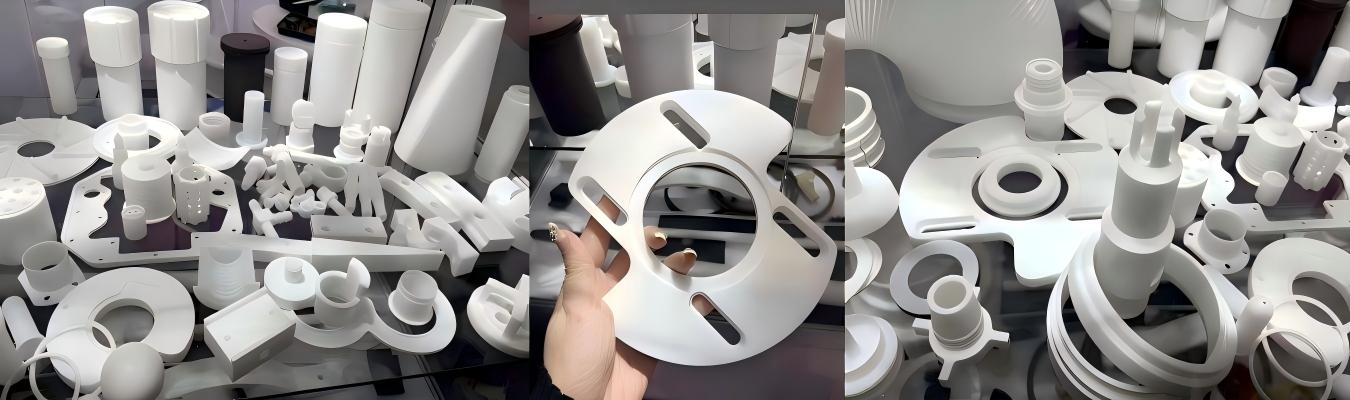
For applications outside these examples, describe the service conditions and failure you need to avoid. When plastic guides or housings mate with aluminum parts, include the mating dimensions or assembly drawings and identify the shared datums. Our CNC aluminum machining service covers the mating metal components; their fits should be reviewed alongside the plastic part's expansion and support requirements.
What to Expect from KTM's CNC Plastic Machining Service
KTM is a custom plastic parts manufacturer in Dongguan, China, with a dedicated plastic machining area and an ISO 9001:2015 certified quality management system. Our plastic CNC machine shop reviews the material grade, difficult features and inspection requirements with your drawing, so the quotation reflects how your part must function.
| Project Question | What We Review with You | What to Agree Before Production |
|---|---|---|
| Can this geometry be machined? | Tool access, wall stiffness, datums and deformation risk | CNC route, difficult features and approved drawing changes |
| Which grade should be used? | Temperature, load, chemicals and moisture | Exact grade and any required supplier documentation |
| Which dimensions matter most? | Local fits, overall geometry and measurement conditions | Critical callouts and inspection scope |
| What does the quote cover? | Quantity, stock, finishing, inspection and packaging | Written scope, lead time and delivery terms |
| How will a repeat order match? | Drawing revision, material condition and first-article requirements | Approved reference and change-control expectations |
| What will accompany the shipment? | Identification, packing and requested records | Part labels and agreed inspection/material documents |
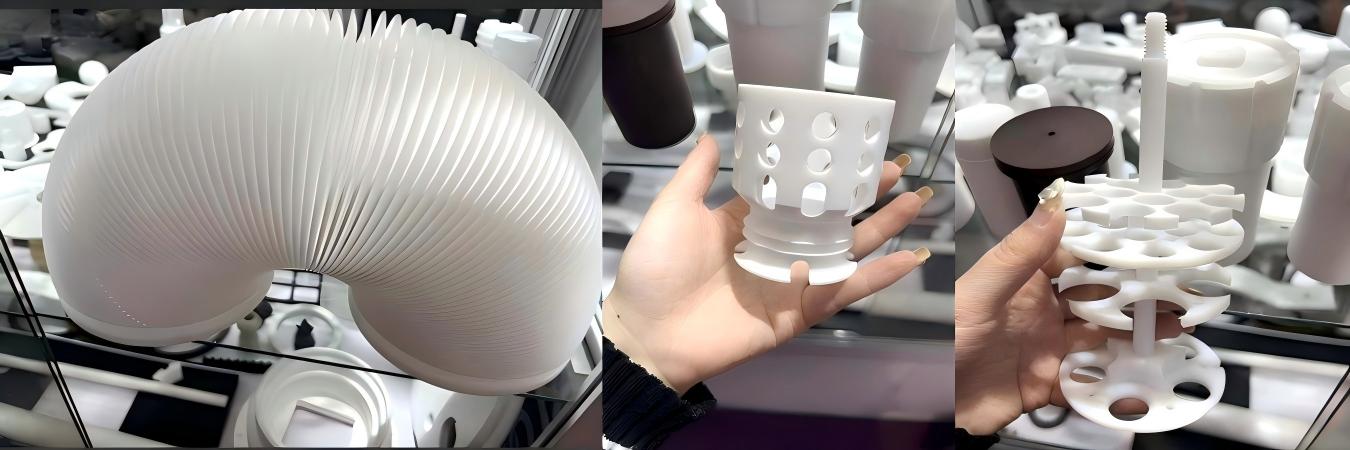
Use these questions to evaluate a CNC machined plastic parts manufacturer: does the quote identify the exact grade, critical dimensions, inspection conditions and delivery scope? Our inspection and material documents follow the agreed project requirements. You can also review KTM's manufacturing background before sending your drawing.
Start with the Feature That Could Stop Your Assembly
Send the drawing and identify the fit, surface or long span that matters most. We can focus the DFM discussion on the decisions that affect assembly, cost and delivery.
CNC Plastic Machining FAQs for Your Next Order
Send Your Drawing for a CNC Plastic Machining Quote
Send the part geometry, material and quantity. We respond within 24 hours. The review starts with whether the structure is suitable for CNC machining, then focuses on difficult features, deformation risks and the requirements that affect your assembly.
Start with CNC Feasibility, Critical Fits and Cost
- • CNC feasibility: tool access, deep pockets, internal corners, thin walls and unsupported spans.
- • Dimensional risk: critical fits, material movement, long-part geometry and measurement conditions.
- • Quotation scope: material grade, quantity, finishing, inspection requirements and delivery plan.
Attach a dimensioned PDF and, where available, a CAD model in a ZIP archive. In the Information field, include material grade, quantity, target date and critical requirements. We support 1–100,000 parts with no MOQ. Your first reply within 24 hours will identify the next step and any missing information. Request an NDA before sharing confidential files.
Example RFQ: POM-C guide, 20 pieces; STEP model in ZIP plus a dimensioned PDF; critical bore Ø10 ±0.05 mm; service temperature 15–35°C; requested delivery date. Feasibility, price and delivery are confirmed for your drawing.
