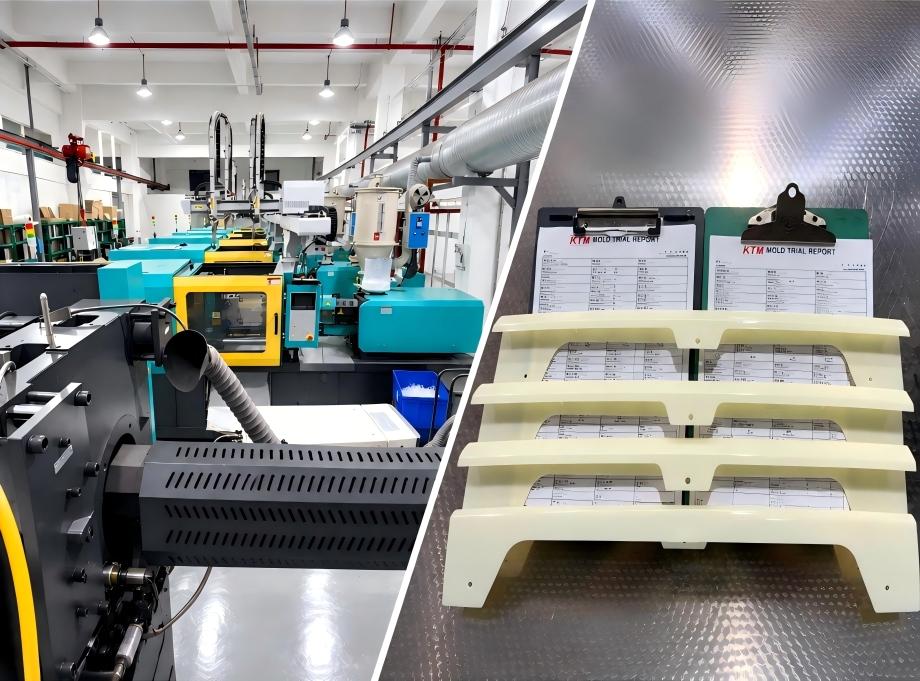
Custom Injection Molding: 1,000 to Millions
KTM's custom injection molding services connect drawing review, in-house moldmaking, tool trials and molded-part production in Dongguan. One engineering team plans resin, cavities and inspection around your initial order and repeat demand.
Tooling and production planned for your part:
-
40+ injection molding machines, all equipped with robotic part handling, support 24/7 production.
-
In-house DFM, moldmaking, trials and molding keep tool decisions with the part team.
-
Cavity count, resin handling and inspection planned around your drawing and release schedule.
Four Engineering Decisions Behind a Reliable Custom Molded Part
Every custom part brings a different combination of geometry, resin and demand. Our DFM review connects those requirements to the mold design, first-trial checks and repeat production plan.
Before steel is cut, KTM reviews wall sections, draft, resin grade, gate position and the dimensions that control fit or sealing. We identify proposed design changes and their tooling implications, so you can assess the cost and function trade-offs before approving the mold. Our injection molding guide explains the cycle from clamping to ejection and the process terms used in your tooling review.
Share your CAD model, critical dimensions, surface requirements and expected order volumes. The four decisions below show how we turn those inputs into a tooling plan and an agreed set of trial checks for your part.
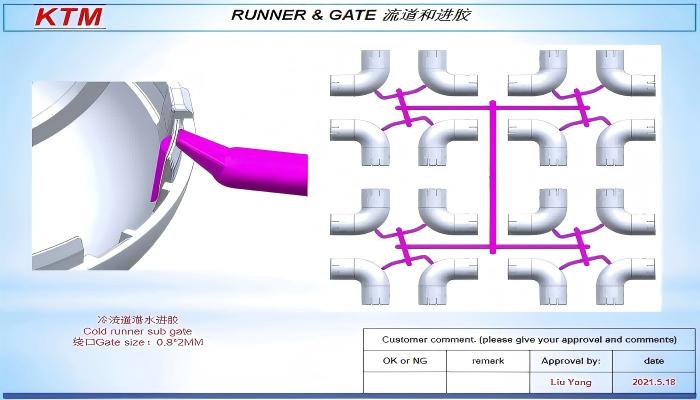
Wall Sections, Draft & Gate Location
Thick bosses can sink, thin walls can short-fill, and a gate on a cosmetic face can be costly to move later.
FixWe review wall transitions, draft, undercuts and allowable gate marks against your CAD and 2D drawing. You see proposed changes and their tooling effect before machining begins.
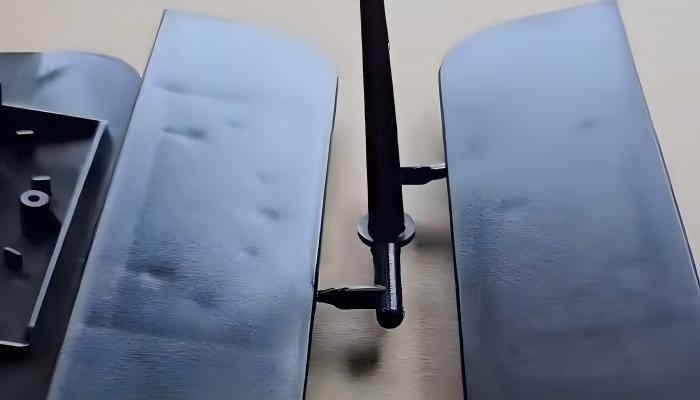
Cooling, Warpage & Critical Fits
As a part cools, uneven sections and long spans can change its shape and affect mating or sealing features.
FixWe plan cooling circuits and inspection points around critical features. For complex filling or warpage risks, simulation can inform the mold design; T1 measurements then check the real part against the agreed drawing.
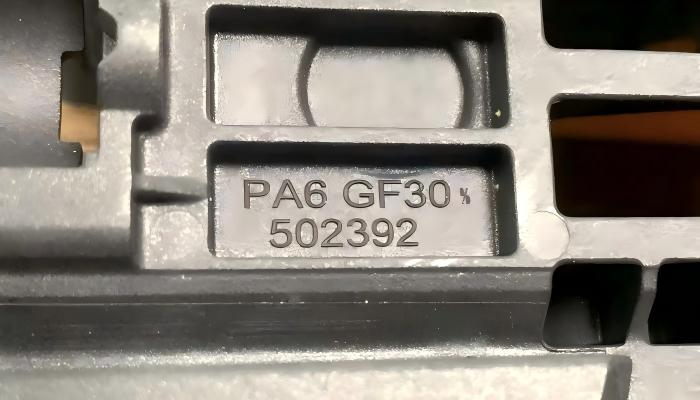
Resin Grade, Fillers & Tool Wear
ABS, PP, PC, POM and glass-filled nylons differ in shrinkage, drying requirements and wear on mold components.
FixThe specified grade informs steel selection, gate and runner design, mold temperature and process settings. We confirm the exact resin and any related inspection needs in the quotation.
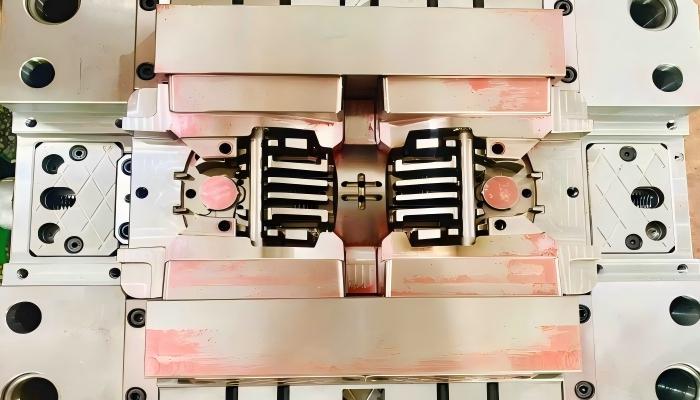
Tool Trials & Repeat Orders
A first trial produces evidence for review; it is not automatic approval for volume production.
FixKTM records trial findings, reviews tool or process changes, and agrees which features need rechecking. One project team retains the mold and process history for later production batches.
The next step is matching those engineering decisions to the tooling and molding work your part needs.
Custom Injection Molding Services Under One Project Team
One project team connects your part review, mold design, machining, trials and injection molding. Choose an export mold, finished molded parts from KTM, or a program that grows from an initial order into repeat production.
We define the resin, cavity count, tool construction, sample approval and inspection scope around your drawing and planned demand. Where inserts, painting, ultrasonic welding or assembly are required, their fit and acceptance checks are included in the agreed project scope.
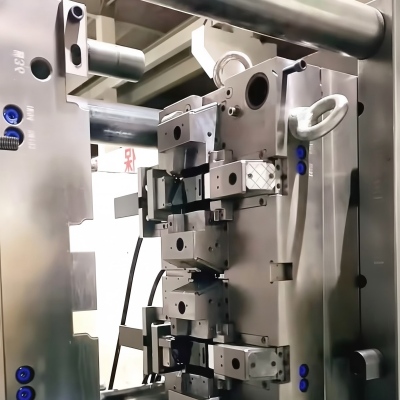
Custom Mold Design & Manufacturing
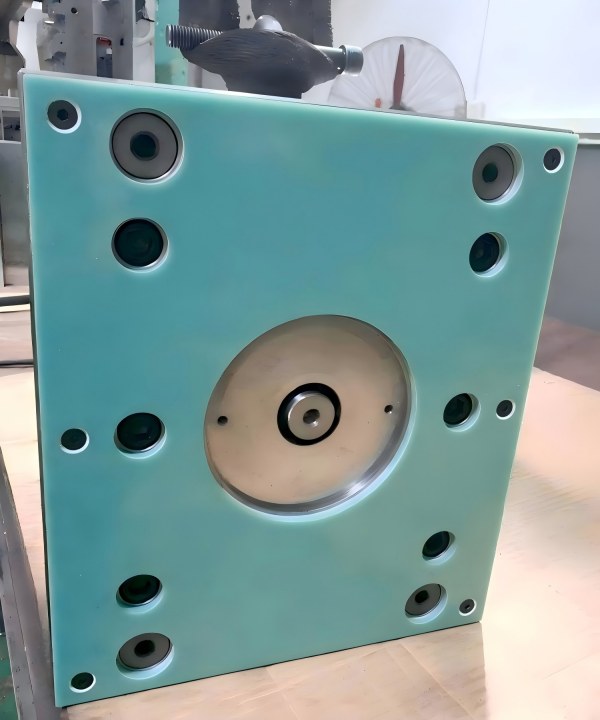
Our engineers turn your part revision into a tool plan covering cavities, gating, cooling and ejection. KTM machines core and cavity components in-house with FANUC CNC and Sodick EDM equipment, then assembles and trials the mold. The quote defines tool steel, included sampling and whether the mold stays at KTM or ships to your plant.
Custom Injection Molding Production
We match the press, cavity count and molding conditions to your resin, geometry and release schedule. Trial samples establish agreed process and inspection requirements before production starts. Each repeat order follows the approved drawing revision, material specification and acceptance criteria, with tool maintenance, batch identification and part handling planned for the next scheduled production run.
Metal Insert & Nut Overmolding
Threaded inserts and other metal features need a stable position during filling and a defined pull-out or torque requirement. We review insert geometry, mold retention and the plastic flow around the hardware, then verify the agreed features on trial parts after molding. KTM can machine project-specific inserts when that scope is included in the quotation.
Secondary Operations & Assembly
A molded component may still need coating or painting, printing, ultrasonic welding, fixture work or assembly before shipment. We review those steps with the molded-part tolerance and cosmetic requirements, so a later operation does not compromise fit or appearance. The quotation separates molding, finishing, assembly and inspection requirements when specified for a clear production scope.
When a trial part misses a critical dimension, the toolmaker and molding engineer review gate, cooling and process data together. The corrective action follows the same part revision into the next trial or approved production run.
Review our injection mold design and manufacturing workflow, including tooling built for export or production at KTM.
Custom Injection Molded Parts Built Around Your Drawing
KTM makes custom injection molded parts including housings, functional components and insert assemblies. Critical fits, surface requirements, resin grade and expected demand determine the tooling and trial checks. Identify sealing faces, screw bosses, snap fits and visible surfaces on your drawing so we can review the molding risks that affect assembly and appearance.
| Part type | Relevant examples and engineering checks |
|---|---|
| Enclosures & housings | Electronic, POS and lighting housings; cosmetic faces, bosses, clips and mating fits |
| Functional components | Latches, connectors and gears; critical dimensions, wear faces and repeatable assembly |
| Insert-molded assemblies | Threaded nuts, pins and metal features; location, retention and pull-out requirements |
| Large panels & covers | Equipment covers and structural housings; projected area, press fit, cooling and warpage review |
For a large panel, the drawing is reviewed against projected area, mold size, shot weight and the available press before KTM confirms a production route. Larger-press capacity is coordinated with long-term partners; see the Large Part Injection Molding route below.
Watch an LED light housing tool and its molded part; this project shows how tooling and molding fit together for a customer-specific enclosure.
Plastic Materials Selected for the Part and the Mold
Resin choice changes the tool and the process. Send the exact grade or the working requirements for the part, including temperature, load, chemical exposure, appearance and any certification needs. We review shrinkage, drying, filler wear, gate location and finish before finalizing the tool plan.
| Material family | Common examples | Review focus for a custom project |
|---|---|---|
| General-purpose thermoplastics | ABS, PP, PE, PS | Shrinkage, wall transitions, sink and visible surfaces |
| Engineering thermoplastics | PC, PA6/PA66, POM, PET, PBT | Drying, fit, warpage and application temperature |
| Filled grades | Glass-filled PA and other specified grades | Abrasive wear, fiber orientation, gate design and dimensional stability |
| Specialty grades | PEEK, PPS, PEI and other project-specific grades | Confirm exact grade, tool material, press temperature capability and inspection scope before quoting |
Texture or polish is decided together with draft, gate position and the specified resin. For a grained face, we review the applicable VDI/MT texture requirement and whether part geometry will release cleanly. For a tight mating feature, we review the drawing tolerance, datums and measurement method against grade-specific shrinkage and dimensional stability.
Before approving samples for repeat production, define the resin manufacturer and grade, color specification and permitted use of regrind. These become part of the agreed material specification; proposed substitutions should be reviewed for their effect on fit, appearance and inspection requirements.
Send your CAD model and resin grade for a custom injection molding DFM review. Get feedback on wall sections, gate location, finish and critical fits before approving tooling.
Get Material & Tooling FeedbackCustom Molding Requirements Across Applications
Custom injection molding requirements depend on the part's operating conditions and acceptance criteria. KTM reviews resin, geometry, critical dimensions and release quantities for each drawing, then defines the tooling and inspection scope.
Automotive
For automotive injection molding, housings and ducting are reviewed for grade-specific heat resistance, mating fits and agreed inspection points. Send the drawing and release quantities to define tooling and repeat production.
Electronics
Custom plastic enclosures need cosmetic finishes, snap features, threaded inserts and accurate assembly interfaces. Identify visible faces, gate-mark limits and mating dimensions so the mold and trial checks address the part's requirements.
Industrial equipment
Industrial covers, fittings and functional parts may need wear or chemical resistance. Define loads, fluid exposure and assembly dimensions so KTM can review resin suitability, mold construction and repeat-order inspection requirements.
Medical and aerospace
For medical injection molding, specify resin, documentation and acceptance requirements. Aerospace injection molding projects also need a defined material and inspection scope. KTM confirms each program's manufacturing responsibilities before quoting.
The initial quantity and expected repeat orders shape the tooling route. The following production options explain how we plan that transition.
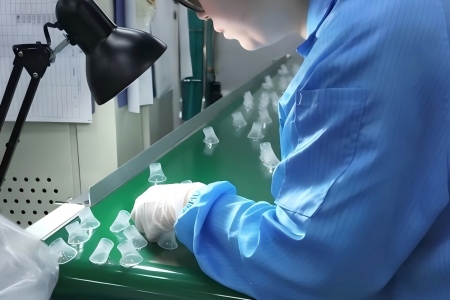
Inside KTM's automated molding operation: production planning still starts with the part, resin, tool and approved quality requirements.
From 1,000-Part Launches to Million-Part Programs
KTM reviews your initial order, repeat releases and lifetime demand together. These quantities guide mold investment, cavity count, cycle-time expectations and maintenance planning. The quotation explains the proposed tooling route for the launch stage and any additional tooling needed as demand grows.
Prototype Injection Molding
Prototype injection molding provides parts in the specified resin for fit, function and design checks before production tooling. KTM selects the prototype tool around your trial quantity, geometry and inspection requirements.
Rapid Injection Molding
For rapid injection molding, KTM reviews geometry, resin and tool complexity against the required first-sample date. The quote defines the proposed build schedule, trial scope and inspection steps, so you can assess timing before approving the tool.
Low-Volume Injection Molding
With low volume injection molding, we compare initial mold investment, unit cost, expected shots and restart frequency. Your release quantities and lifetime demand guide cavity count, tool construction and maintenance planning for repeated small batches.
Mass Production Injection Molding
As demand reaches hundreds of thousands or millions of parts, cavity balance, cooling, automation, tool maintenance and batch inspection shape cost and consistency. KTM plans these around your approved part revision, selected production equipment and release schedule.
Large Part Injection Molding
For large part injection molding, KTM checks projected area, mold dimensions and shot weight against the available press. Parts beyond the in-house 400T range are reviewed for partner production, with tooling and inspection responsibilities defined before quotation.
An approved prototype may establish fit and function, while volume production can require a different tool. We document which design, resin and inspection decisions carry forward to the next stage.
Engineering Records That Support Your Custom Molding Program
Agree the DFM, trial and inspection report package at quotation. KTM ties these records to your approved drawing revision, specified resin and identified molding risks, so your engineer can review how each issue is checked before production release.
| Stage | What the customer can review |
|---|---|
| Quotation | Preliminary DFM comments and an itemized tooling and part quotation |
| Tool design | Review of wall sections, gates, cooling, ejection and critical features after project start |
| Risk analysis | Moldflow or other analysis when geometry or resin makes it useful, with assumptions stated |
| T1 trial | Sample observations, photos and an issue list tied to the approved drawing revision |
| Production approval | Agreed dimensional checks and material documentation before release |
Toolmaking
FANUC CNC and Sodick EDM equipment support core, cavity and detail work for custom molds.
Molding
The in-house fleet uses approved resin, press setup and robotic part removal for repeat batches.
Inspection
CMM, optical and hand gauges are selected for the features that the drawing requires us to check.
For each critical dimension, agree the datum reference, measurement method and report scope. KTM reviews the trial results against the approved drawing before the customer releases the part for production.
What Sets Custom Injection Molding Cost?
Your quote has two linked decisions: the mold investment and the cost of accepted parts over the planned demand. Part geometry, cavities, steel, gates, texture, resin, cycle time, inspection and secondary operations affect the total. A lower initial tool price can increase unit cost or maintenance if the production quantity is high; an oversized tool can burden a launch order.
KTM itemizes the agreed tool scope, sampling, unit price and any finishing or assembly in the quotation. Send a 3D model, 2D drawing, resin grade, initial order, expected total demand and critical requirements. If those inputs are still open, we can discuss options and identify what must be decided before a firm price or schedule is given.
The next questions cover the decisions engineers and buyers usually need to settle before placing a custom injection molding order.
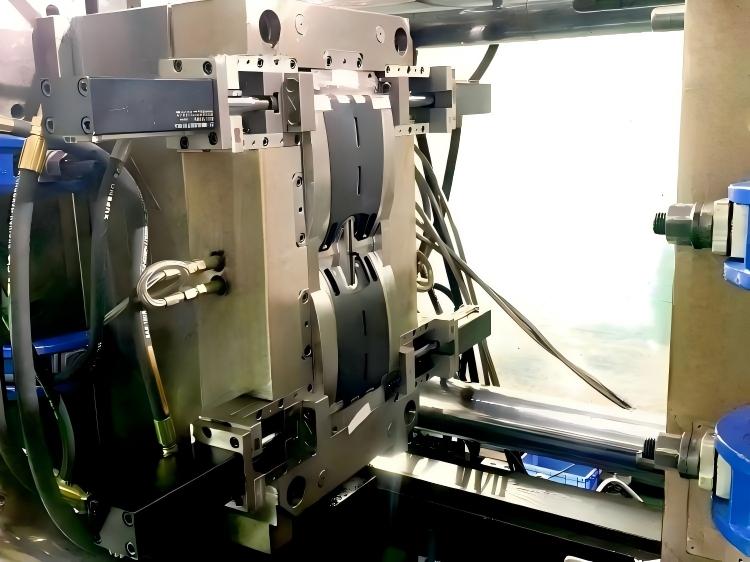
Request custom injection molding pricing for your drawing and planned volumes. Compare the mold investment, sampling scope and per-part cost, with finishing and inspection requirements itemized where specified.
Request an Itemized Tooling & Part QuoteCustom Injection Molding FAQ
CUSTOM INJECTION MOLDING PROJECT REVIEW
Get a Tooling and Production Plan for Your Part
Receive a preliminary moldability review and a proposed tooling route for your custom plastic part. We identify design concerns, sampling and inspection needs, and the inputs still required for an itemized quote. Include resin grade, initial quantity and expected lifetime demand so tooling decisions match your production plan.
What Happens After You Submit
- 1Engineering review: We check wall sections, draft, gates, undercuts and the features your drawing identifies as critical.
- 2DFM feedback and quote: We explain the proposed mold, initial production route and itemized tooling and part pricing.
- 3Trial and release plan: We agree samples, inspection points and the steps needed before repeat production.
Send Your Part to a KTM Project Engineer
Attach a PDF drawing or ZIP file (place CAD models in ZIP) and describe the resin, quantities, target delivery date and critical requirements. An engineer will review the part and reply with preliminary DFM feedback and the next quotation steps.