Unscrewing Injection Mold ManufacturerPerfect Threads Released on the First Trial
We design and build unscrewing injection molds for bottle caps, closures, and threaded fittings that release clean threads on the first trial. 20+ years on the tooling floor, running both unscrewing and collapsible core technology under one roof — so we tell you which method your part needs before steel is cut.
What Is an Unscrewing Injection Mold — and Why Threads Fail to Release
What Is an Unscrewing Injection Mold
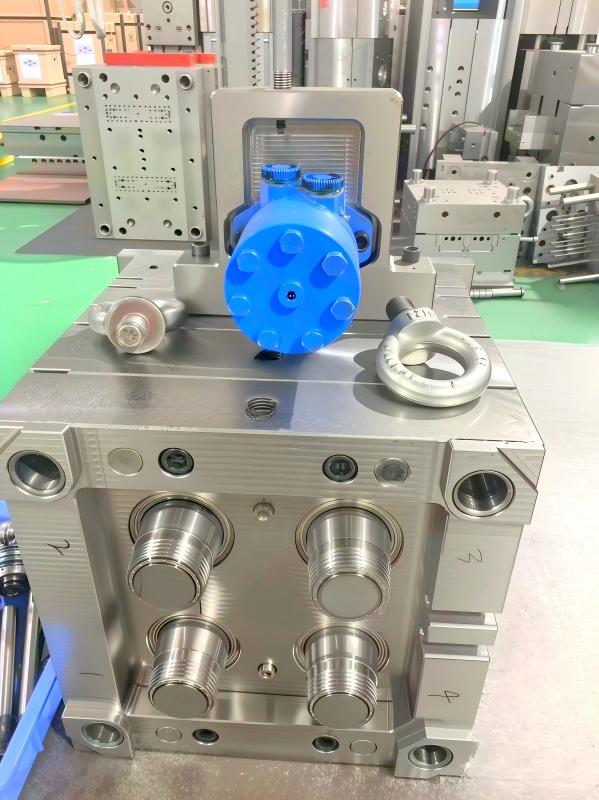
An unscrewing injection mold releases threaded plastic parts — bottle caps, closures, threaded fittings — that no ejector pin can push off a core. A thread is a continuous undercut, so once the plastic solidifies, a rotating threaded core spins the part loose along its helix instead of shearing it. At KTM, the core is turned by a servo, hydraulic, or rack-and-pinion drive, synchronized to the ejection stroke so the thread leaves the steel without shaving, drag, or warp.
How It Differs from Straight-Pull Ejection
A straight-pull mold uses ejector pins to push the part in the open direction — fine for parts with no undercuts. Force a thread off that way and it strips. The unscrewing mold, like an internal thread mold with a rotating core, backs the core out along the same helix the thread was formed on — the only path that preserves a deep, multi-start, or tight-tolerance thread.
The 5 Pain Points Behind Failed Thread Ejection
Most thread-mold failures trace to five root causes. For each, we name the symptom, the engineering reason behind it,and how we design it out before it reaches your line.
Rack binding and jerky motion
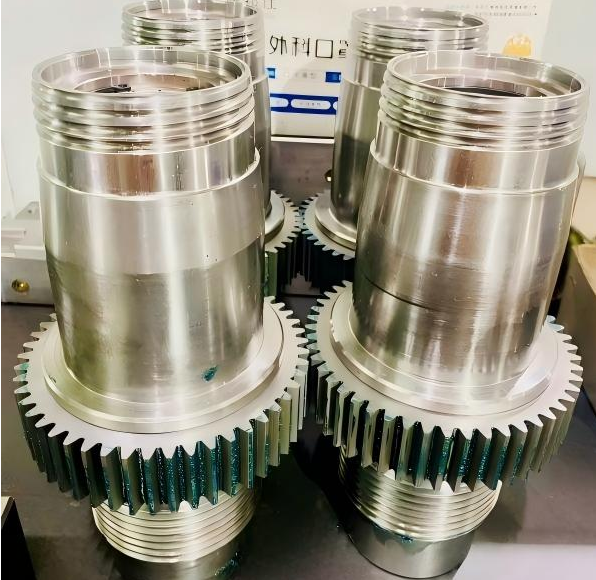
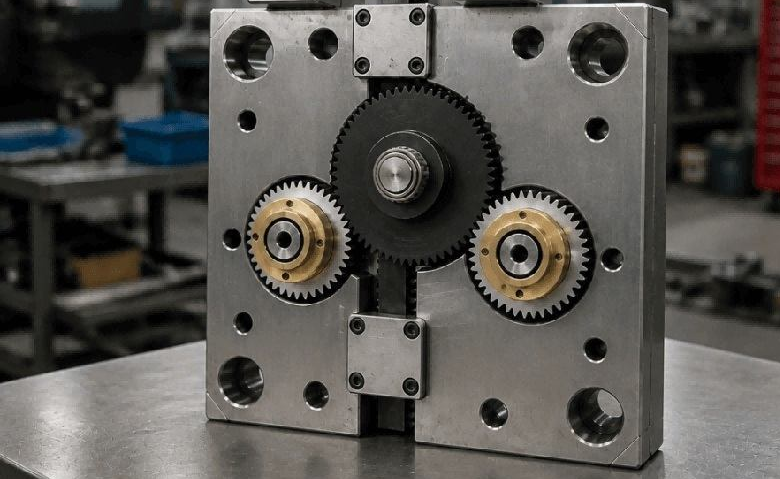
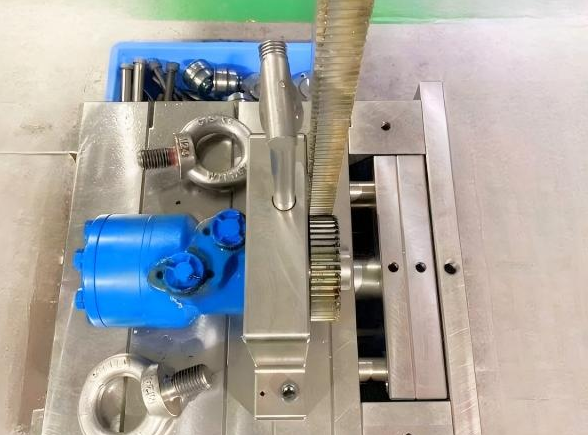
When the rack-and-pinion sticks, cores rotate unevenly and the thread strips. The real cause is backlash, rack parallelism, and worn guide surfaces — not the drive itself. We turn and grind the gear train in-house, control mesh clearance, and run the racks against hardened, precision-ground guides so the rotation stays smooth across the full production run.
Thread dimension drift
Plastic shrinks onto the core as it cools and pulls the thread profile out of spec. The fix starts at design, not the press: we pre-compensate core dimensions to your resin's shrink rate, then hold melt and mold temperature to lock it in. Every thread is CMM-verified against your 3D model before shipment — not eyeballed on a go/no-go gauge.
Stripping and core seize-up
If the part grips too tightly, friction and trapped vacuum lock it onto the core and shave the thread on release. We catch this in DFM, then attack it three ways: polished thread flanks to cut friction, venting to break the vacuum, and rotation timed against the ejection plate so the core backs out on the helix — never straight.
Gear-oil leakage into the cavity
Lubricated gear and rack drives can bleed oil onto the part — a non-starter for medical and food-contact closures. Where cleanliness is critical, we specify a servo drive that keeps hydraulic oil away from the cavity entirely. Where torque demands hydraulics, we isolate the drive train and design accessible service points into the maintenance plan.
Deep or multi-start threads that won't release
A collapsible core can only retract so far — usually 0.5–2 mm — and a large multi-start lead angle or deep thread simply exceeds that travel, while segment seam lines can mark the profile. An unscrewing mold backs these out along the helix instead. We decide between the two methods on thread depth, pitch, and resin stiffness before steel is cut, so the tool is never overbuilt or under-spec'd.
Early on, KTM paid real tuition learning these five failure modes. Today they are exactly what our process is engineered to prevent. Next, see the four-step cycle where each risk is designed out — one step at a time.
How an Unscrewing Mold Works
— 4-Step CycleEvery threaded part runs through the same four steps. Two of them look like any injection mold. The other two — the cooling grip and the synchronized rotation — decide whether the thread releases clean or shaves on the first shot.

Injection
Molten plastic fills the threaded cavity under pressure and forms the full thread profile in a single shot. Sharp crests and roots depend on venting at the thread peaks. Trapped air or a short shot leaves an incomplete thread that no rotation downstream can recover.

Cooling— where the grip is set
As the plastic solidifies, it shrinks onto the threaded core and grips it. That grip is the exact force the drive has to overcome a moment later, so cooling is not a passive wait. Cool too long and the part locks onto the core; cool too little and the soft thread strips under rotation. We balance the cooling circuit so the part holds its profile and reaches its release window at the same time.

Unscrewing (rotation triggered) — the defining step
The mold opens along the parting line and leaves the part sitting on the core. A servo, hydraulic, or rack-and-pinion drive then spins the core, walking the thread off its own helix. Rotation count is matched to the thread's number of turns, and rotation speed stays synchronized with the ejection plate — so the part backs off at the same rate it is freed. Break that synchronization and the thread strips or cross-threads.
Ejection
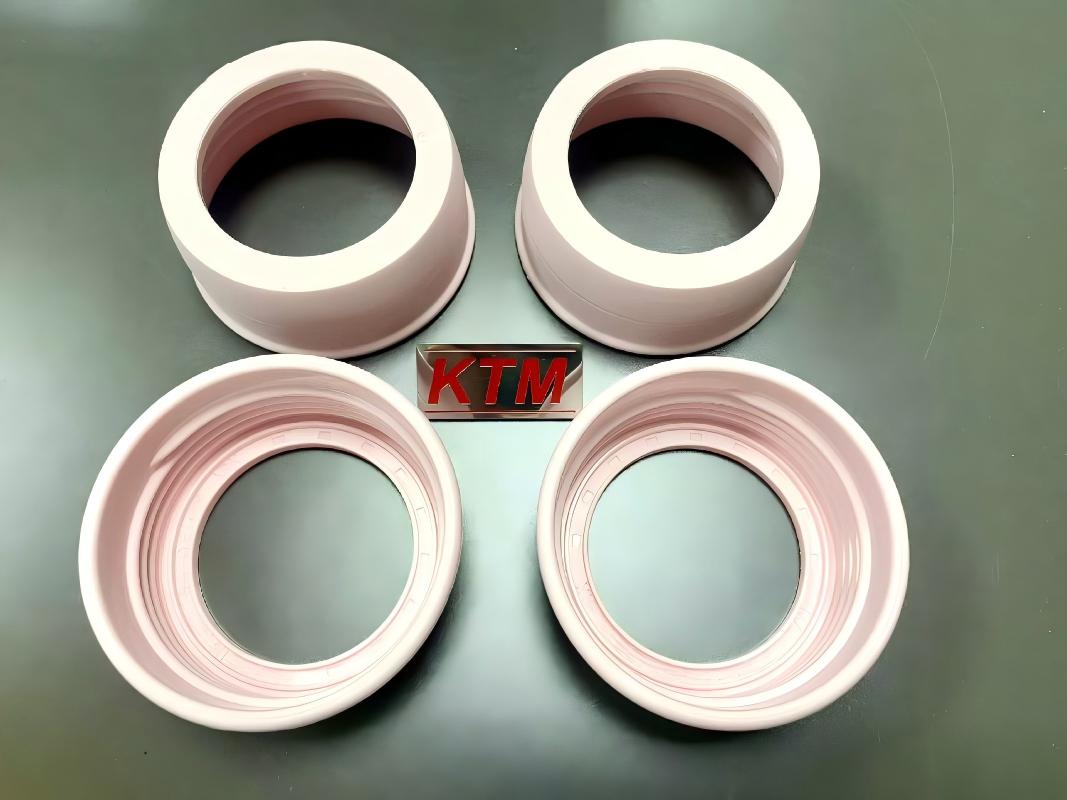
After the final turn, the fully unscrewed part drops free or is lifted off — no shaved threads, no flash, no drag marks — and the core resets for the next shot.
The sequence repeats automatically, shot after shot. On hardened tool steel (H13 · 1.2344 · S136) with precision-ground cores, it holds thread accuracy across production volumes without the rack binding or pitch drift that stalls a line. Which drive turns that core depends entirely on your thread. See the rotating core in motion, then compare the three drives that power it.
Have a threaded part? Get a free feasibility check within 24 hours.Unscrewing Mold Driving Mechanisms Compared
The drive turns a threaded core out of solidified plastic without shaving the thread. The wrong choice shows up at trial as stripped threads, jerky rotation, or oil on the part. KTM builds four drive types and matches the drive to your thread pitch, core torque, and cleanliness requirement, rather than fitting every part to one house standard.
| Drive | Relative torque | Rotation control | Cleanliness Relative build cost | Best fit |
|---|---|---|---|---|
| Servo | Medium-high | Programmable turn count, repeatable to the degree | Higher | Multi-start, tight-tolerance necks, medical / food-contact |
| Hydraulic motor | Highest | Good, cam/stop-controlled | Medium | Deep threads, large-diameter cores, stiff engineering resins |
| Rack & pinion | Medium | Tied to press open-close stroke | Lowest | Standard caps and closures |
| Helical gear / motor | High | Synchronized across all cavities | Varies by cavitation | High-cavity closure tools |
Hydraulic Motor Drive — Our Workhorse for Deep Threads
A hydraulic motor turns the core gears through a rack or geared train, and it delivers the highest usable torque of the four. That torque is what backs a deep or tapered thread out of a stiff, glass-filled resin that grips the core hard as it shrinks. It is the drive we reach for most on demanding threaded parts. The trade-off is seal upkeep, so we build in accessible service points and set a maintenance interval with the tool.
Servo-Driven Unscrewing Mold — When Rotation Must Repeat to the Degree
A servo drive gives the tightest rotation control: programmable turn count, controlled acceleration, and start-stop synchronized to the ejector stroke. It runs clean, with no hydraulic oil near the cavity, which matters for medical and food-contact closures. Specify it for multi-start threads and tight-tolerance necks where every cycle must repeat the same angular position.
Rack-and-Pinion Drive — Lowest Build Cost for Standard Caps
A rack-and-pinion drive ties core rotation directly to the machine's open-close stroke. No external motor, fewer moving parts, lower build cost. It suits standard caps and closures on presses that need no auxiliary unscrewing unit.
Helical-Gear / Motor-Driven Train — Identical Threads Across Every Cavity
A helical-gear train transfers rotation from one source across a multi-cavity layout, so every core turns at the same pitch. That keeps thread quality identical from cavity 1 to cavity 32 in high-cavitation closure tools, where a single lagging core shows up as scrap.
How to choose in one line: stroke-linked rack-and-pinion for standard caps on a budget; hydraulic motor for deep threads and stiff resins; servo when angular repeatability is non-negotiable; helical-gear train when cavity count is high and every core must match.
The drive is only half the decision. Thread accuracy itself is cut on our lathe and set on a precision grinder — the grinder holds the thread-profile tolerance, so on our floor drive selection and thread machining are decided together, not in separate steps. The bigger question many engineers still face is whether to unscrew at all, or collapse the core inward.Unscrewing Mold vs Collapsible Core Mold
— Which One Your Thread NeedsBoth tools release internal threads and undercuts, but they work by opposite physics. An unscrewing mold rotates the threaded core out of the part along its helix. A collapsible core mold contracts segmented steel inward, so the part strips straight off. Pick the wrong one and you pay for it in cycle time, tooling budget, or thread quality. Here is the engineering comparison, run the same way we run it before your steel is cut.
A collapsible core mold cycles faster because there is no rotation step, and the tool stays compact. It fits shallow-to-medium internal threads, standard caps, and closures. Its limit is collapse travel: segments retract roughly 0.5–2 mm depending on geometry, so deep, aggressive, or multi-start threads exceed what they can clear. The segment seams can also leave faint witness lines on the thread flank — a real concern on sealing surfaces.
An unscrewing mold handles the threads a collapsible core cannot: deep, tight-tolerance, multi-start, and stiff engineering resins that grip the core too hard to strip. The trade-off is a longer cycle for the rotation stroke and a larger, heavier mold base carrying the drive train. Because there is no segment seam, the thread flank releases clean.
| Feature | Collapsible Core Mold | Unscrewing Mold |
|---|---|---|
| Ejection method | Inward contraction + stripper plate | Mechanical rotation (unscrewing) |
| Cycle time | Very fast | Slower (bound by rotation stroke) |
| Complexity & size | Compact, simpler | Large, heavier, mechanically complex |
| Ideal threads | Shallow/medium internal, caps | Deep / tight-tolerance / multi-start, engineering plastics |
| Collapse travel limit | ~0.5–2 mm inward (geometry-dependent) | Not travel-limited — follows the full helix |
| Thread flank finish | Possible seam witness lines on sealing faces | Seam-free, clean flank |
| Maintenance focust | Segment fit & wear | Gear/rack lubrication & drive synchronization |
| Mold Steel (prototype/low-volume/production) | P20/1.1730 acceptable for low volume H13 / 1.2344 / S136, hardened for production | P20/1.1730 acceptable for low volume H13 / 1.2344 / S136, hardened for production |
| Core equipment at KTM | SODICK wire-EDM (sets core-pull precision & mold life) | Lathe + grinder (grinder sets thread accuracy) |
| Relative cost | Often higher — more wire-EDM machining steps | Varies by cavity count, steel, and thread geometry |
Two rows decide long-term reliability. Steel: for production volumes, both tool types must run hardened steel — H13, 1.2344, or S136 — or the moving thread surfaces wear and the action jams. For a trial mold of a few hundred to a few thousand shots, softer P20 or 1.1730 keeps tooling cost down. Equipment: collapsible core segments are cut on SODICK wire-EDM, where sub-micron fit decides flash-free release and core life; unscrewing thread profiles are ground, where the grinder sets the thread accuracy.
When to use which: choose a collapsible core mold for high-volume, shallow-to-medium threads where cycle speed drives your part cost. Choose an unscrewing mold for deep, tight-tolerance, or multi-start threads that cannot risk segment witness lines. Not sure which your part needs? Send the 3D file — we call it before steel is cut. Once the method is set, the geometry has to be made moldable, which is where DFM earns its keep.
Unscrewing Injection Mold Design
& DFM EssentialsMost threaded-mold failures are designed in before a single chip is cut. Our DFM review reads your 3D file and flags them there, where a fix costs an email instead of a new core. Four checks shape every unscrewing injection mold design we quote.

Scoring and wear
The core and bushing run metal-on-metal on every rotation, so galling is the failure that ends a mold early. We run a hardened core — H13 or S136 at 48-52 HRC — against a wear-resistant or oil-impregnated bushing, and grind the thread-forming faces to Ra 0.4 or finer so the profile releases clean instead of dragging. On multi-cavity tools we set the bushing material and lubrication interval up front, so the action stays smooth from the first shot to the last.
Synchronization
Rotation has to match the ejector stroke to the degree. Turn count is set by thread engagement length divided by pitch; miss it and the core either strips the thread or leaves it half-formed. We define rotation count, start timing, and stop position against your thread pitch and lead, then prove the numbers at trial before the tool ships — not after your line is down.
Aggressive-thread judgment
Not every internal thread needs unscrewing. Shallow, rounded threads in a flexible resin can strip straight off a collapsible core; deep, square, or multi-start profiles in a stiff grade cannot. We judge your internal thread mold on thread depth, pitch, lead angle, and resin elongation, then tell you which method the part actually needs — so you never pay for a rotating drive a strip-off core would have handled.

Shrinkage pre-compensation
Plastic shrinks onto the core as it cools and locks the thread out of spec. Shrink rate swings wide by resin — roughly 1.5-2.5% for PP, 2-4% for HDPE, under 0.5% for glass-filled grades — so we pre-adjust core dimensions to your material before steel is cut. Every finished thread is then verified against the print on a CMM, with a dimensional report, not a go/no-go eyeball.
Every review returns a written DFM report covering thread release, steel grade, drive selection, and shrinkage compensation. It is the same document that heads off the costly revisions engineers face after steel is cut.
One thread flagged on paper beats one core scrapped in steel. Get My Free DFM Reportour engineers return a full DFM report on thread, steel, and drive within 24 hours. No cost, no obligation, no mid-project surprises.
Applications & Real Projects
You can read every spec on this page, but engineers buy on proof. KTM builds unscrewing and collapsible core molds for the same industries we already ship to across the United States, Germany, the UK, and Mexico. Below are six representative threaded-mold projects, grouped by application. Where a customer permits disclosure, full cavity, drive, and CMM inspection data is available on request.
Bottle Caps & Closures
Flip-top dispensing closure
Internal thread sat behind a shallow undercut; straight-pull strip sheared the first samples.
Moved the part onto a collapsible core, timed the central pin to retract before the stripper plate advanced.
Segments cleared the undercut without shaving plastic; and the plastic closure mold released a clean thread on the first trial.
Tamper-evident cap
A pilfer band sitting above a multi-start internal thread ruled out any collapsing core on this closure.
We ran every cavity on one synchronized unscrewing drive, so each core turned at the same pitch as the ejection stroke.
No stripped bands, no cavity-to-cavity thread drag. This cap mold now runs in a packaging line.
Pipe & Threaded Fittings
Threaded pipe fitting
A deep tapered thread had to back out of a stiff resin that gripped the core hard during shrinkage.
A hydraulic rack-and-pinion drive supplied the torque; rotation speed matched the cooling window.
The pipe fitting thread mold delivered full, flash-free threads off every cycle.
Irrigation coupling
Field couplings run at high volume, so cycle speed drove the tooling choice over a rotating option.
We fit the medium-depth internal thread to a collapsible core; held tight segment clearance on the seal face.
Cycle time dropped against an unscrewing build, and the parts threaded onto mating couplers with no leaks under line pressure.
Engineering Threaded Components
Sealing ring, baby-bottle assembly
The sealing lip allowed zero flash, so the split line had to stay entirely off the seal face.
We held a flash-free split on the internal thread mold; verified seal geometry against the 3D model before steel was cut.
The ring sealed on the first assembly trial, with no flash carried onto the food-contact lip.
Glass-filled engineering fitting
A tight-tolerance, multi-start thread needed precise rotation control in a stiff, abrasive resin.
A servo drive held repeatable angular position and controlled acceleration through the full unscrewing cycle.
The thread released without drag across a long run; CMM checks confirmed pitch held in tolerance from first article to last.
Six parts, two release methods, one standard: the thread leaves the core on the first trial. Many of these molds also pair with our injection molding services, so the tool proven here can run production under the same roof. To see the full set, request our capability deck. The people who build these tools are the next section.
Thread-Level Quality Documentation
— Every Unscrewing Mold Verified,Not AssumedAn unscrewing mold stands or falls on two things: thread accuracy and a clean first-trial release. Here is the documentation that proves both, stage by stage — and it stays yours to keep.
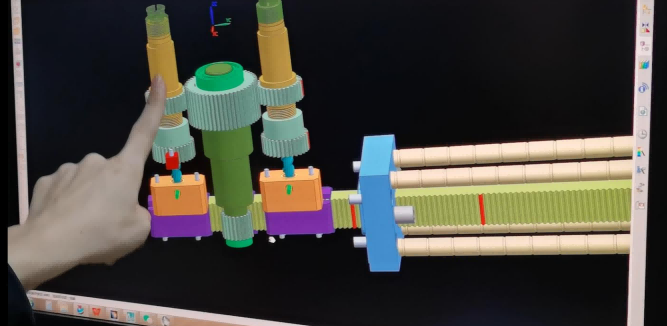
Before steel is cut
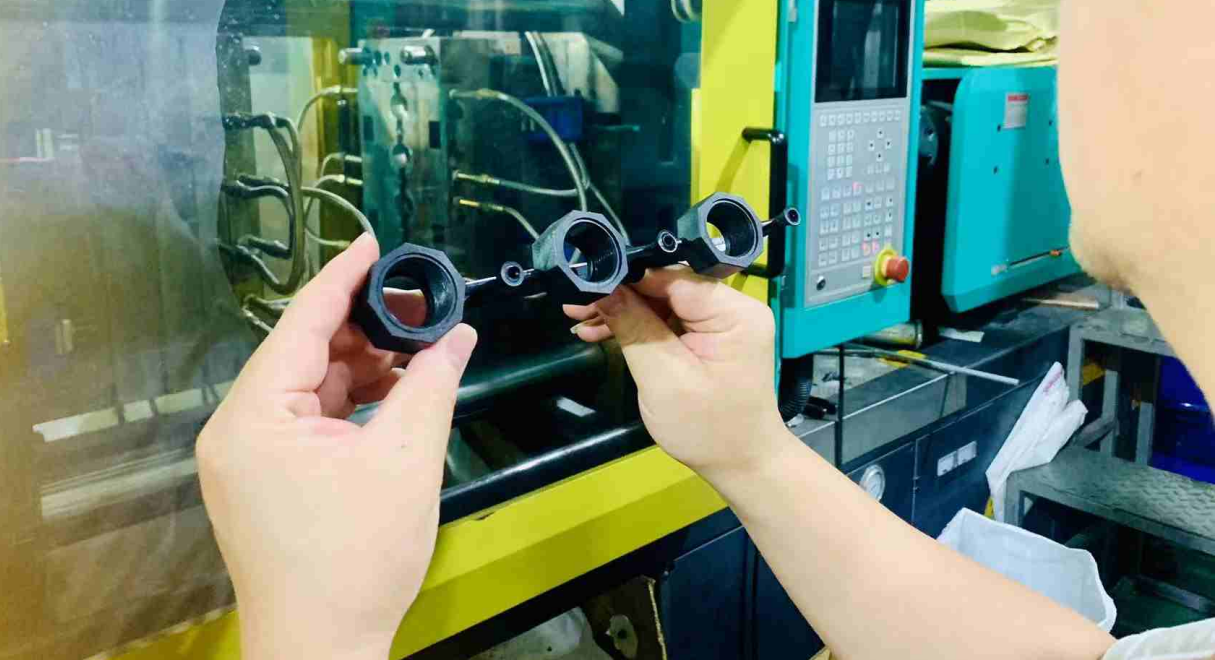
After the first shot

Dimensional proof
Material and traceability
The full file set — DFM, Moldflow, trial and release report, CMM thread data, and material certificates — ships with your mold and stays yours to keep.
Why Engineers Choose KTM to Build Their Unscrewing Molds
Few factories run both unscrewing and collapsible core technology in-house. KTM does — so before steel is ordered, we tell you which method your threaded part actually needs, backed by the equipment that sets thread accuracy.
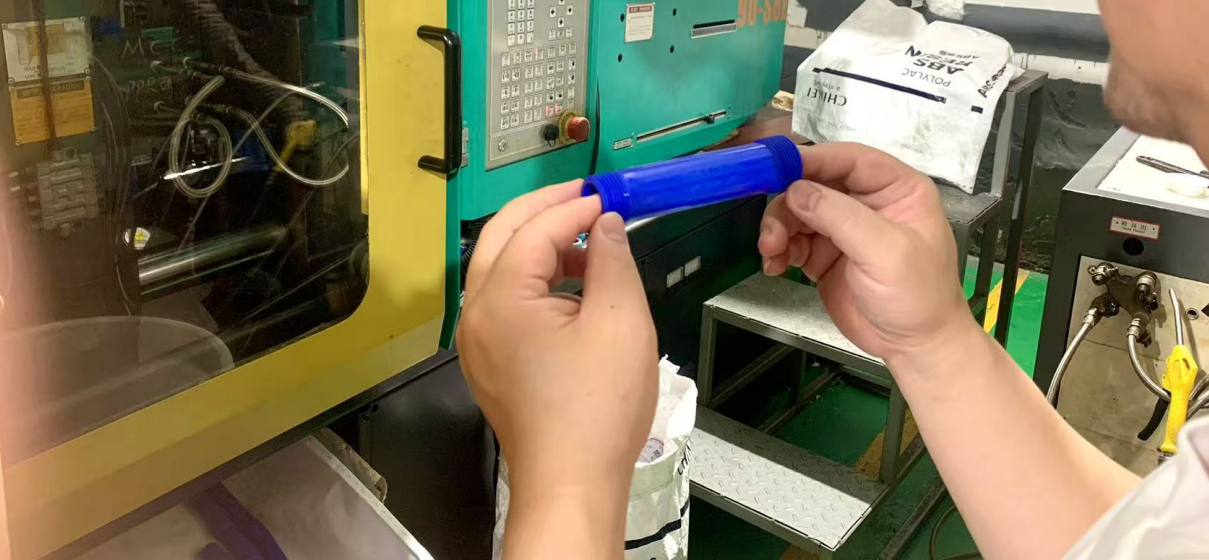
Founder-led, transparent pricing
Our founder holds a mold-design degree and 20+ years on the floor, so an engineer makes the call when a core stalls. One quote, one price, agreed before we cut — no mid-project hikes.

The grinder sets your thread
Thread cores are turned on our lathes and finished on precision grinders, where the grinder sets the thread tolerance. Threaded profiles run on SODICK wire-EDM, so pitch and lead hold from first article to last.

The right drive for your thread
Servo, hydraulic, and rack-and-pinion drives all run here. We match drive torque and rotation control to your spec — multi-start, deep, or tight-tolerance — so the core backs out clean on the first trial.
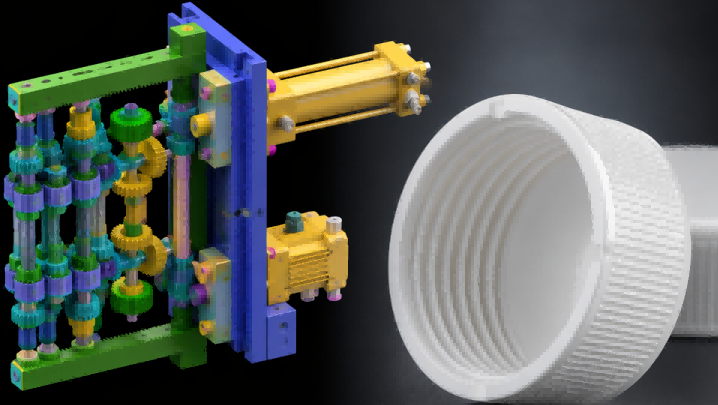
Dual method, an honest call
We build both unscrewing and collapsible core molds in-house. That means we recommend the method your thread depth, pitch, and resin actually need — not the one method a single-technology shop happens to own.
20+
Years on the floor
80
Person factory
40+
Injection machines
US/MX/UK/EU
Export markets
Unscrewing Injection Mold FAQ
Get a Free DFM Review for Your Threaded Part
Send your 3D file and our engineers return a preliminary DFM report on your unscrewing injection mold within 24 hours — thread release, steel, drive, and shrinkage assessed on your actual part. Three steps, no obligation.
Send your 3D file → Free DFM report in 24–48 hours → Quote and trial plan. Pricing stays transparent from kickoff to shipment, with no mid-project price hikes.
24-48 Hour Turnaround
Preliminary DFM report on your part
Engineer-to-Engineer
Handled by mold engineers with 5–10 years in threaded tooling
No Obligation
Transparent pricing, no mid-project hikes