Custom Cable Tie Molds & Injection Molding
Designed around your strap, locking head, nylon grade and production machine.
KTM builds custom nylon cable tie molds around your strap dimensions, locking-head design and production machine. We review the gate, runner and fine locking features to address incomplete filling, flash and unreliable engagement, for export tooling or in-house molding in Dongguan, China.
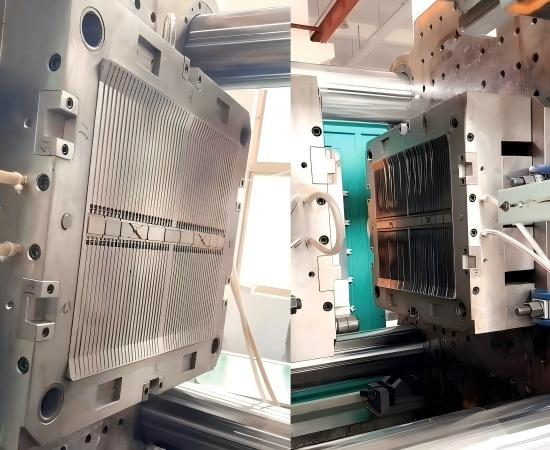
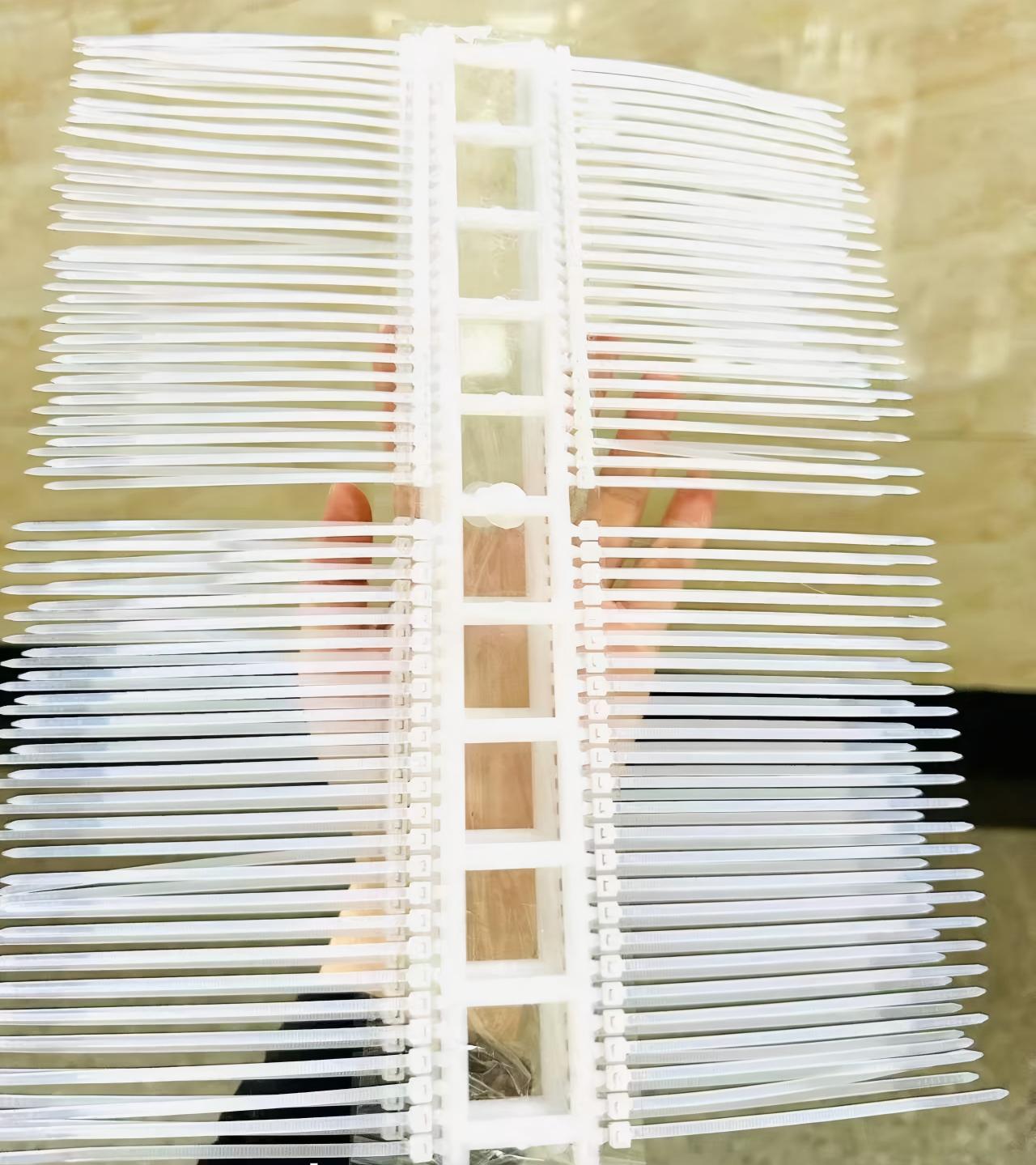
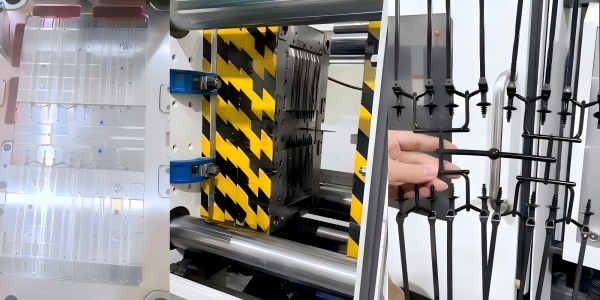
Our work includes a 100-cavity project running at approximately 20 seconds per cycle, and a 64-cavity mold whose short shots and flash were resolved by changing the runner system.
- Gate and runner layouts matched to your cable tie geometry.
- Tooth and pawl details reviewed for the required locking performance.
- PA6 or PA66 selected for your color and service conditions.
- Machine compatibility and sample acceptance reviewed before cable tie tooling.
Project results are references; the specification for your cable tie is assessed individually.
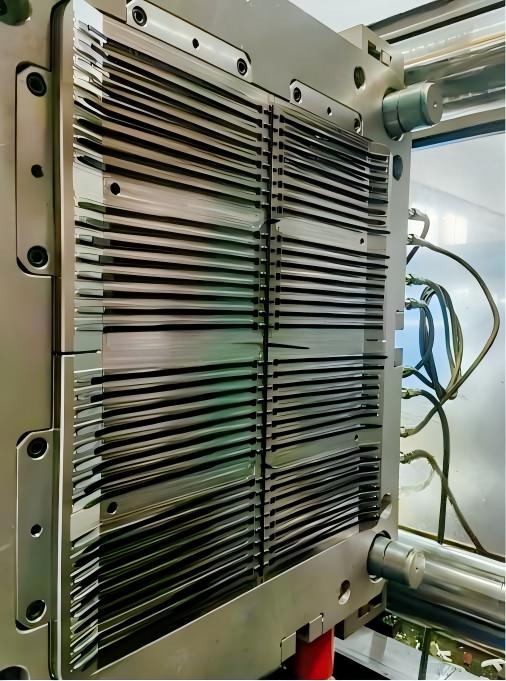
How We Solved Short Shots in a 64-Cavity Cable Tie Mold
The original cold-runner design left some cable tie straps incomplete. Raising injection pressure produced flash elsewhere without resolving the filling problem across the mold.
A runner change, with the risk on us
The customer initially wanted to retain the original gating arrangement. We continued working through modifications and trials, but the recurring defects showed that adjustments within the same runner concept were not enough. We proposed converting the tool to a hot-runner system feeding cold runners, with the transfer points and gates reconsidered for the cable tie geometry.
The customer was concerned about paying for another change without a proven result. We agreed that, if the conversion solved the defects, we would charge for the hot-runner system. If it failed, KTM would absorb the hot-runner cost and the losses associated with that modification.
The result on our own standard press
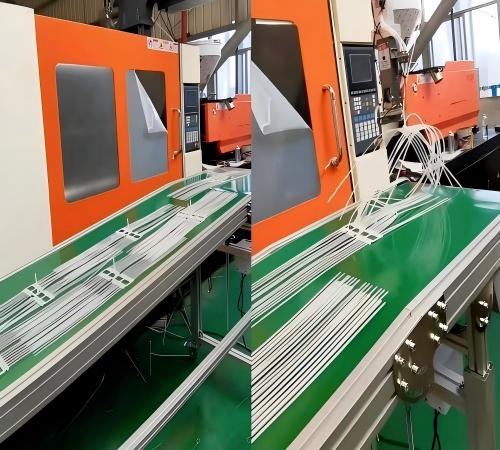
After the conversion, the short shots and flash were resolved in the trial. We also ran the modified mold on our own standard injection machine. The same defects were eliminated there: this tool could produce complete, clean cable ties without relying on a dedicated cable tie molding machine.
A customer relationship that continued for years
When he saw the results, the customer acknowledged that retaining the original arrangement had delayed the solution. He apologized and voluntarily paid all the modification costs incurred on the mold, beyond the hot-runner charge we had proposed.
Years later, KTM remains his sole supplier of cable tie molds, and he has entrusted us with other mold projects as well. We earned that responsibility by staying with the problem, taking the financial risk of the proposed change and proving the result on the machine.
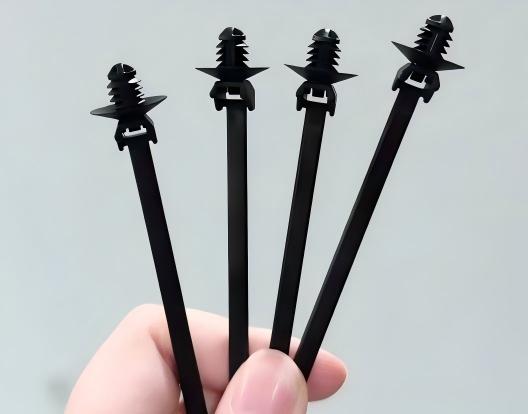
Discuss the filling problem on your cable tie tool
Send the tie drawing, defect photos and current runner layout, together with the resin grade and machine details. We can review the likely causes and the information needed to evaluate a modification.
Why Cable Tie Molds Short-Shot: Gate & Runner Design
A cable tie combines a long, thin strap with a thicker locking head and fine teeth. These sections fill and cool differently. Excessive pressure loss, an early-freezing gate or trapped air can leave the tail incomplete while other cavities begin to flash. The defect pattern across the mold helps identify where to investigate.
Hot Runner vs Cold Runner for Cable Ties
A cold runner can be appropriate when the tie geometry, cavity layout and machine provide an adequate filling window at an acceptable runner weight. A hot runner feeding cold runners can reposition the feed points and shorten cold flow paths in a multi-cavity tool. It also adds heaters, controls and maintenance requirements.
We assess strap length and thickness, head position, cavity balance, resin flow behavior and injection capability together. Cavity count alone does not define the runner choice. A submarine gate must be evaluated for its effective section, location and removal behavior; the failure of the original arrangement in our 64-cavity case is not a universal rule against that gate type.
For an existing mold, cavity-by-cavity short-shot samples and the current process settings are more useful than a single photograph of a defective tie. They help distinguish a runner imbalance from a restriction, venting issue or machine limitation.
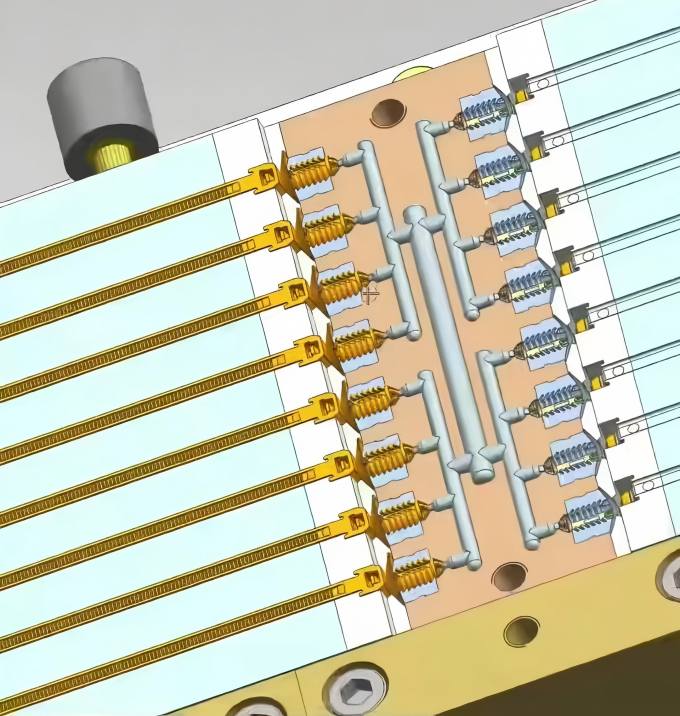
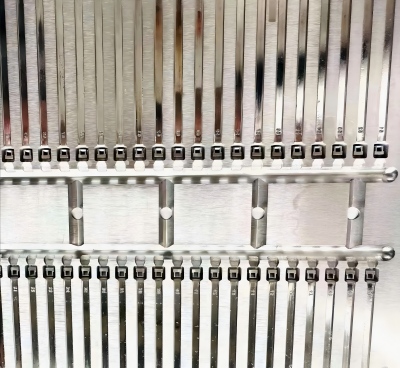
Four Checks Before Changing the Tool
Gate access
Review the gate position and effective section against the thin strap and locking head. A restrictive feed can freeze before the distant sections fill, even when barrel pressure appears adequate.
Cavity balance
Compare filling progression across near and far cavities using the same resin and settings. Unequal flow resistance can produce incomplete tails in one area while other cavities flash during packing.
Venting and detail
Inspect air escape at strap tips, teeth and the locking head. Restricted vents can limit filling; worn shutoffs or damaged inserts can create flash that interferes with threading and locking.
Resin and machine
Check drying, melt conditions, injection speed and available pressure against the selected nylon grade. Validate the proposed runner change on a suitable machine, with trial samples and recorded process conditions.
Preventing Yellowing in White PA66 Cable Ties
White and natural cable ties make discoloration easy to see. Review the resin and colorant combination, drying history, melt temperature and residence time. Material held too long in the barrel or hot-runner dead spots can degrade even when the controller displays the intended setpoint.
A hot runner is not an automatic cure for yellowing. The system must suit the nylon grade, shot size and production rhythm. Use the resin supplier’s processing guidance, then assess color and locking performance on trial parts under the agreed conditioning state. Increasing temperature simply to force a thin strap to fill can hide the underlying restriction.
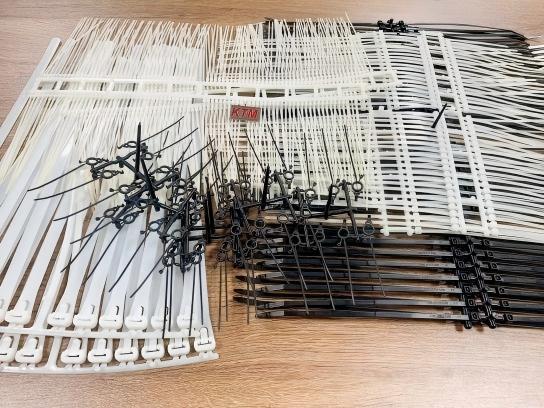
Custom Cable Tie Molds: A 100-Cavity Project Reference
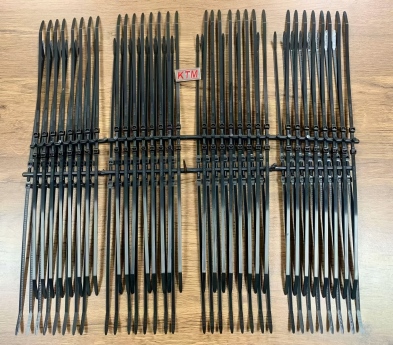
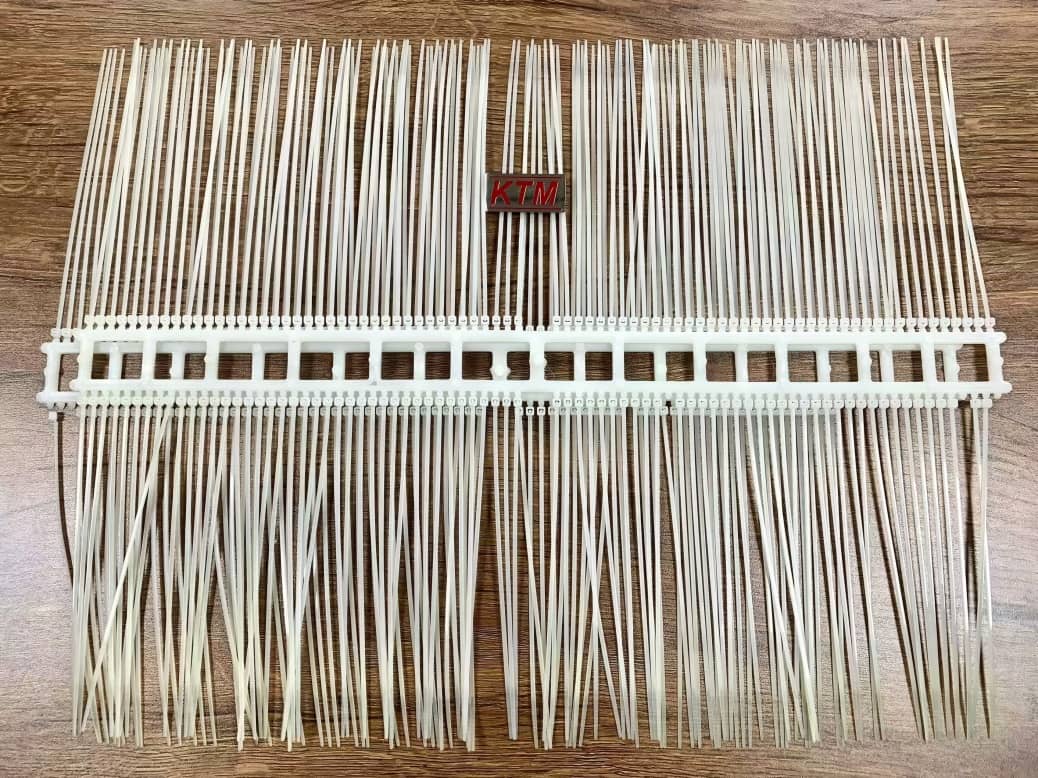
A completed KTM project used 100 cavities with an approximately 20-second molding cycle, a one-million-shot tool-life reference and a six-week lead time. These figures describe that project; each new tie design needs its own tooling and production assessment.
| Completed 100-cavity project | Reference figures |
|---|---|
| Cavities | 100 cavities |
| Molding cycle | Approximately 20 seconds |
| Tool-life reference for this project | 1,000,000 shots |
| Lead time | 6 weeks |
| New projects | Assessed by tie dimensions, structure, resin, machine and acceptance requirements |
A cycle figure includes more than filling. Cooling the locking head, opening the mold, releasing the straps and handling the runner all affect repeatable output.
The locking detail defines a usable tie
Geometry is built to your part, not pulled from a catalog. Tooth pitch, pawl engagement and the head opening must work together: the tail needs to thread smoothly, the pawl must engage, and the strap must hold the specified load without slipping or breaking prematurely.
Strap width and thickness, head wall sections and the proposed parting line influence filling, cooling and ejection. Flash inside the head can obstruct threading; distortion or damage to a tooth can affect engagement. These details belong in the drawing review and sample acceptance criteria.
For a custom zip tie mold, we review cavity count against the required output and the press capacity. More cavities increase the mold footprint, shot requirement and balancing task. A smaller, stable layout can be a better fit than a higher cavity count that the selected machine cannot run consistently.
PA6 vs PA66 for Custom Nylon Cable Ties
Select the resin against the finished tie’s locking load, installation conditions and service environment. “PA6” or “PA66” identifies a polymer family; the specific grade, additives and moisture state determine whether it suits your application.
| Selection factor | PA66 cable ties | PA6 cable ties |
|---|---|---|
| Application fit | A common choice for cable ties; specify the required grade and finished-part performance. | An option where the selected grade meets the locking, flexibility and service requirements. |
| Heat and weather | Specify heat or UV stabilization when the application requires it. | Check the grade’s temperature and weathering suitability against the application. |
| Filling and shrinkage | Use grade-specific data to assess the thin strap, gate and cavity allowance. | Reassess filling and dimensions if changing from another nylon grade. |
| Moisture management | Dry pellets for processing; agree conditioning of molded ties for acceptance. | Dry pellets for processing; agree conditioning of molded ties for acceptance. |
| Cost comparison | Compare the specified resin and additives, runner consumption and accepted-part yield. | Evaluate the actual grade quotation and production results, not polymer price alone. |
Specify the environment before cutting steel
For outdoor cable ties, request an appropriate UV-stabilized grade; black color alone does not establish weather resistance. For elevated temperatures or low-temperature installation, identify the exposure and required locking performance. Flame-retardant resin selection also needs a stated requirement rather than an assumption based on the nylon name.
Switching PA6 and PA66 in an existing mold can change filling, shrinkage and the fit between the pawl and teeth. Review the supplier data and sample dimensions before approving a substitution. Any required product certification or independent testing should be defined during quotation.
Keep drying and conditioning separate
Before molding, excess moisture in nylon can damage the polymer during processing and affect appearance and strength. Drying temperature, time and residual moisture limits should follow the selected grade’s guidance, with material handling considered between the dryer and the machine.
After molding, nylon cable ties absorb moisture, which changes flexibility and mechanical behavior. Agree the sample conditioning and test environment before comparing locking or loop tensile results. A universal moisture target is not appropriate for every grade and application. We document the trial resin so the approved sample can be traced to the material used.
Send the required locking load, installation temperature and service environment. We can review the nylon options against your cable tie design before the tooling specification is finalized.
Steel, Inserts & Hot Runners for Cable Tie Molds
Steel selection needs to protect the fine tooth and pawl detail over the intended production run. The right choice depends on the resin formulation, expected cycles, surface requirement and maintenance plan.
| Tooling option | What we evaluate for cable ties |
|---|---|
| S136 / 1.2344 (H13) | Hardness and heat treatment, resistance to wear, and durability of fine locking features for the intended production duty. |
| NAK80 / P20 / 718 | Suitability for the required life, machining detail and finish. These grades are not interchangeable; specify the supplied condition, final hardness and any heat treatment. |
| Replaceable inserts | Access to worn tooth, pawl and gate areas, replacement strategy and the dimensions that must remain consistent after servicing. |
Maintain the features that control locking
A cable tie mold can continue filling while worn details begin to change the product’s function. The maintenance plan should therefore cover gate wear, flash at the head, tooth definition and ejection marks, as well as cooling passages and vents.
Cavity count alone does not determine the steel grade. Consider how many cycles the tool will run, whether the nylon contains additives that affect wear, and how easily critical inserts can be repaired or replaced. We specify the steel and applicable hardness or heat-treatment documentation with the tooling scope.
Our CNC and EDM work is directed at the geometry that matters to the tie: a repeatable strap section, defined teeth, a clean locking-head cavity and surfaces that allow release without damaging the pawl. Surface finish must support those functions rather than serve as a cosmetic specification alone.
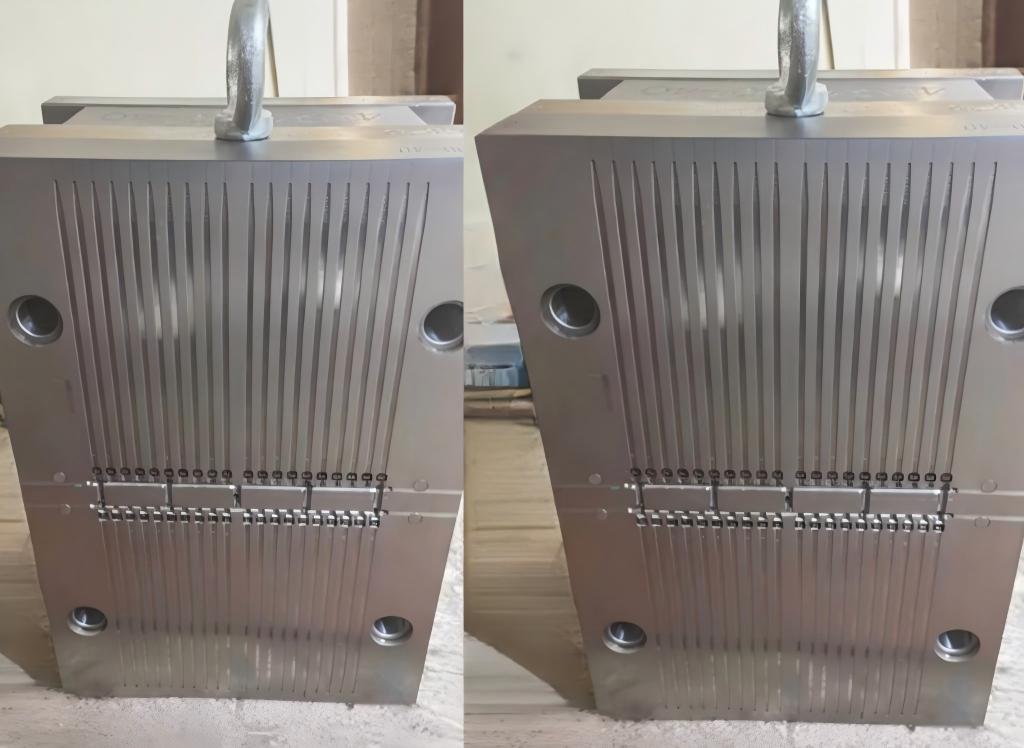
Select the hot-runner system for the resin and your plant
For your cable tie mold, the quotation should identify the proposed steel, insert arrangement and runner system, with service parts and maintenance responsibilities agreed before manufacture.
Export a Cable Tie Mold or Order Molded Ties
Choose the scope that fits your production plan. Both routes start with the same cable tie geometry, material requirements and sample approval criteria.
Export Tooling for Your Factory
For production at your factory, we develop the cable tie mold around your part drawing and injection machine. Share the tie-bar spacing, platen and mold-height limits, nozzle interface, available shot capacity, injection performance and ejection arrangement before the layout is finalized.
The review must cover the nylon shot and runner weight, filling demand, clamping requirement and hot-runner controls. A standard machine may be suitable, as our 64-cavity project demonstrated, but compatibility needs to be established for each tool and tie design.
We run trials at KTM and supply the agreed samples and records for your review. Confirm the material, conditioning state, locking criteria and shipment requirements so the acceptance decision is based on the cable tie you will produce.
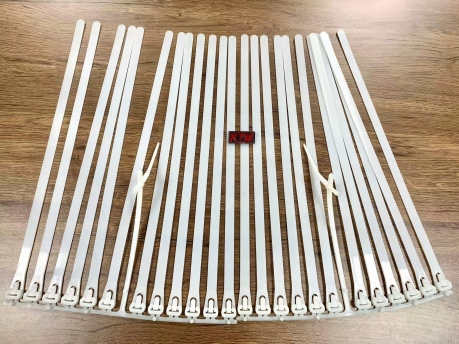
Cable Tie Molding at KTM
For finished cable ties, the mold stays at KTM and the production requirements begin with your approved design. Define the nylon grade, color, strap dimensions, locking performance, order quantities and intended application so the tooling and molding decisions support the same specification.
Trial samples establish the geometry and appearance for approval. Agree how the ties will be conditioned and how locking performance will be assessed; a sample tested straight from molding may behave differently from a tie after moisture conditioning.
Production planning also needs packaging, identification and delivery requirements. For thin nylon straps, handling and storage can affect the condition in which the ties reach your assembly line. We discuss these requirements with the molding scope before confirming the production quotation.
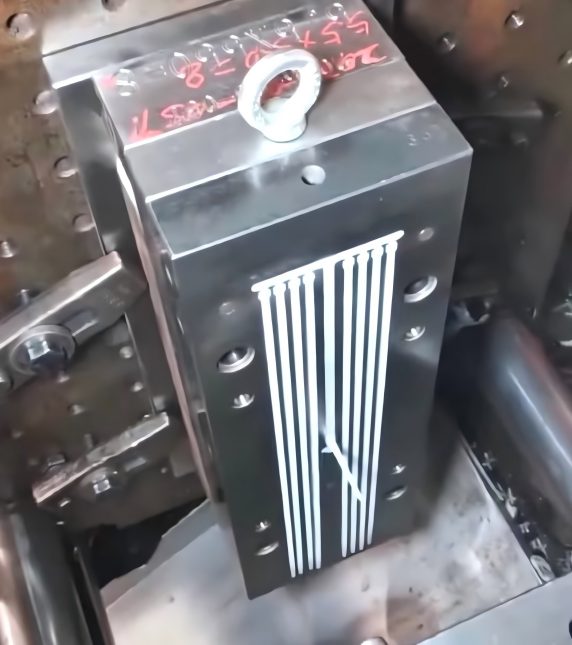
Cable Tie Mold Documentation & Sample Acceptance
Tooling approval should connect the drawing, trial conditions and finished cable tie. Agree the acceptance criteria before manufacture so a fully filled strap is not mistaken for a fully qualified product. The documentation and inspection deliverables are defined in the quotation.
DFM review
Review strap sections, locking-head detail, parting lines, gate access and ejection risks before machining. Resolve drawing questions early, while changes can still be assessed against tooling cost and the agreed custom cable tie requirements.
Trial report
Record the trial resin, machine conditions and filling observations alongside the agreed dimensional results. These records help your team understand how the sample was produced and what must be reproduced during the next trial.
Trial video
Show the cable tie mold cycling and parts being released during the trial. Review the footage together with the sample and report; video demonstrates operation, while measurements establish compliance with the agreed part specification.
Optical dimensional inspection
Document the agreed strap, tooth and head dimensions using suitable optical inspection. Confirm critical measurement locations from your drawing so dimensional checks focus on the details that affect threading, pawl engagement and locking behavior.
Material documentation
Identify the PA6 or PA66 grade used for the trial and supply the agreed material certificate. Keep the resin reference with the approved samples so later material changes can be evaluated against that baseline.
Steel documentation
Identify the specified cavity and insert steels and the applicable hardness or heat-treatment records. This information supports future maintenance and replacement decisions when wear at gates, teeth or locking-head details begins to affect production.
Define how the finished tie will be accepted
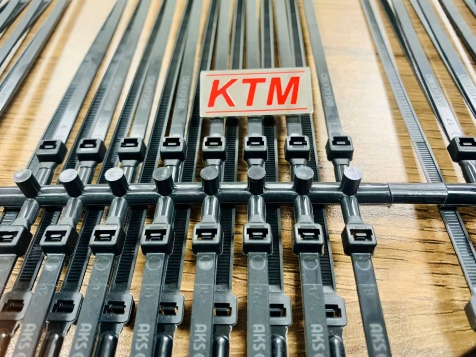
Specify the required loop tensile load, threading behavior, pawl engagement and permitted flash or gate vestige. Identify the conditioning state, sample quantity, test method and acceptance limits. For releasable ties, include the required release and re-engagement behavior.
Optical measurements, trial video and resin certificates each provide different evidence. They do not replace a finished-tie performance test. If your application requires aging, UV exposure, flammability testing or independent certification, define the scope and responsible test provider in the quotation. Simulation can guide runner decisions, but the agreed trials and sample checks determine acceptance.
What Determines Custom Cable Tie Mold Cost?
A useful quotation starts with the tie drawing, material, output target and machine data. These five areas explain where the tooling cost comes from and which requirements need agreement before manufacture.
Cavity count and output
Tie length, strap section and locking-head size determine the space and filling demand of each cavity. Compare the proposed output with machine capacity, balancing complexity and accepted-part yield before paying for a higher cavity count.
Steel and critical inserts
Steel grade, hardness and replaceable tooth or pawl inserts affect the build cost and maintenance strategy. Specify the intended production life and resin formulation so the quotation reflects the wear conditions of your cable tie.
Runner system and controls
A hot runner feeding cold runners adds manifold, nozzle and control requirements. Compare the named system, temperature zones, runner material consumption and service parts alongside the mold price, using the same cable tie production requirements.
Locking geometry and release
Fine teeth, a thin pawl, a releasable head or a heavy-duty strap change machining and ejection requirements. The quote should reflect those details and the inspection needed to confirm that the molded tie functions correctly.
Surface detail and qualification
Gate finishing, venting, strap release surfaces and locking-head detail need appropriate machining and inspection. Include the agreed trial resin, sample checks and documentation in the scope so competing quotations cover comparable cable tie tooling work.
Compare the agreed scope, not only the total
We itemize the proposed tooling scope so you can review the cavities, steel, runner system and part requirements. Confirm which trials, inspection records, spares, transport and on-site support are included. If your requirements change, the effect on price and schedule should be agreed before additional work begins.
Custom Cable Tie Mold FAQ
Discuss Your Custom Cable Tie Mold
Send your cable tie drawing or sample details, including strap dimensions, locking-head design, nylon grade, color, target loop tensile load and annual volume. For an export mold, include the injection machine specifications. For an existing tool, describe the filling or locking problem and share the runner layout if available.
We aim to respond within 24 hours to clarify your requirements and the next review steps. A formal quotation follows once the necessary project details are complete. The proposal can then define the gate and runner options, cavity layout, machine compatibility, sample approval requirements and delivery schedule for your cable tie.
Changes to the agreed tooling scope, price or schedule are discussed before additional work begins.
Message Sent
We will review your drawing and reply within 24 hours.