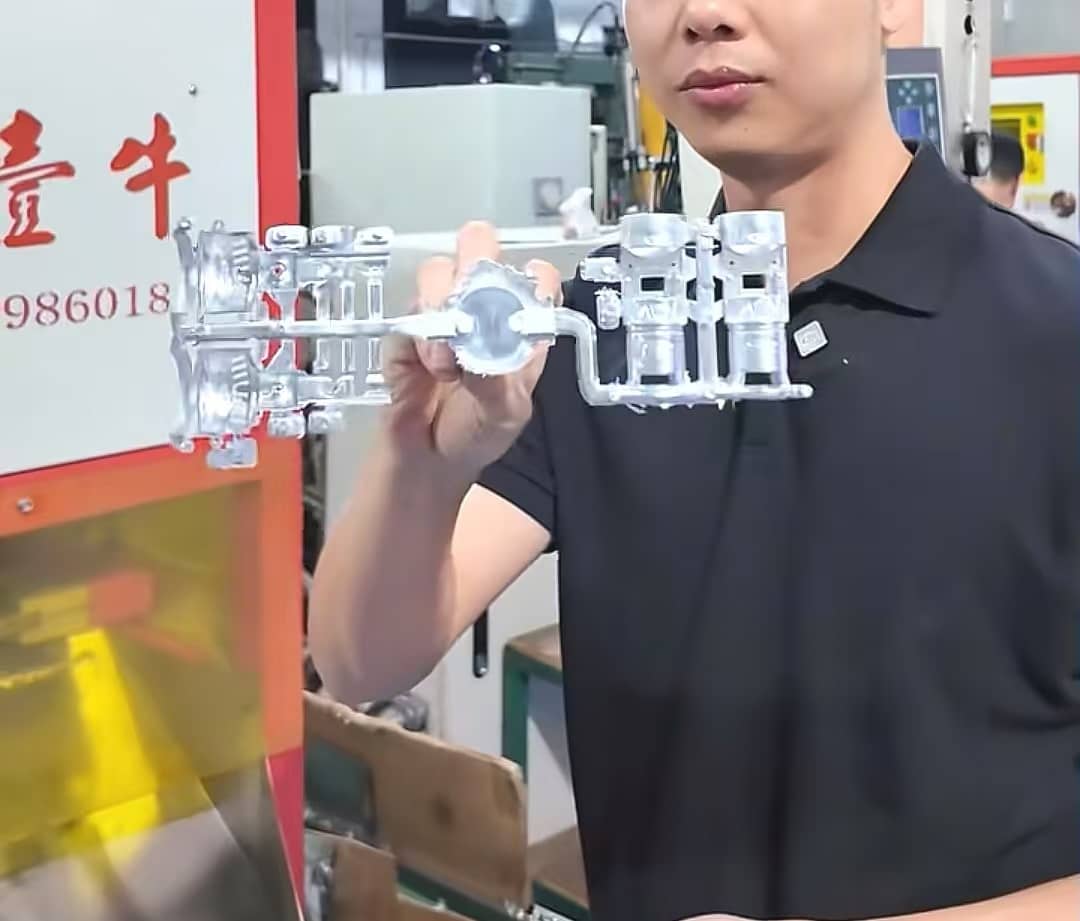
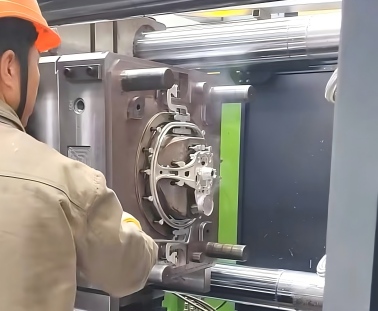
Precision aluminum die casting mold on a CNC machine bed
Aluminum Die Casting Molds

Aluminum Die Casting Mold Manufacturer — DFM & Moldflow Verified Before We Cut Steel

We engineer aluminum die casting molds that run 100,000+ shots against 650–720°C melt. Before any H13 or 8407 block goes on the CNC, your part clears DFM and Moldflow review. Most defects are designed in, not machined in — so we catch them on screen first.

  • Four failure modes solved at the design stage(heat checking, soldering, erosion, carbon buildup)
  • Steel matched to mold life across H13 / SKD61 / 8407 / 8418 / 8433
  • 3D-printed conformal cooling that cuts cooling time 30–50%
  • ADC12 / A380 / A356 alloy selection matched to your part

Sodick mirror EDM · Fanuc CNC · CMM & material reports · shipped to 15+ markets

What It Is

What Is an Aluminum Die Casting Mold?

An aluminum die casting mold (or mould, in UK usage) is the precision steel tool that shapes molten aluminum under high pressure. Metal at 650–720°C is forced into the cavity, held under pressure, then cooled and ejected as a finished part. A complete mold carries the cavity, the gating system, venting, and the ejection mechanism.

The duty is brutal on steel. Every cycle stacks thermal shock, high injection pressure, and a metal stream that scours the surface. How the mold absorbs that load decides both its life and your scrap rate.

Precision machined steel die casting mold cavity with gating system

4 Failure Modes That Kill Aluminum Die Casting Molds — and How We Prevent Them

Most mold trouble traces back to four mechanisms. We design against each one before steel is cut.

01

Heat Checking & Thermal Fatigue

The cavity heats under melt, then chills under spray release agent, cycle after cycle. That swing cracks the surface into a fine web that prints onto castings as roughness and flash.

Our fix

Premium hot-work steel, optimized water lines, and controlled spray timing to lower thermal stress.

02

Soldering & Drag Marks

Hot aluminum bonds to the cavity at a microscopic level, so the part sticks and tears on ejection, sometimes pulling material short.

Our fix

Nitriding or PVD surface hardening, corrected draft angles, and tuned injection speed to release the part clean.

03

Erosion & Corrosion

High-velocity aluminum scours the gate and core, eroding dimensions out of tolerance, while the melt attacks the steel and degrades finish.

Our fix

Re-engineered gating to kill jetting, plus local inserts and coatings on the wear points to hold dimension.

04

Thermal Imbalance & Carbon Buildup

Uneven cavity temperature creates hot spots, the source of shrinkage and porosity, while excess heat carbonizes release agent into surface buildup.

Our fix

Balanced cooling and heating layout, plus a high-volatility release agent dosed at controlled volume.

These four failures share one root: heat against steel. Every fix starts with the right grade — so here is how we match steel to your mold-life target.

100,000+
Shots per tool
650–720°C
Aluminum melt
30–50%
Faster cooling
15+
Export markets
Mold Steel & Life

Mold Steel Selection & Mold Life H13 / SKD61 / 8407 / 8418 / 8433

Steel choice is the first lever on mold life. Aluminum runs hot, so the cavity needs hot-work tool steel that resists thermal fatigue, pressure, and repeated expansion. We select grade by application, not by what is cheapest on the shelf.

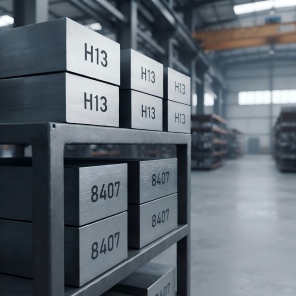
Stacked blocks of hot-work tool steel in a workshop
Steel Standard Strength Best for
H13 AISI High-temp strength, toughness, thermal-fatigue resistance, strong value Standard cavities and cores
SKD61 JIS Cleaner melt, higher purity Demanding inserts and cores
8407 Premium hot-work Refined toughness, high cleanliness High-stress, high-cycle molds
8418 Premium hot-work High hardness, strong heat-crack and erosion resistance High-wear cores, slides, and gate areas
8433 Modified hot-work Extreme heat-crack resistance Runnerless and pure-aluminum, very high temperature

Every block is checked on our in-house hardness tester before machining, so the steel that ships is the steel you specified.

What Mold Life Actually Depends On

A useful baseline for aluminum: tooling life starts around 100,000 shots and can climb into the hundreds of thousands for the right job. No honest shop quotes a single number, because four factors drive the outcome:

Part geometry

Thin walls, deep ribs, and hot spots raise thermal load

Mold design

Gating, venting, and steel selection set the stress

Cooling line layout

Balanced cooling lowers heat checking and fatigue

Maintenance

Scheduled inspection and resurfacing extend service life

Get those right and the same H13 cavity outlasts a poorly cooled one by a wide margin. That is why cooling is its own engineering problem — and why we verify it before cutting steel.

Engineering Verification

DFM & Moldflow — Verified Before We Cut Steel

Tooling is expensive to build and worse to rebuild. So we run engineering checks before the first chip comes off the block. Two reviews carry that load, and they are not the same thing.

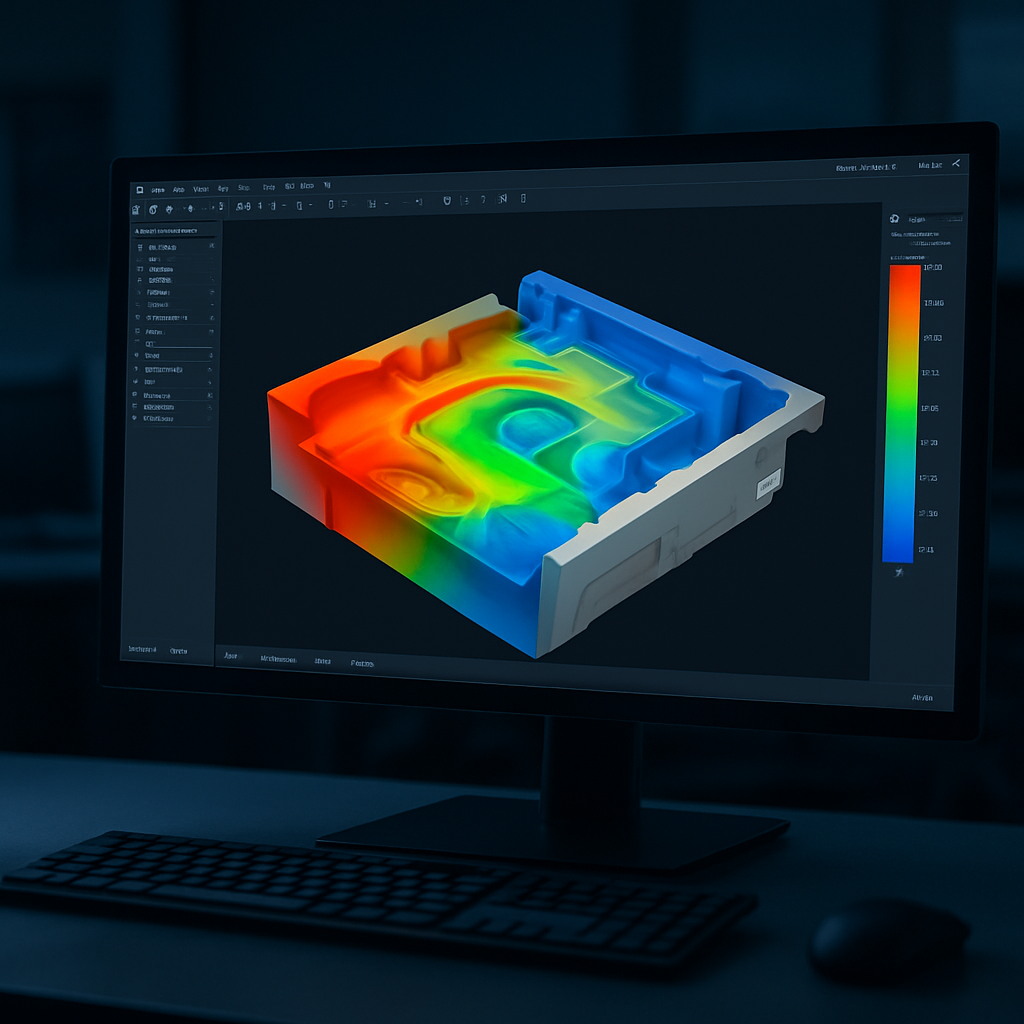
Moldflow casting simulation showing aluminum flow heat map Moldflow fill & solidification analysis

DFM runs on every mold — no exceptions

Design for Manufacturability checks whether your part can be cast cleanly before any steel is committed. It catches the problems that cause rework:

  • Wall thickness — uneven sections that invite shrinkage, porosity, or gas pockets
  • Draft — insufficient angle that drives soldering and ejection damage
  • Layout — first-pass parting line, gate, and overflow positions

You get a preliminary DFM review at quote stage, and a detailed product DFM report once the order is placed.

Moldflow runs when geometry calls for it

Moldflow analysis simulates how the aluminum fills, flows, and solidifies, using software such as MagmaSoft and AnyCasting. It predicts where gas, shrinkage, cold shuts, and air entrapment form, then validates the runner, vent, and cooling layout.

We are straight about this: not every mold needs Moldflow. Simple, well-understood parts move directly to mold design on engineering judgment. For complex geometry — thin walls, deep ribs, tight sealing surfaces — we recommend the simulation, because catching a flaw on screen costs far less than recutting steel.

The result is a mold validated twice before it exists, with reports you can review and keep on file.

When DFM flags a hot spot that straight water lines can't cool, we have a sharper tool for it.

Send us your part drawing — we'll return a preliminary DFM review before you commit to tooling.

Request a Free Preliminary DFM Review
Conformal Cooling

3D-Printed Conformal Cooling for Aluminum Die Casting Molds

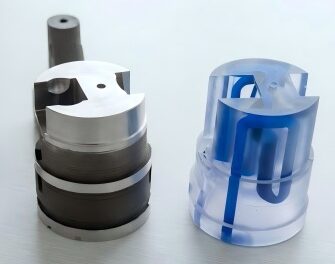
Traditional cooling lines are drilled straight. They can't follow a curved cavity, so heat collects in the spots they miss — the exact hot spots that cause shrinkage and cracking. Conformal cooling solves that by printing channels that hug the cavity contour, so coolant reaches the heat instead of skirting it.

We print these inserts from hot-work tool-steel powder, then finish-machine them for fit. We use them where they pay off: long slender cores, deep ribs, and complex inserts prone to hot spots — not across an entire large mold.

3D printed metal conformal cooling insert with internal channels
01

50% Shorter Cycle Time

Channels sitting close to the cavity surface pull aluminum heat out fast. Across real jobs that cuts cooling time 30–50%, shortens the casting cycle, and lowers your per-part cost over a production run.

02

Fewer Shrinkage Defects & Less Warpage

Drilled lines leave complex zones unevenly cooled, which drives shrinkage and distortion. Conformal channels hold temperature even across the cavity, so castings come out dimensionally stable and reject rate drops.

03

Longer Mold Life

Local overheating is a leading cause of cracking failure. By holding the cavity at an even temperature, conformal cooling lowers thermal fatigue and pushes mold life past the straight-line baseline.

Conformal cooling pairs with our existing 3D printed cooling capability, so the insert is engineered and built under one roof. With cooling solved, the next question is fit — the equipment that holds your tolerances.

Capabilities & Equipment
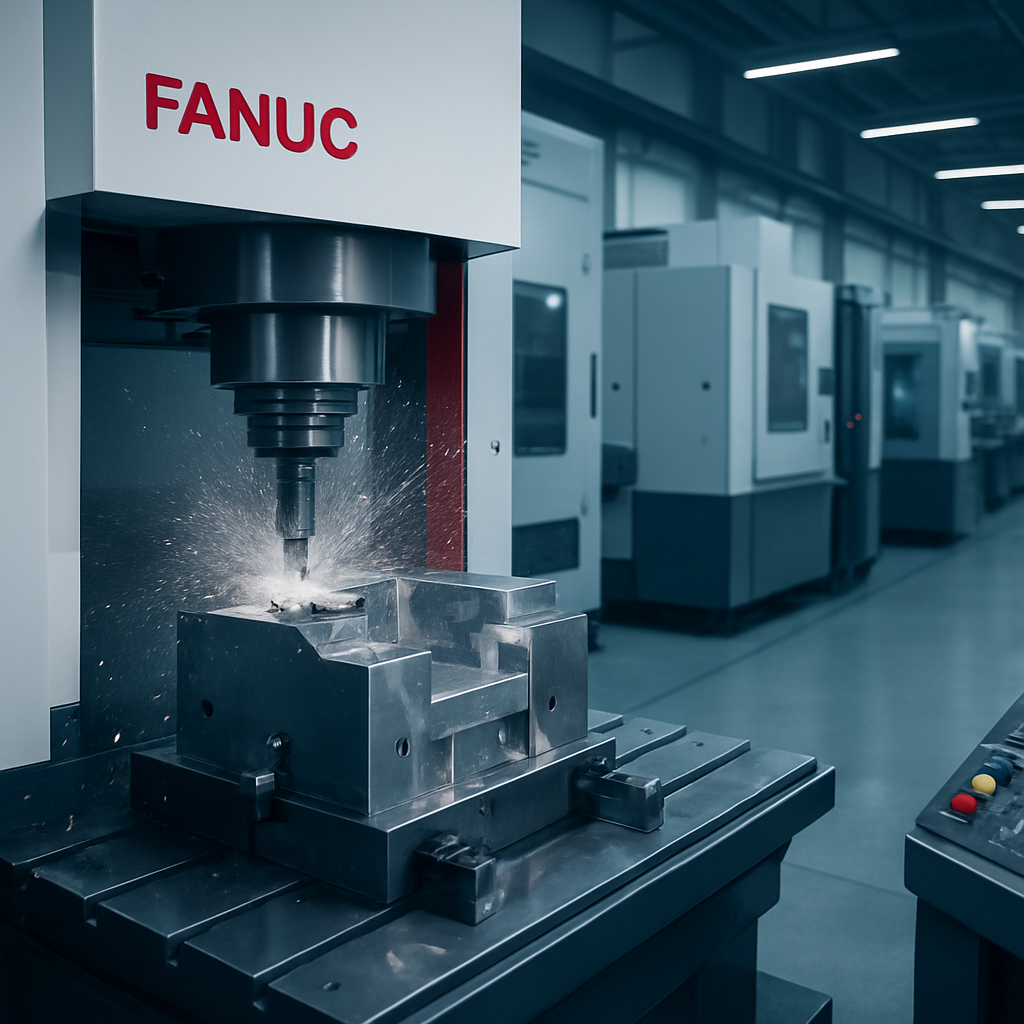
Fanuc CNC machining center cutting a steel mold block

Custom Aluminum Die Casting Mold Capabilities & Equipment

Your part geometry sets the spec, not a standard catalog. Every custom aluminum die casting mold we build is machined and measured on equipment we own and run in-house, so tolerances stay traceable from rough cut to final report.

Machining floor

Handles cavity, core, slide, and insert work:

  • · Fanuc CNC and multiple precision machining centers
  • · Sodick mirror-finish EDM for fine detail, sharp corners, and cosmetic cavity surfaces
  • · Milling, grinding, drilling, tapping, and engraving machines for slides and inserts

Inspection chain

Dimensions get verified, not eyeballed — from coordinate measurement to gauge checks:

  • · CMM (three-coordinate) and optical projector for geometry and profile
  • · Hardness tester for incoming and heat-treated steel
  • · Pin, plug, thickness, and go/no-go gauges, plus calipers, micrometers, and height gauges

This matters when your part carries deep ribs, thin walls, or tight-tolerance bosses. We machine to drawing, then record what we measured — so when your team reviews first article, the numbers are already on paper.

A finished tool is only worth running if it produces parts at volume, which is exactly where many overseas projects stall.

Mold To Production

From Mold to High-Volume Aluminum Die Casting Production

You don't have to ship the tool, re-qualify it, and chase a second supplier for production. Your mold can stay on our floor and run, with the same engineers who cut it owning the casting phase.

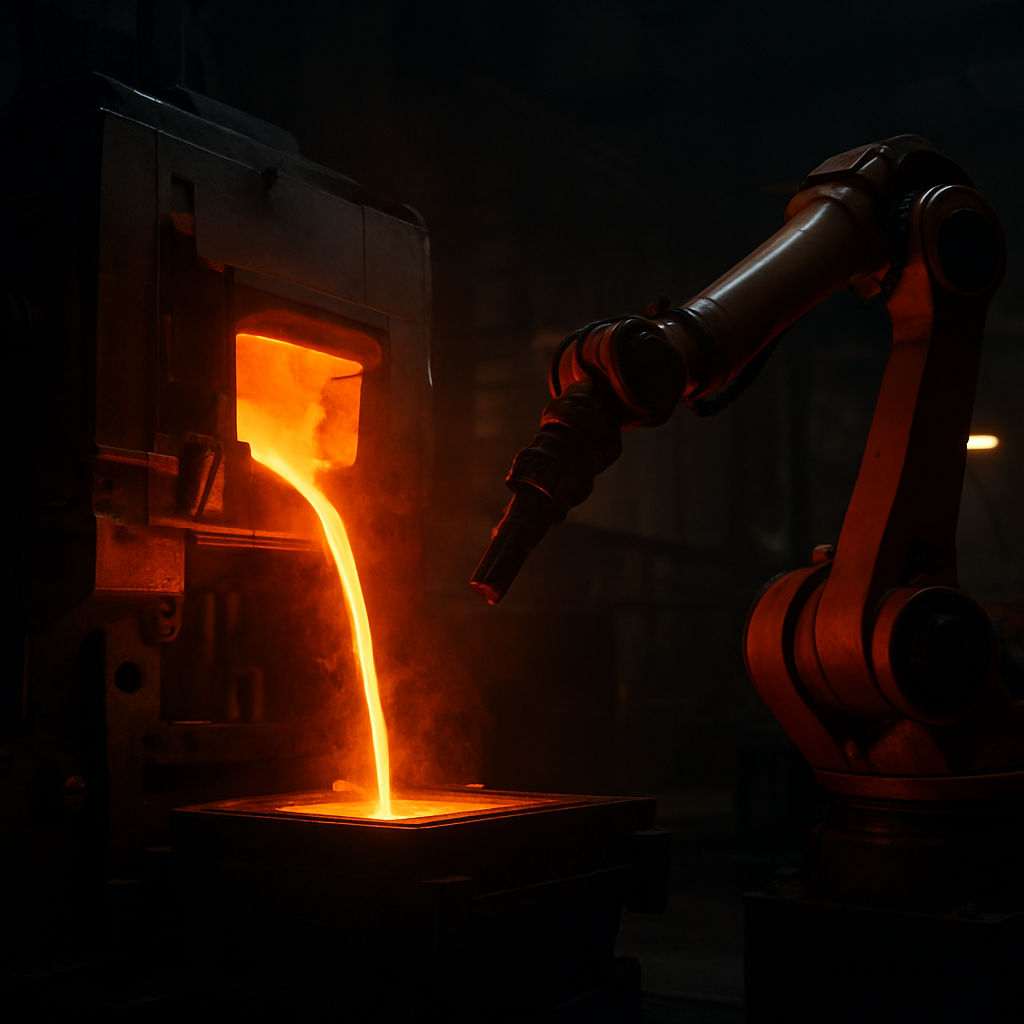
Aluminum runs through a cold-chamber process, and alloy choice drives part performance. We cast the grades your application calls for:

Cold chamber aluminum die casting machine pouring molten aluminum
Alloy Why it's chosen Typical use
ADC12 Good fluidity, low shrinkage, easy to machine Appliance and structural housings
A380 Strong mechanical and high-temperature properties Automotive and transmission housings
A356 Pressure-tight, higher elongation Sealed and load-bearing parts
A360 / B390 Corrosion resistance / high wear hardness Specialty and high-wear components

Across both molding and production, the same traceable QC system follows your part — material lot, shot records, and dimensional checks tie back to one job number. When a defect shows up at part 5,000, we can trace it instead of guessing.

One question decides material before any of this: aluminum or zinc?

Material Decision

Aluminum vs Zinc Die Casting Mold — Which to Choose?

The choice starts with melt temperature, and that single number drives tool life, process, and cost. Use this as a first-pass filter:

Factor Aluminum Zinc
Casting temperature ~650–700°C ~400°C
Process Cold chamber Hot chamber
Tool life Lower, from thermal fatigue 5–10× longer per tool
Part traits Light, corrosion-resistant, high strength-to-weight Fine finish, high hardness, very thin walls
Best fit Structural, heat-dissipating parts Precision hardware, decorative, connector shells

Aluminum's higher pour temperature is what makes steel grade, cooling layout, and surface treatment matter — the hotter the melt, the harder the tool works on every shot. Zinc runs cooler, so its molds live far longer but suit a different part class.

If your part is thin-walled, decorative, or dimensionally critical at small sizes, zinc usually wins. See our zinc die casting mold page for that material's tooling detail. Both metals serve the same industries — and those sectors tell you fast whether your part belongs here.

Still unsure how to choose? Upload your files now!

Upload Your Files
Industries We Serve

Industries We Serve

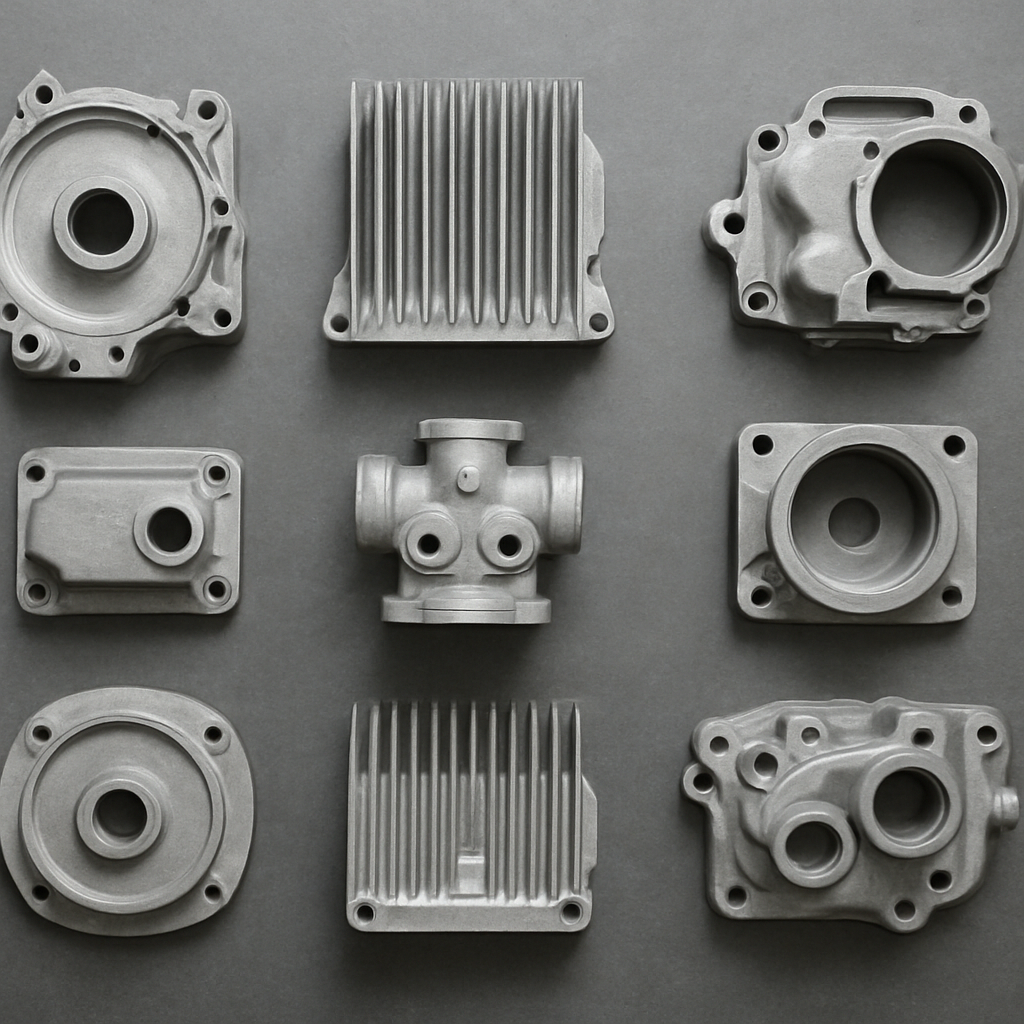
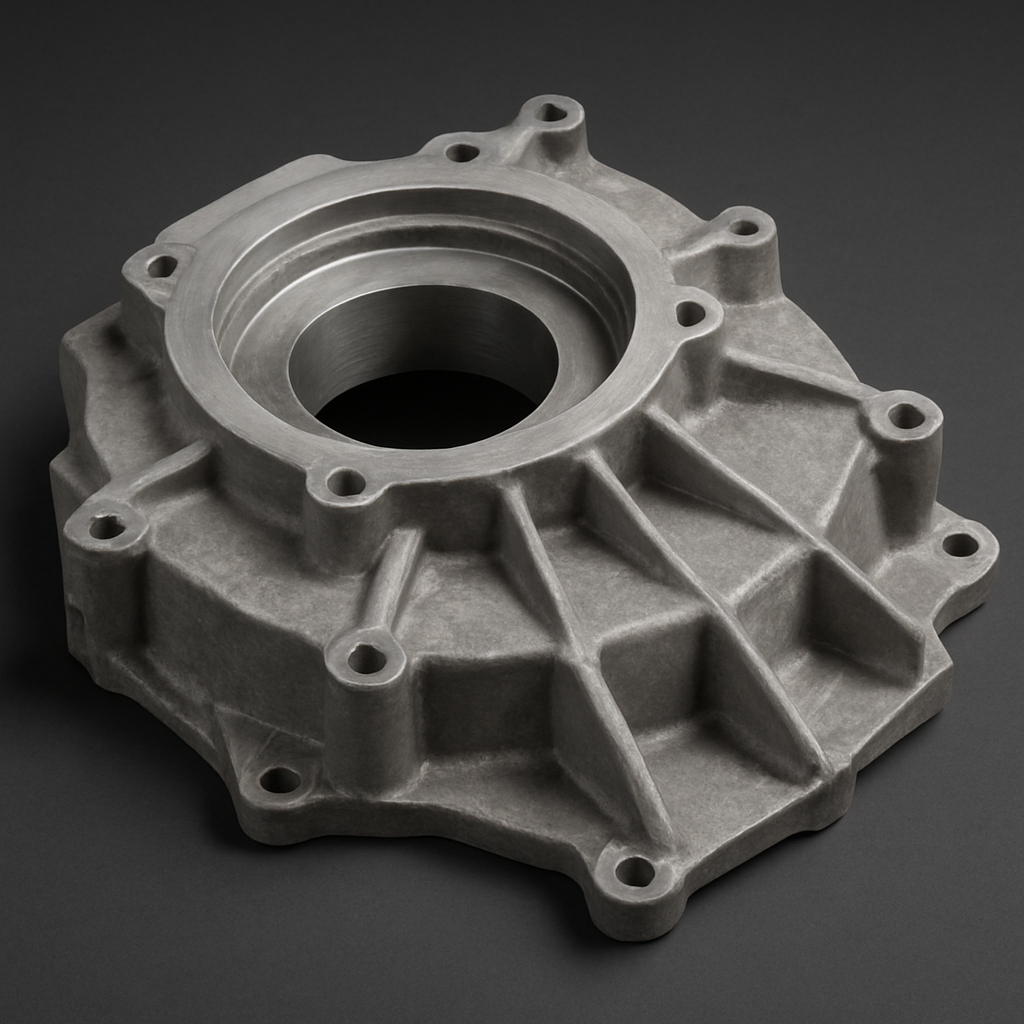
Aluminum die casting earns its place wherever weight, heat, and dimensional repeatability collide. Across our export work for North America and Europe, parts ship into demanding sectors worldwide.

Each sector pulls on a different aluminum trait: thermal conductivity for heat sinks, strength-to-weight for chassis, pressure tightness for valve bodies. We've cut tooling against all of them, so your application rarely lands somewhere we haven't already solved.

What turns that experience into something you can audit is the paperwork that leaves with every tool.

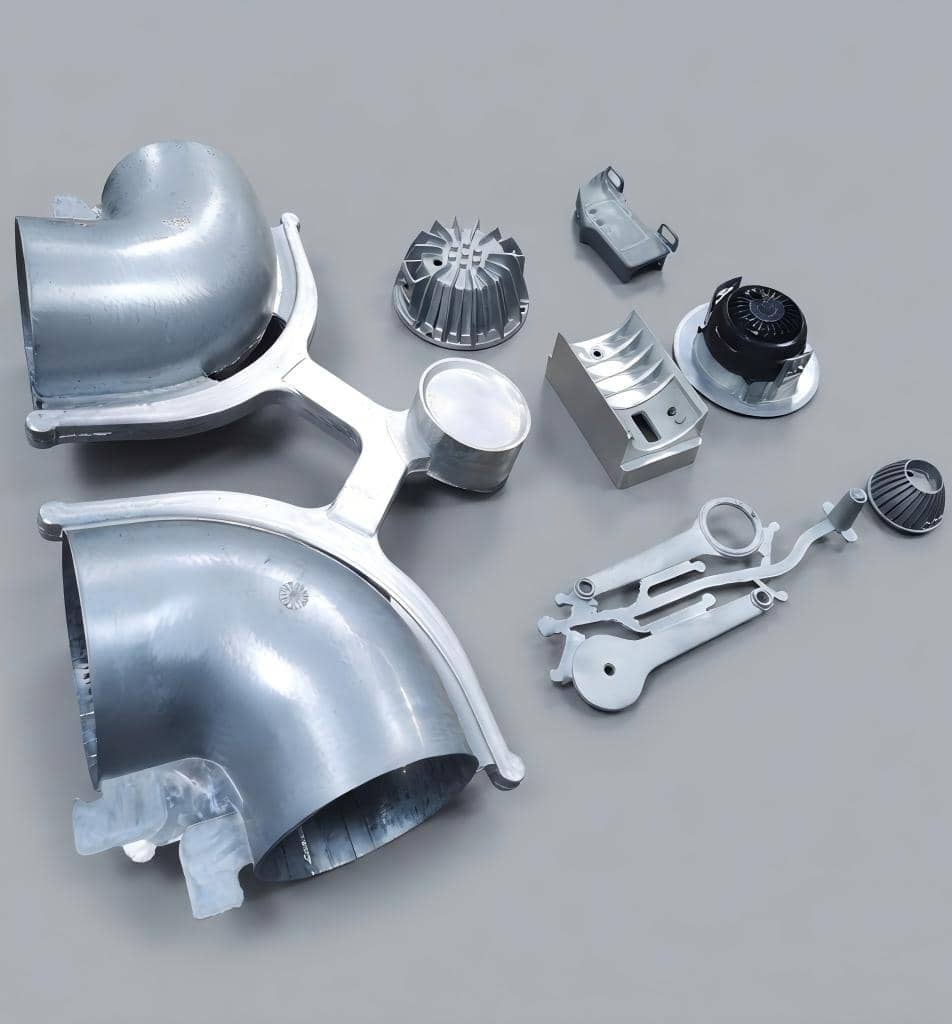
Array of die cast aluminum parts including housings and heat sinks

Automotive & EV

Chassis brackets, shock mounts, transmission housings, battery-pack enclosures, motor and ECU housings

Electronics & Telecom

Laptop and device housings, 5G base-station heat sinks, communications chassis

Aerospace & Defense

Cabin structural parts, instrument frames, radar mounts

Machinery & Industrial

Pump housings, compressor parts, hydraulic valve bodies

Lighting

LED street-light and fixture housings

Documentation & Pricing
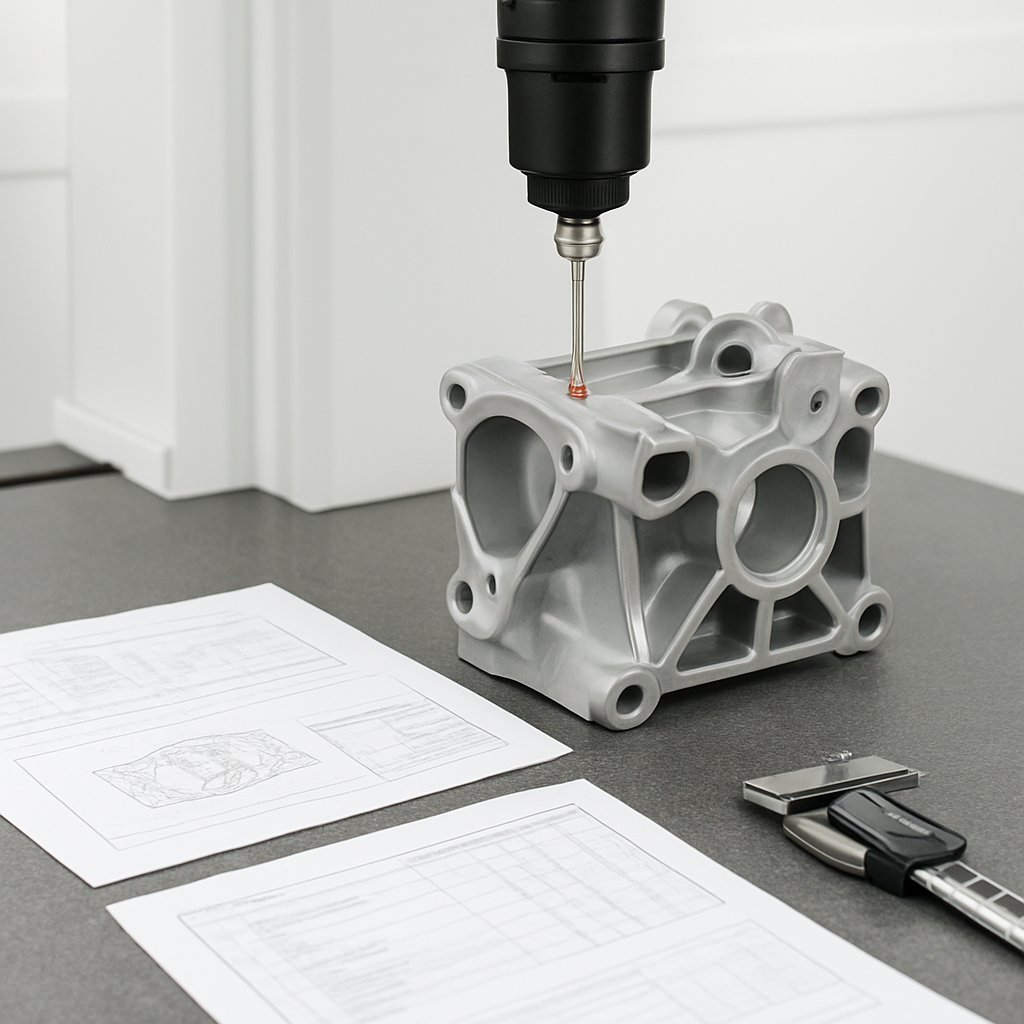
CMM probe inspecting a precision aluminum cast part in a QC lab

Quality Documentation & Transparent Pricing

Engineers in the US and Europe buy on documents, not promises. As one of the aluminum die casting mold suppliers in China that builds to Western file standards, we deliver a paper trail you can hand straight to your quality team.

Your delivery package includes

  • CMM dimensional report tied to your drawing's critical dimensions
  • Material certificate for the mold steel and casting alloy
  • Trial-shot (T1) report documenting first-article results
  • Full traceable QC records linked to one job number

Certification

We hold ISO 9001. We don't carry IATF or medical certification, because we supply tooling and components rather than assembling finished machines — and our automotive and medical clients have never required it of us. We'd rather show you the report than a certificate that doesn't fit the work.

Transparent pricing

The quote you approve is the price you pay. No hidden line items, and no low entry number followed by a mid-project increase once steel is cut. If scope changes, you see it before we proceed.

Time-zone overlap

Time zones don't slow this down. Our project team works until 8:00 PM local to overlap your hours, and your English-fluent engineering contact joins video reviews without a translator in the loop.

Documents prove the work. The next question is who stands behind it when something goes wrong.

Why KTM

Why KTM Is an Engineer-Led Aluminum Die Casting Mold Manufacturer

KTM is a mold factory in Dongguan, Guangdong — not a trading desk that forwards your drawings to a shop you never see. Design, CNC machining, EDM, and dimensional inspection run under one roof. The engineer who reviews your part is the same engineer who answers when a question comes up at the bench.

That structure starts at the top. Our founder holds a degree in mold design and manufacturing and has spent 20+ years on the floor. He still leads the technical side of every tooling problem the factory takes on — not a sales-driven owner, but the person who solves the hard ones himself.

Experienced mold engineer examining a steel die casting mold

What that structure solves for you

01

A casting problem gets diagnosed by the engineer who designed the tool — not relayed through a desk that can't read a flow simulation.

02

A risky feature gets fixed on the design table before steel is committed, instead of surfacing as a second tool after the first one fails.

03

A scope change reaches you from the person cutting the steel, with cost shown before work continues — never as a silent mid-build invoice.

04

A video review runs in fluent English with someone who reads the tooling, so one call settles what an email thread drags out for a week.

As an aluminum die casting mold manufacturer, we ship to the US, Canada, Mexico, Costa Rica, and across Europe — UK, Germany, France, Italy, Spain, Sweden, and Poland among them. It's the reason several clients have stayed with us for 4, 6, and 10+ years.

An engineer-led shop is easiest to judge by finished tools — so here are three.

Case Studies

Aluminum Die Casting Mold Case Studies

Specs and certificates describe capability; finished tools prove it. Each case below is a real failure mode we engineered against — what went wrong, what we changed, and how the tool ran after. Alloys, steel grades, and cavity counts are listed so you can map them to your own part.

Die cast aluminum EV motor housing part

Case 1 — EV Motor Housing

Alloy A380
Steel H13, nitrided
Cavities 1
Problem Heat checking on a thick boss after early production runs
Fix Repositioned cooling, added a local insert at the hot section
Result Surface cracking eliminated; tool returned to stable production

A thermal node on the boss was driving early surface fatigue. Moldflow flagged it before steel was cut, and the cooling layout was reworked at the design stage rather than on a second tool.

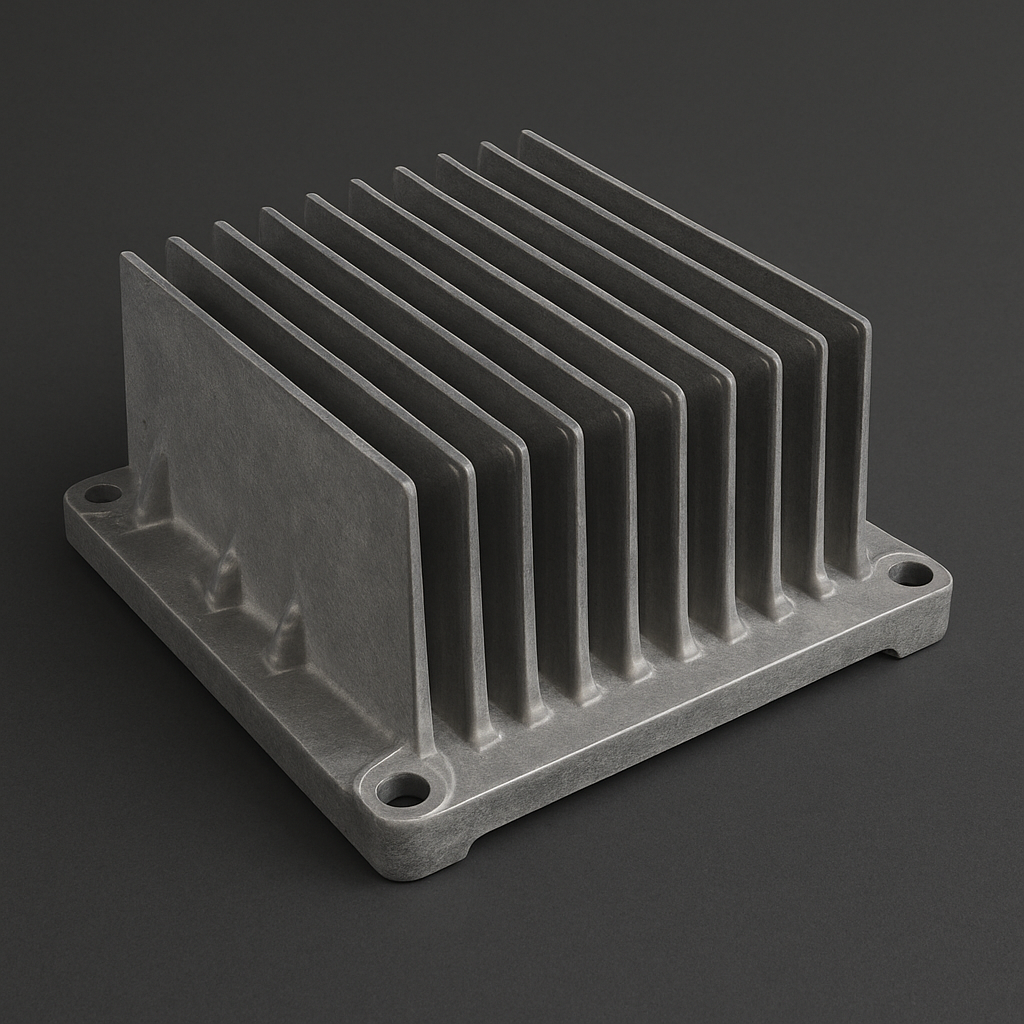
Die cast aluminum 5G base station heat sink with deep fins

Case 2 — 5G Base-Station Heat Sink

Alloy ADC12
Steel 8407 core
Cavities 2
Problem Slow solidification on deep, thin fins; shrinkage at the fin roots
Fix 3D-printed conformal cooling insert following the fin contour
Result Cooling time cut roughly 35%; fin-root shrinkage cleared

Straight-drilled lines could not reach between the fins. A conformal insert in hot-work tool-steel powder pulled heat evenly and stabilized the section.

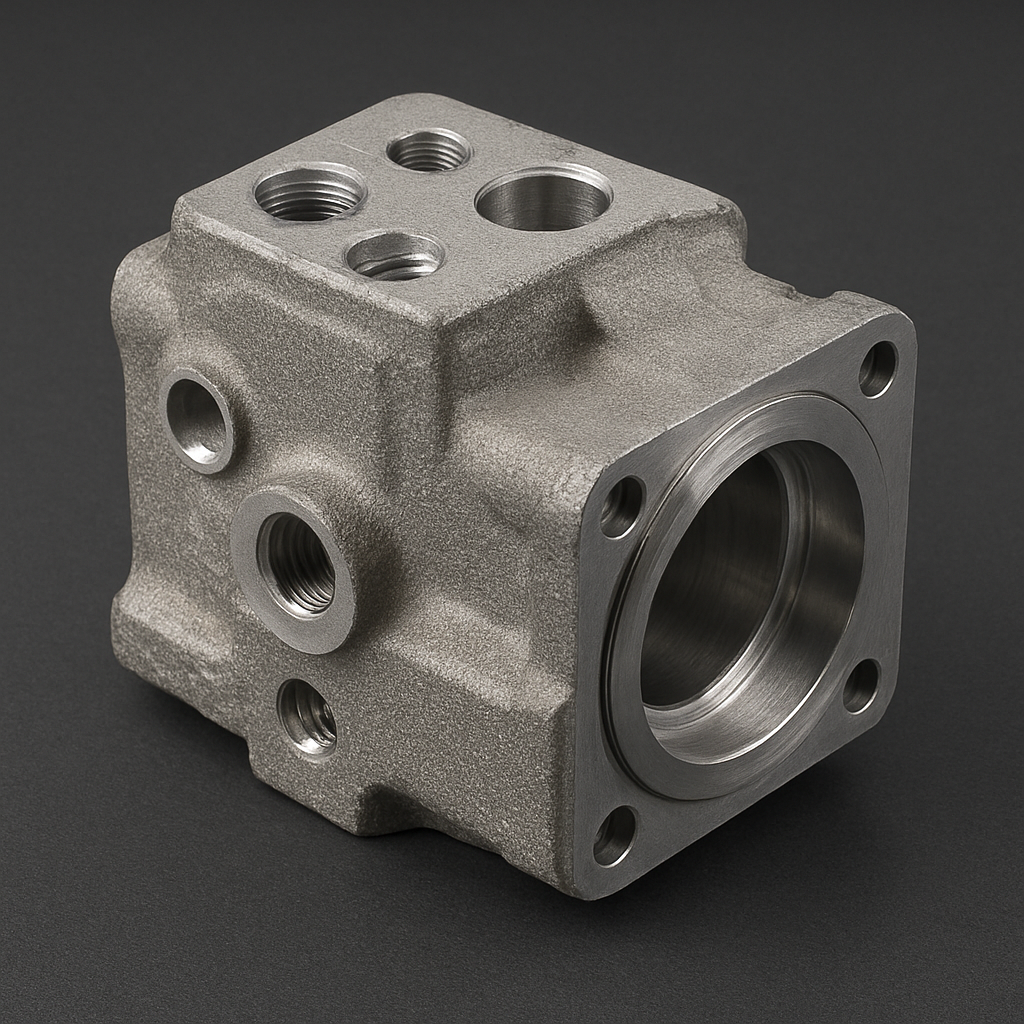
Die cast aluminum hydraulic valve body part

Case 3 — Hydraulic Valve Body

Alloy A356
Steel SKD61
Cavities 1
Problem Erosion at the gate and porosity in a pressure-sealing wall
Fix Re-cut gate to lower jet velocity; revised overflow and venting
Result Gate wear slowed; sealing wall passed pressure check

A356 was specified for pressure tightness. The first DFM pass showed the gate driving a high-velocity jet onto the core, so gating and venting were rebuilt before tooling started.

Each tool ships with CMM data, material certs, and a trial report — the paperwork that lets you sign off without a site visit.

Facing heat checking, porosity, or soldering on your current mold? Talk to our engineers.

Send Your Part Drawing

The questions below cover what engineers ask before that first drawing changes hands.

FAQ

Aluminum Die Casting Mold FAQ

Macro detail of a die casting mold steel surface
Can aluminum be die cast?
Yes — aluminum is the most common die casting metal. Its low density and high strength-to-weight ratio suit thin walls and complex geometry, while good thermal and electrical conductivity make it the default for housings and heat sinks. The trade-off is the casting temperature, around 650–720°C, which is why mold steel and cooling design matter so much.
Why is aluminum used in die casting?
Weight, conductivity, and corrosion resistance. Aluminum delivers durable, lightweight parts where load and heat both matter — EV motor housings, gearbox cases, 5G heat sinks. It machines and finishes well after casting and holds dimensional stability across high cavity counts.
What is the minimum wall thickness for aluminum die casting?
Typical production sits between 1.0 mm (0.040 in) and 2.0 mm (0.080 in). With optimized gating and conformal cooling, walls down to 0.5 mm (0.020 in) are achievable — but only after Moldflow confirms the section fills before short shots or cold shuts appear.
What is the best aluminum alloy for die casting?
A380 for most cases — strong, ductile, corrosion-resistant, and easy to machine, weld, and repair. ADC12 is the high-volume workhorse with excellent flow and low shrinkage. A356 is chosen for pressure-tight parts, B390 for high-wear applications. The right alloy depends on load, sealing, and finish, not popularity.
How much does aluminum die casting tooling cost?
A die casting mold typically runs 5,000 to 75,000, driven by part size, cavity count, and complexity. We quote with no hidden fees and no mid-project price change once the tool is signed off.
What is the life of an aluminum die casting tool?
Cast at roughly 1,060–1,220°F, a well-built aluminum mold lasts up to 100,000+ shots. Brass, cast near 1,640–1,720°F, often fails by 10,000 cycles from thermal fatigue. Tool life depends on steel grade, surface treatment, and cooling balance — not luck.
How much does it cost to die cast aluminum parts?
Part cost typically ranges from 0.20 to 5 for simpler designs, set by weight, cycle time, and finishing. Magnesium generally runs higher. Conformal cooling that trims cycle time directly lowers your per-part cost over a production run.

One short step turns these answers into a quote on your specific part.

Start Your Project

Start Your Aluminum Die Casting Mold Project

Send your drawing. Get a preliminary DFM review back — before you commit to tooling. No sales script, no pressure.

You get a reply from an engineer within 24 hours and a quote with full part numbers and zero hidden fees.
Attach or tell us your alloy, volume, tool steel, and main concern.