Medical Injection Molding for Medical Devices
Precision Tooling & Clean Production
in China
Medical device molding problems are often created before the tool is built: thin walls can warp, deep undercuts can prevent release, and an unsuitable resin can fail after sterilization.
KTM is a medical tooling and injection molding partner in Dongguan, China. Our engineer-led review covers part release, wall thickness, gating, material requirements and inspection planning before medical mold steel is cut.
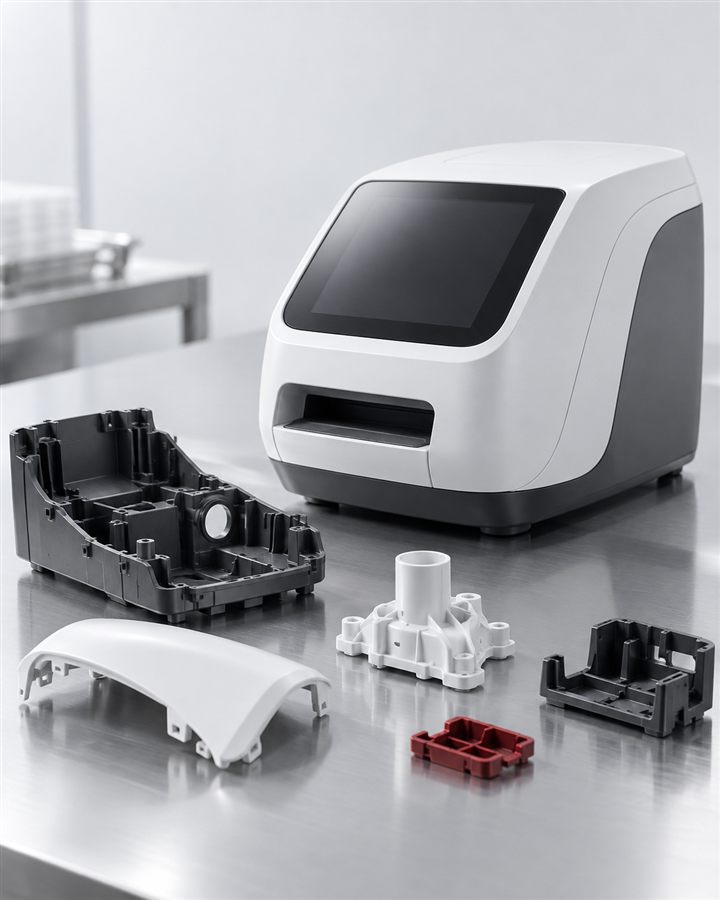
Medical Injection Molding for Device Components
Design, Tooling and Process Control
Medical injection molding converts specified medical-grade thermoplastics into repeatable medical equipment housings, bezels, brackets and structural parts.
KTM produces these precision medical plastic components in a climate-controlled FANUC workshop with robotic handling.
We address molding risks at the drawing stage, before they become tool changes or rejected parts. Most recurring defects are easier to prevent during medical DFM than to correct after tooling.
Medical Molding Risks We Address Before Cutting Steel
| Failure Mode | Where It Bites | How We Catch It Early |
|---|---|---|
| Sink marks & warpage | Thick sections, uneven cooling | Wall-thickness review + mold-flow on complex parts + cooling fixtures |
| Material / cleaning compatibility | Specific grade and service conditions reviewed | Customer-defined sterilization cycle; grade-specific review |
| Splay (silvery streaks) | Hygroscopic resins not fully dried | Resin drying protocol before each run |
| Undercuts won't release | Deep cores, sharp internal corners | Slider / lifter design or geometry changes feedback |
| Out-of-spec micro features | Flow shifts at small scale | Decoupled, data-driven process setup |
| Incomplete documentation | Traceability gaps at audit | DFM, sampling and CMM reports on file |
Our Medical Injection Molding Capabilities
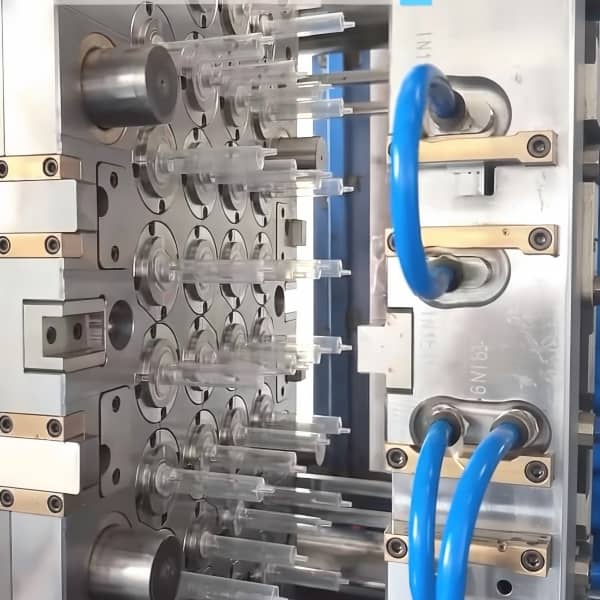
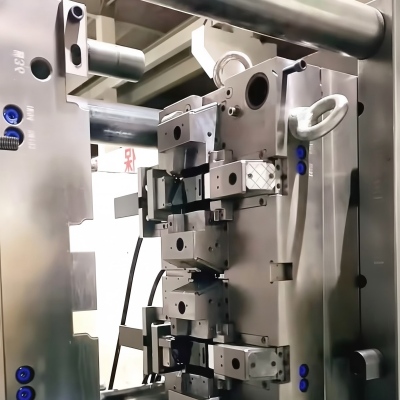
Medical device parts often need more than a single-cavity tool. KTM designs the mold architecture around part geometry, resin behavior, sterilization requirements and production volume—from prototype tooling through hardened-steel production.
Standard & Hot-Runner Molds
For medical housings, bezels and brackets, we specify cavity layout and hot-runner gating around resin flow, visible surfaces and critical assembly dimensions.
Overmolding
For medical grips and covers, we review substrate bonding, shutoffs and sealing edges, then assess the selected material pair against the device cleaning method.
Insert Molding
For connector bodies and sensor housings, insert tooling positions metal contacts or threaded inserts; T1 samples are checked for flash, retention and assembly fit.
Two-Shot (2K) Molding
Qualified partner 2K presses form rigid and soft features in one cycle for medical grips and covers; KTM reviews interface geometry, material pairing and inspection requirements.
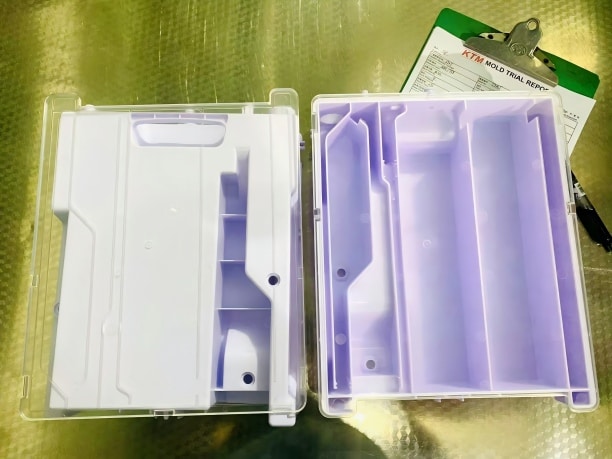
For double-shot, gas-assist and nitrogen-assisted work, our long-term partner lines run machines from 450t to 3,300t, so part size never caps a project.
When a geometry can't be steel-molded at low volume, we route it through vacuum casting rather than force a compromised tool.
Medical-Grade Materials and Sterilization Compatibility
Material selection affects sterilization performance, dimensional stability and cosmetic life. The table is a design-stage guide to resins used in medical components, possible sterilization methods to validate and typical applications.
| Material | Key Property | Methods to Validate | Typical Application |
|---|---|---|---|
| Polycarbonate (PC) | High clarity, impact strength | Gamma, EtO | Housings, sight windows |
| Polypropylene (PP) | Chemical resistance, fatigue life | Autoclave, EtO | Fluid components, hinges |
| Polystyrene (PS) | Rigidity, dimensional stability | EtO, gamma | Diagnostic consumables |
| PEEK | High heat and load resistance | Autoclave, gamma | Structural, load-bearing parts |
| LSR (silicone) | Biocompatible, flexible | Autoclave, gamma | Seals, gaskets, soft grips |
| TPE | Soft-touch, bondable | EtO, gamma | Overmolded grips |
Medical Device Applications We Mold
KTM focuses on medical device housings, bezels, structural brackets and cosmetic enclosures—the components that must hold fit, finish and cleanability requirements. Typical medical plastic injection molded parts include:
- ►Diagnostic and patient-monitoring equipment housings
- ►Display bezels and control-panel frames
- ►Structural brackets, mounts and internal carriers
- ►Cosmetic housings with validated painting and silk-screen marking
- ►Drug-delivery device housings and test-equipment components
Medical Engineering Evidence: DFM, Mold-Flow, T1 Sampling and CMM
KTM supports medical device injection molding with records that let your engineering team review the process before production release. Each program produces a traceable evidence trail:
Preliminary medical DFM flags draft, undercuts and wall-thickness risks
Detailed DFM records gate, cooling and parting-line decisions after order
Mold-flow assessment checks fill, cooling and warpage for complex parts
T1 sampling records molding settings and first-article inspection results
CMM reports check critical medical housing and assembly dimensions
Material certificates document the approved resin grade and lot identity
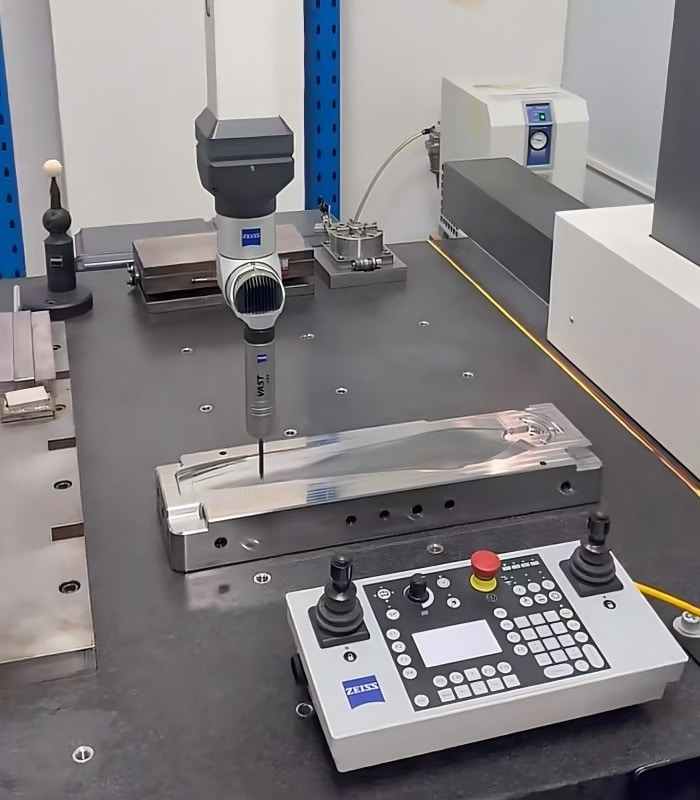
The equipment behind those reports is on the floor. We cut steel on FANUC CNC machining centers and a Sodick mirror-finish EDM, and verify parts with a CMM, a 2D projector, a hardness tester, and pin, plug and thread gauges.
Measurement is built into the workflow, not added at the end — which is what lets buyers move from sample to production without surprises.
Two Ways to Work With Us: Mold Export vs. In-House Production
Medical OEMs and contract manufacturers choose between receiving a validated mold or receiving finished medical plastic parts. KTM supports both routes with the same tooling documentation and engineering contact.
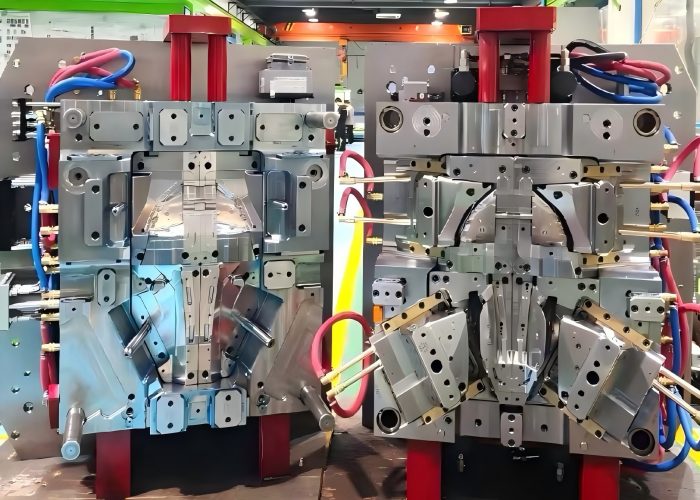
Medical Injection Mold Export
We design and cut the medical injection mold, validate the first trial, then ship the tool to your facility for production on your qualified presses.
You receive the sampling report, CMM data and full tooling documentation with the shipment. The mold is yours, the IP is yours, and tooling drawings travel with it.
This route covers standard, hot-runner, overmolding, insert, two-shot and gas-assist tooling.
In-House Molding Production
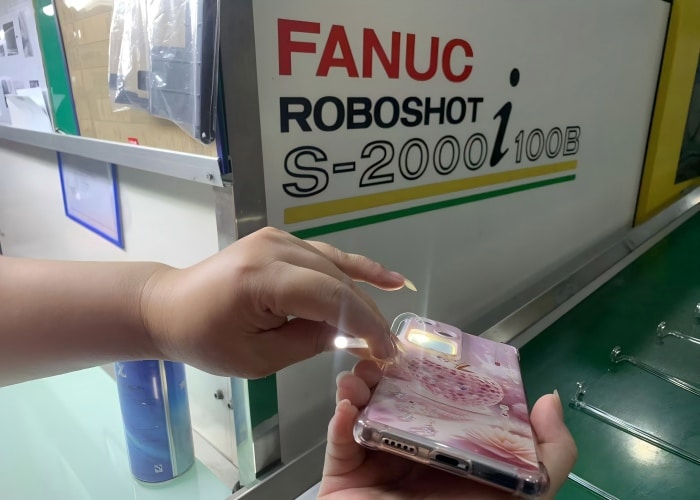
Prefer finished parts? KTM keeps the approved tool and runs it in our FANUC injection molding workshop. Our 40 machines cover 90t to 400t, with robotic handling for stable repeat runs and documented setup control.
For larger parts, qualified partner presses extend capacity up to 3,300t; the tool, resin and inspection requirements remain defined in the project documentation.
You receive inspected medical plastic parts, not only a mold.
Medical Injection Molding Case Studies
These medical housing and structural-part examples are described by function because client identities remain confidential under NDA. Each summary shows the tooling decision, validation focus and evidence supplied.
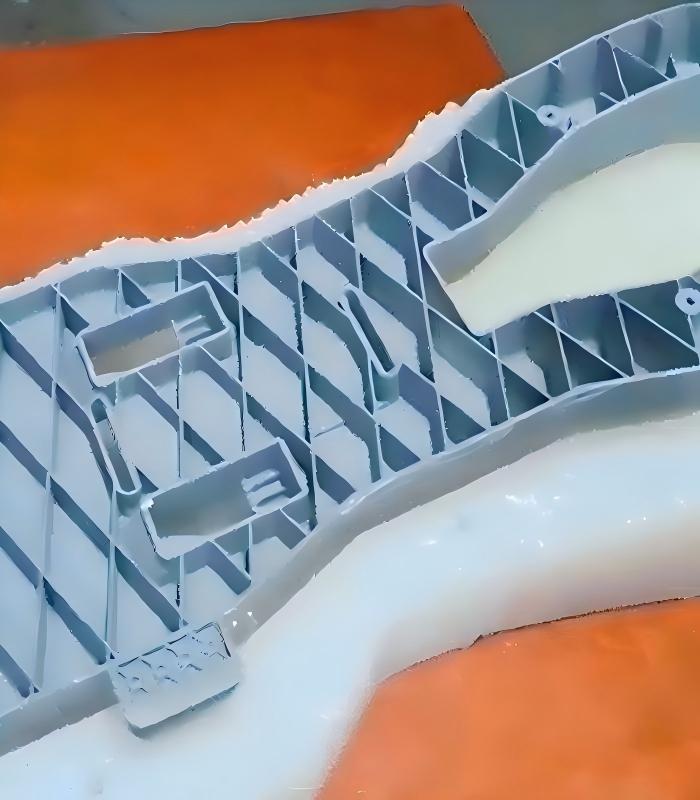
Case 1 — Diagnostic Housing Validated Without Production Steel
Deep internal undercuts prevented reliable steel-tool release, while the initial quantity was too low to justify production tooling — plus a cosmetic spec calling for multiple spray-paint colors and silk-screen marking.
Vacuum casting validated fit and cosmetic finish at low volume, followed by in-house spray painting and silk-screen marking — the clean fit for short-run, structurally complex parts with demanding cosmetics.
Functional housings were delivered for design review without committing to a mold the geometry could not support.

Case 2 — Mirror-Finish Medical Housing on a Prototype Mold
Hold a high-gloss finish across the visible housing surface while maintaining fit at prototype volume.
S136 stainless tool steel provided polishability and corrosion resistance; the mirror surface was finished on our Sodick EDM and hand-polished by a senior technician.
Mirror surface met the customer's cosmetic standard, validated before any production commitment.

Case 3 — Internal Structural Component, 1 × 6 Hot Runner Mold
Hold assembly-fit dimensions across a medium-volume run on a functional internal component.
S136 hardened steel matched to the volume; DFM-optimized wall thickness and gate location to control sink and warpage; CMM-verified before shipment.
Fit tolerances held across the run, shipped with full dimensional reports.
Case 4 — High-Volume Internal Component, S136 Mold
A high-volume program needing long tool life and dimensional repeatability on a wear-prone resin.
S136 hardened steel for wear resistance beyond 500k cycles; balanced cooling and gating for cavity-to-cavity consistency; CMM verification across cavities.
Stable dimensions cavity-to-cavity at volume, with tool life supporting long-run production.
From Prototype to Production
The route depends on quantity, geometry release and validation needs. KTM maps the path before you commit to steel or production tooling.
Vacuum Casting
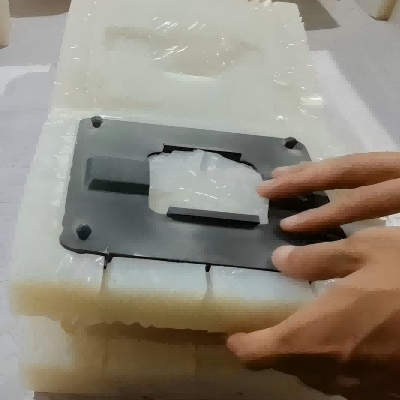
For small batches of medical equipment housings, vacuum casting tests fit and cosmetic finish when undercuts or changing geometry make steel tooling premature.
Prototype Molds in P20 or Aluminum
For medical enclosure design validation and limited runs, P20 or aluminum tooling enables T1 inspection before gate, wall and assembly details are finalized.

Hardened Steel Molds in H13 or S136
For repeat medical part production, H13 or S136 tooling is specified against expected volume, resin wear, cavity balance and dimensional inspection needs.
One honest note: if a part can't release from a steel mold, we tell you during DFM and recommend the geometry changes that make it moldable.
Flagging it early costs a conversation; finding it after the tool is cut costs a tool.
That staged path is how a 100-piece prototype becomes a six-figure production run under one medical prototype injection molding team, with no hand-off between shops.
From low-volume medical prototypes to production tooling, one engineer-led team keeps DFM, tooling, molding and inspection connected.
Upload Your Files → Free Preliminary DFMWhy Choose KTM for Medical Injection Molding
Our founder has formal mold design and manufacturing training and more than 20 years on the shop floor. He still leads technical reviews, so medical projects receive an engineering response on draft, gates, cooling, materials and inspection.
That focus is why clients stay: several have worked with us for 15, 10 and 6 years, shipping into the US, Germany, the UK, France, Italy, Mexico and Costa Rica.
- ✓Founder-led technical review for medical part and mold decisions
- ✓Experienced mold makers and a dedicated project engineer
- ✓English project communication with written DFM and trial updates
- ✓Quote scope records resin, tolerance, inspection and tooling ownership
- ✓ISO 9001 quality system with traceable project records

Want evidence before tooling? Send a STEP file or 2D drawing for a preliminary medical DFM review and an inspection-focused quotation.
Get a Transparent Quote — No Hidden FeesMedical Injection Molding FAQ
Get Your Free Preliminary DFM
Send a STEP or IGES model, 2D drawing, resin grade, target quantity and critical dimensions. Our medical molding team reviews parting lines, draft, wall thickness, gates and inspection requirements before recommending the tooling and production route. You receive a preliminary DFM response and a project-specific quotation.