01
DFM Review
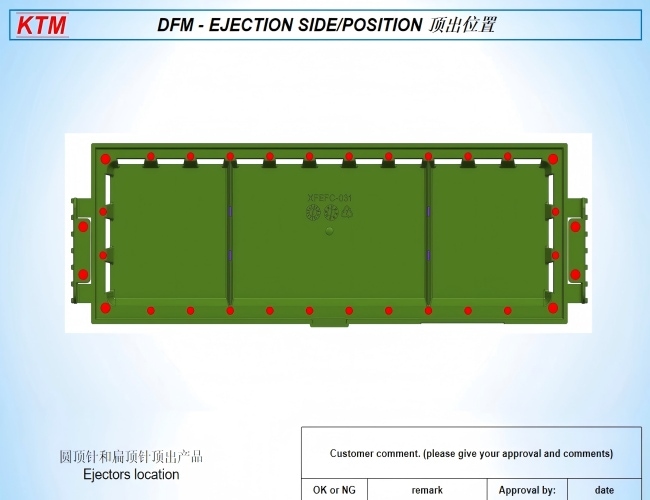
We review wall thickness, ribs, draft, gates and parting lines to identify sink, weld-line and ejection risk before tool design.
AUTOMOTIVE TOOLING & PRODUCTION
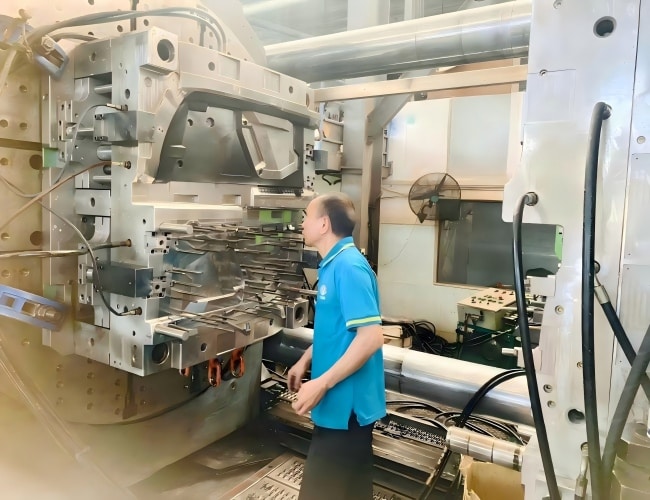
Automotive injection molding and mold manufacturing for interior, exterior and under-hood plastic components. We support engineering teams with preliminary DFM, complex ejection design, controlled trials and documented inspection before production release.
An automotive mold quotation starts with the drawing, material target, annual volume and quality requirements. We use the preliminary DFM to define the tool concept, gate strategy and ejection risks before engineering work is released.
AUTOMOTIVE INJECTION MOLDING
Automotive injection molding produces repeatable vehicle components by injecting a selected thermoplastic into a precision steel mold. It covers interior trim, exterior housings, lighting components and under-hood parts, from validation runs through production programs.
The process can combine complex geometry, surface texture and functional features in one part. Material behavior, cooling, gate design and ejection must be developed together before steel is cut, especially where the part has long flow lengths, visible grain or difficult undercuts.
ENGINEERING REALITY
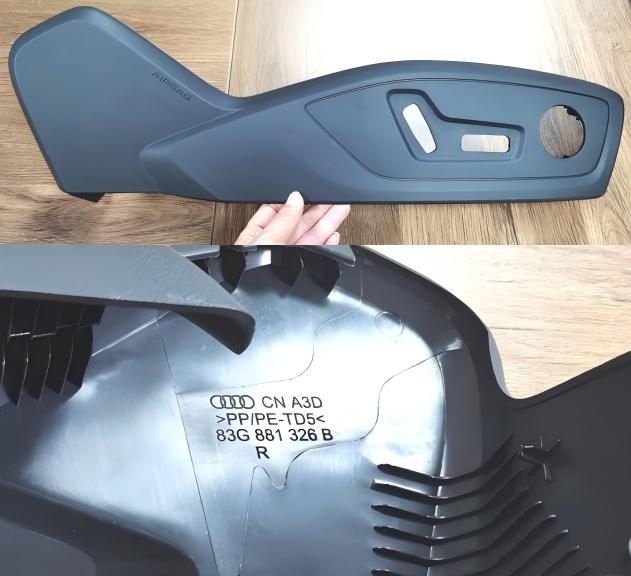
Automotive injection molding can replace multiple metal or machined components with lighter structural resin parts. A properly engineered tool repeats thin walls, snap fits, ribs and Class-A grain surfaces with a controlled cycle.
For EV lightweighting and established vehicle platforms alike, it offers design freedom and repeatability when the resin, gate, cooling circuit and ejection layout match the geometry.
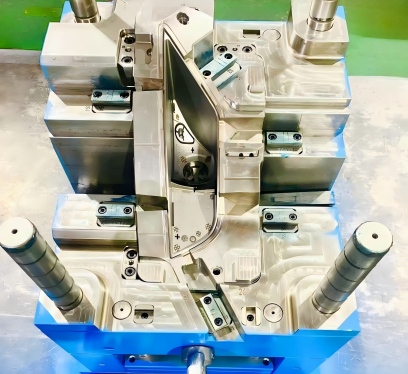
Glass fiber can improve stiffness and heat resistance, but fiber orientation can also influence directional shrinkage and warpage. Gate location, flow direction, cooling balance and part restraint should therefore be reviewed together before the tool design is released.
FROM DRAWING TO RELEASE
The molding cycle closes and clamps the tool, fills and packs the cavity, cools the part, then opens the mold for ejection. The machine cycle alone does not protect a complex automotive part. The engineering sequence around it determines whether a molded component remains stable, clean-surfaced and easy to inspect.
We use the six stages below to connect the drawing, tooling decisions, sample evidence and production release.
01
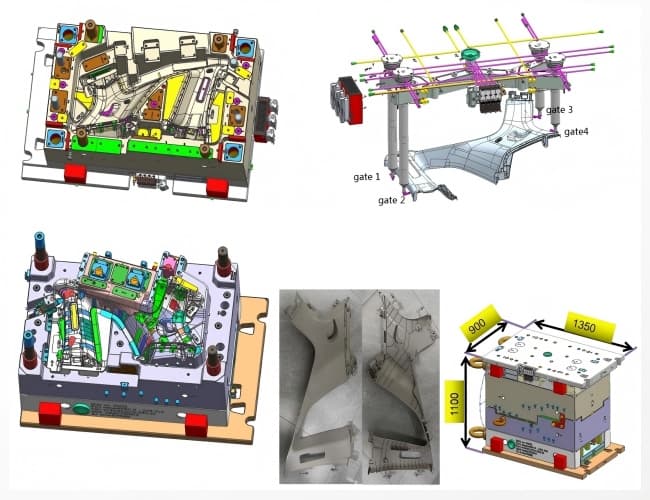
We review wall thickness, ribs, draft, gates and parting lines to identify sink, weld-line and ejection risk before tool design.
02
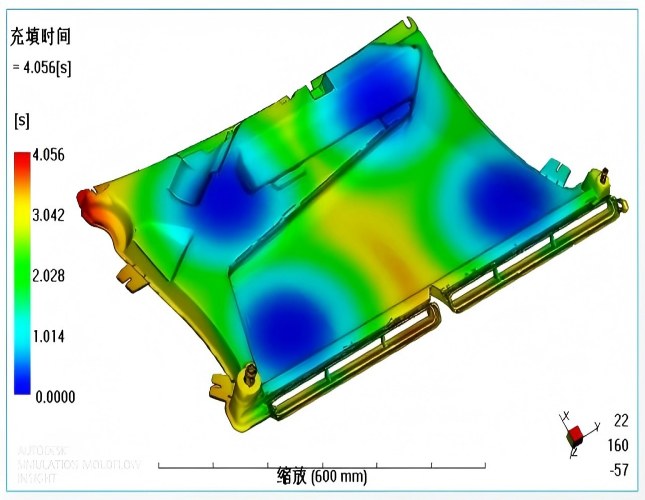
We simulate filling, packing and warpage on large or deep-rib parts; simple geometry is reviewed without unnecessary analysis.
03
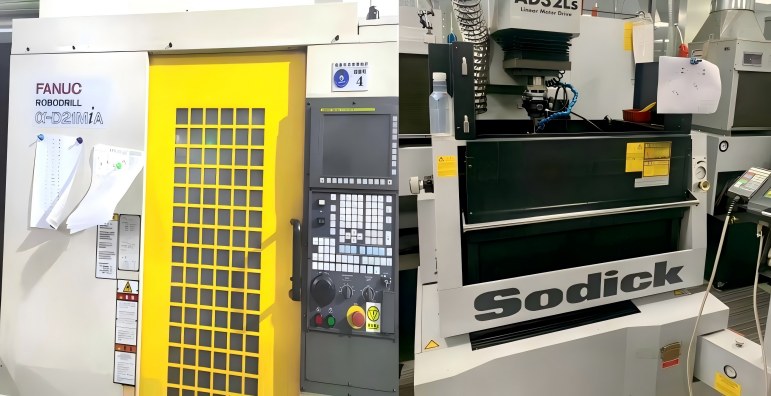
Approved DFM becomes a serviceable tool through FANUC machining, SODICK EDM, balanced cooling and appropriate hot-runner integration.
04
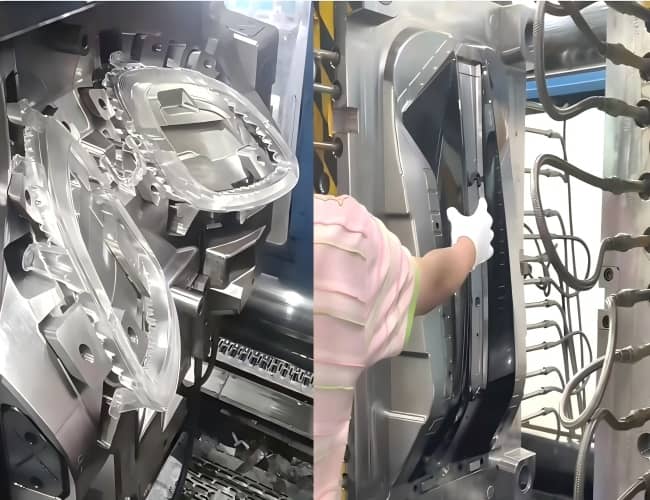
Trial samples are checked against the drawing; dimensional results, visible defects and agreed tooling corrections guide the next sampling stage.
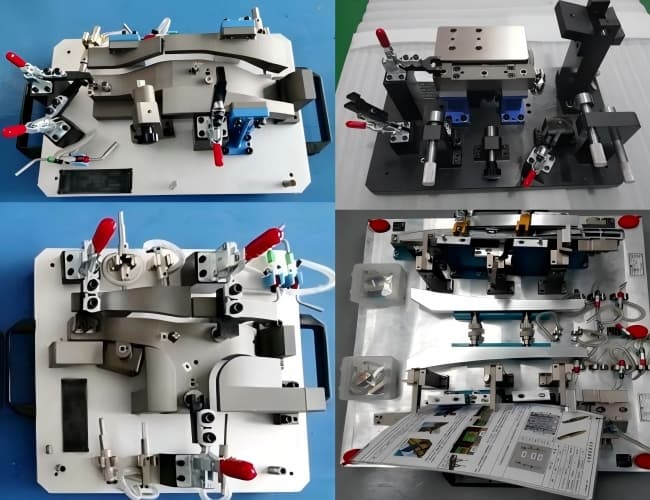
05
Where needed, controlled cooling fixtures support large parts; flatness, fit and critical dimensions are verified under agreed measurement conditions.
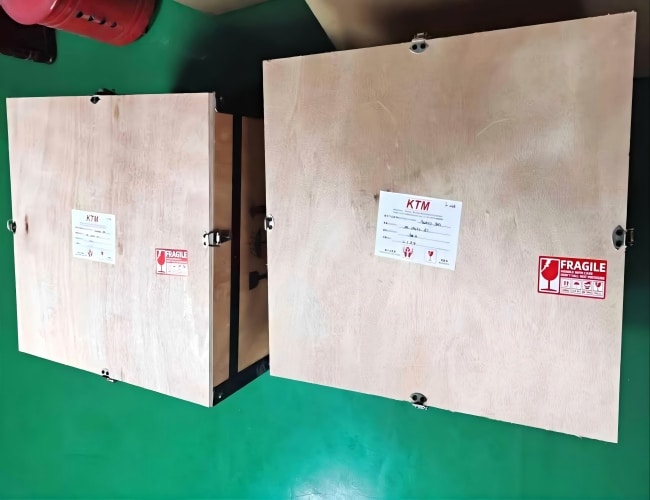
06
After sample approval, we document agreed dimensions, material traceability and packing details before export or production release.
MATERIAL SELECTION
Material choice drives strength, surface quality and dimensional stability long before tooling begins. We mold common automotive thermoplastics used for the applications below and select each grade against the part’s load, heat exposure, appearance target, chemical environment and production geometry. That choice affects gate design, cooling, shrinkage allowance and inspection criteria.
Interior trim, seat components and non-load-bearing housings.
Talc can improve stiffness and shrinkage control; texture and impact requirements guide selection.
Ventilation ducts, brackets and housings.
Improves stiffness and heat resistance; fiber orientation is checked on critical geometry.
Reservoirs, connectors and heat-exposed housings.
High heat and strength capability; moisture conditioning and cooling need attention.
Consoles, instrument-panel trim and visible housings.
Appearance and impact performance depend on grade, wall section and finish.
Light guides, lamp covers and selected optical components.
Requires polished cavities and specification-led optical validation.
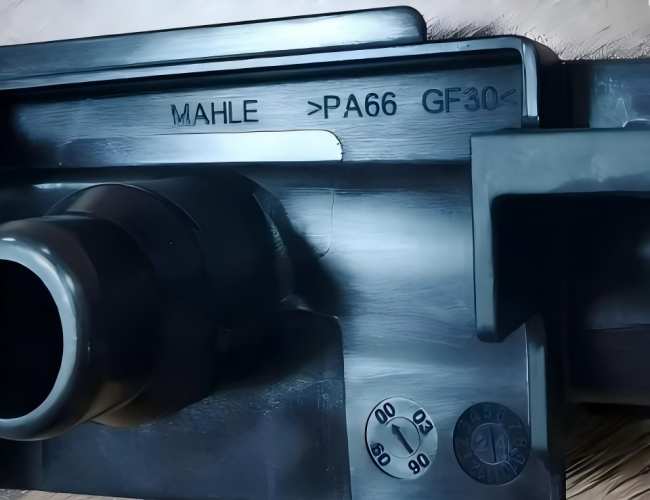
Glass-filled grades such as PA66 GF30 can provide stiffness and heat resistance, while fiber orientation may also create directional shrinkage. We review geometry, gate location, cooling and material behavior together before the tool design is released.
Material certificates and lot traceability are provided where specified in the project quality plan, so incoming verification and shipment documentation can be matched to the resin used on the run.
Selecting resin is only the first step; the next is proving that the chosen wall section, gate and cooling plan will hold its required dimensions.
PART APPLICATIONS
From Class-A cabin trim to heat-exposed reservoirs, automotive injection-molded parts must keep their shape, surface and fit through repeated heat, vibration and assembly cycles. KTM supports Tier-2 and Tier-3 programs with DFM-led tooling and controlled molding.
We plan resin, gate position, cooling, ejection and inspection together, so visible grain, sealing faces and critical interfaces are designed for production before steel is cut.
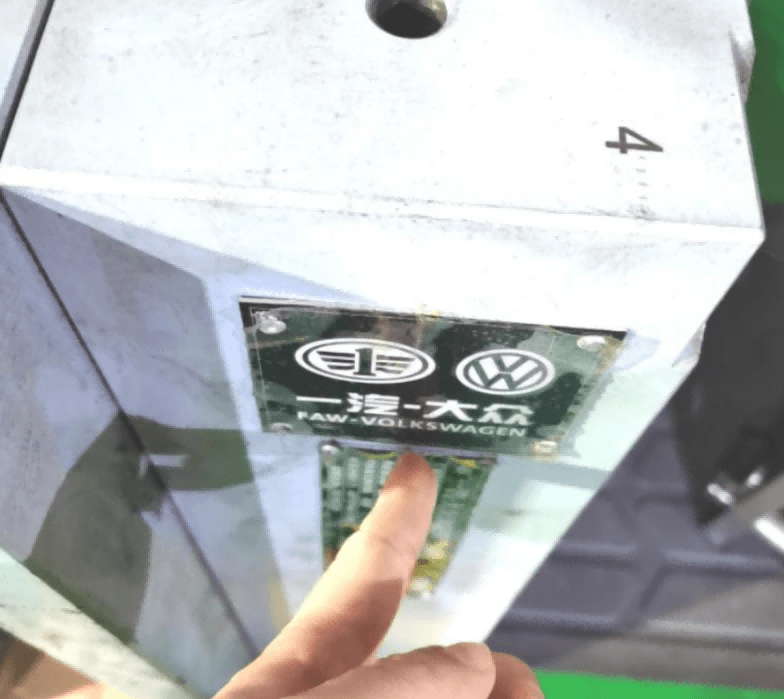
Door panels, armrests, console trim and light-bar housings with visible Class-A grain surfaces.
Focus: grain match, hidden weld lines, controlled fit-and-gap and low warpage.
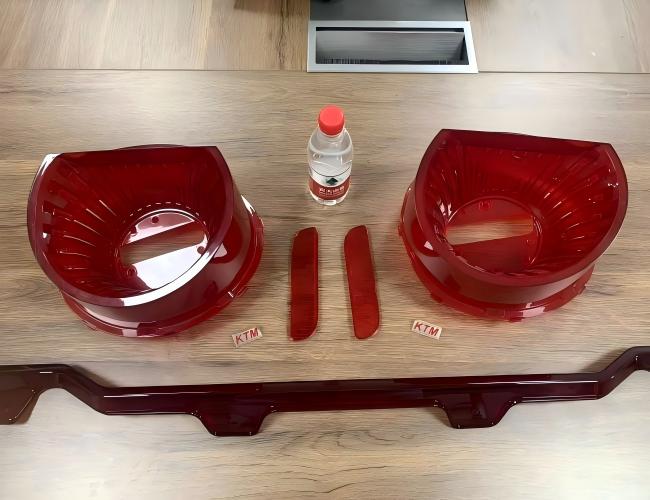
Mirror housings, grille parts, exterior trim and lamp lenses with specification-led surface and weathering requirements.
Focus: surface finish, stable fit-and-gap, weathering performance and dimensional consistency.
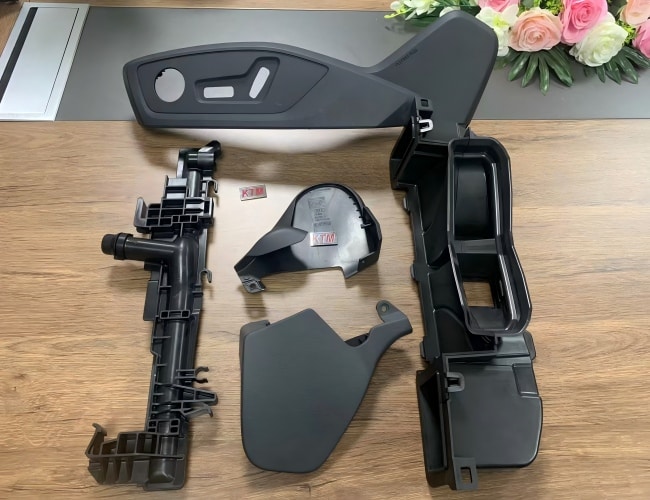
Connectors, ducts, reservoirs and covers engineered for heat, vibration and reliable sealing performance.
Focus: heat resistance, burst-pressure margins, sealing interfaces and dimensional stability.
Difficult parts are rarely flat covers. Deep-draw interior trim needs lifters, thin sealing ribs need stable packing, and visible grained surfaces need gating and cooling decisions that suit the geometry.
For visible and optical components, cavity finish, venting, gate position and handling criteria are set with the product specification. Every part type named above is assessed against its actual material, geometry and validation requirements.
Send the drawing, material target and annual volume. We will identify the tooling decisions that matter before you commit to a mold concept.
Get a Free Automotive DFM ReviewTOOLING OPTIONS
Some automotive programs need tooling that controls flow, bond strength or wall behavior beyond a standard two-plate mold. We select the mold concept from the part geometry, resin, surface requirement, annual volume and validation plan, then confirm the machine and process route before design release.
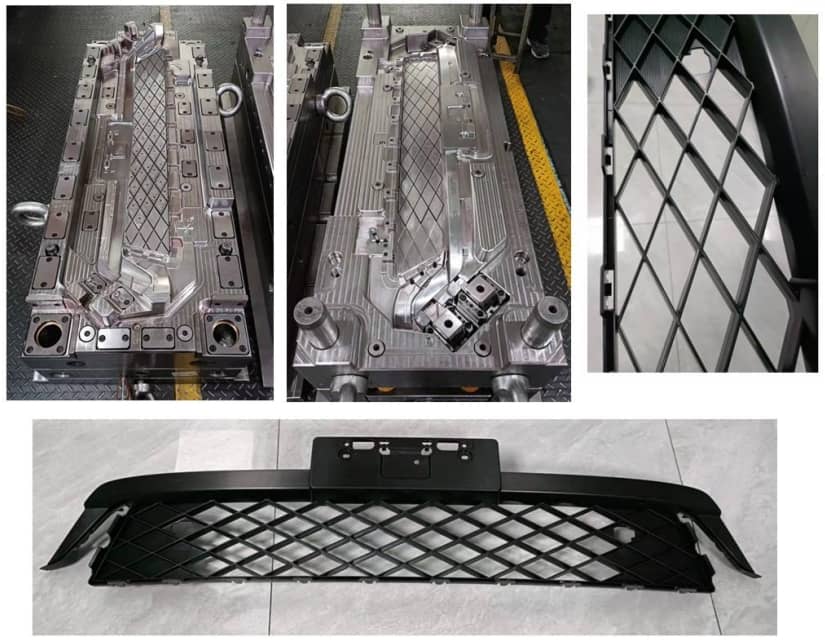
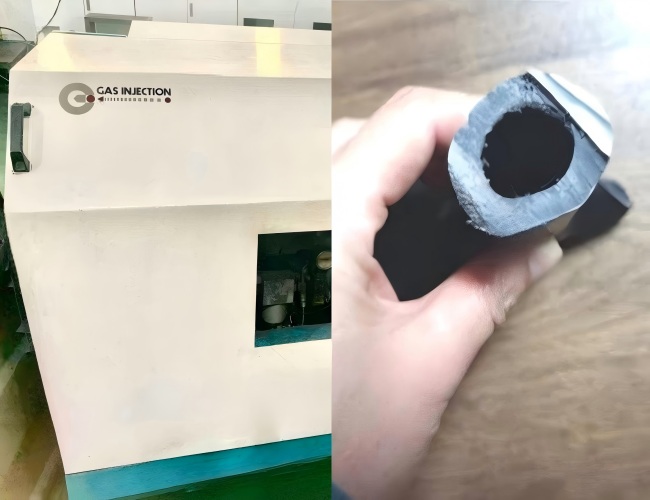
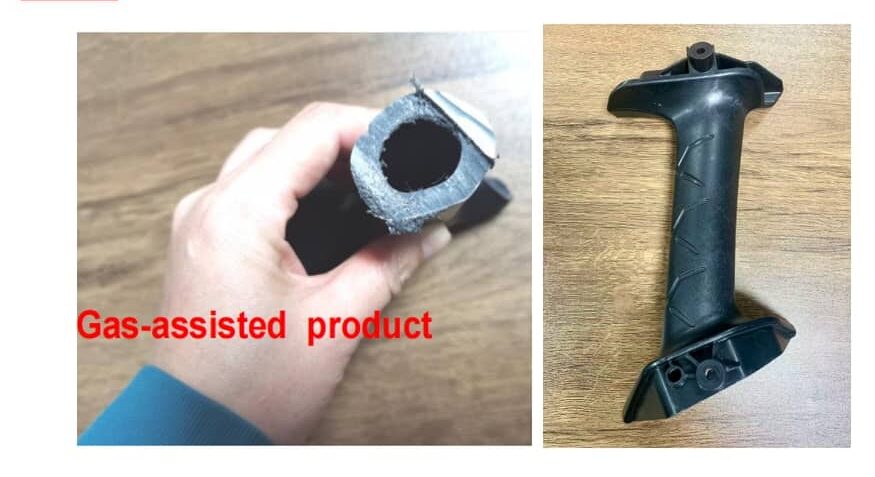
Gas-assisted injection molding creates hollow sections in thick automotive handles and frames to reduce surface sink, control warpage and lower molded-part weight.
Capability: on-site nitrogen-assist molding support.
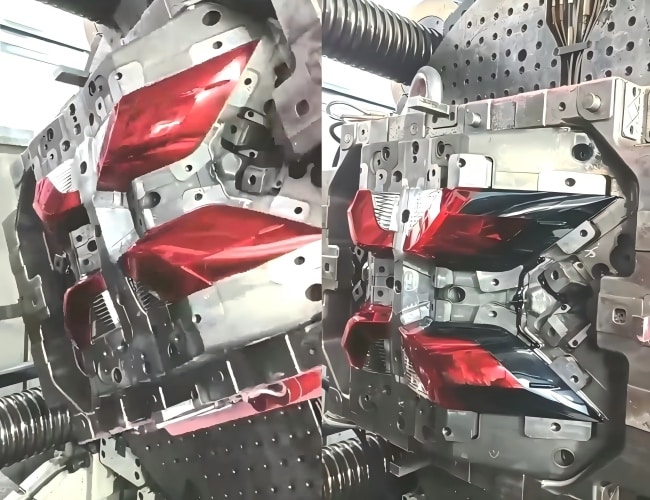
Two-shot injection molding produces hard-soft trim, integrated seals and two-color automotive housings in one controlled cycle, with tooling matched to material compatibility.
Capability: two-color injection machines and tooling.
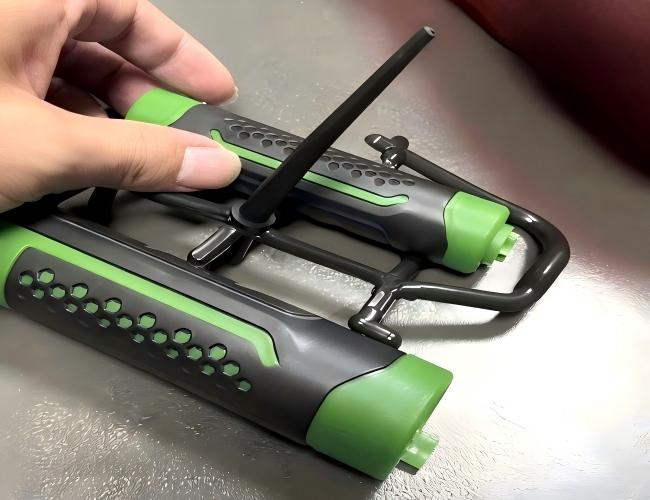
Overmolding bonds soft-touch TPE to automotive grips and sealed connectors, with material compatibility and gate position reviewed for reliable adhesion during production.
Capability: controlled gate and bond design.
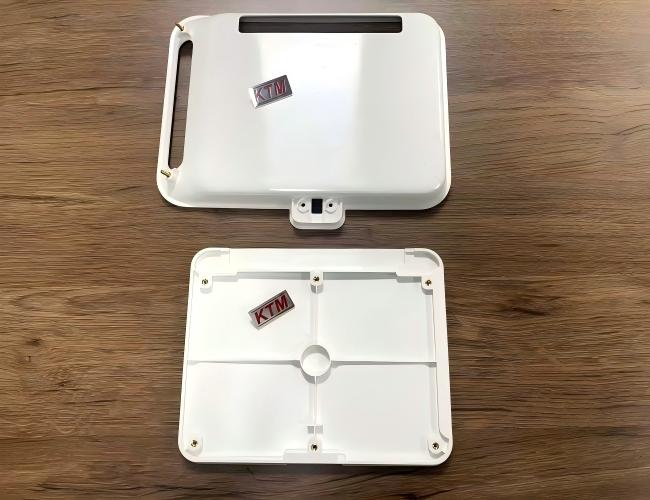
Insert molding places bushings, threaded inserts and terminals within automotive components, with retention and loading methods planned for consistent positioning throughout production.
Capability: robot or hand-loaded insert runs.
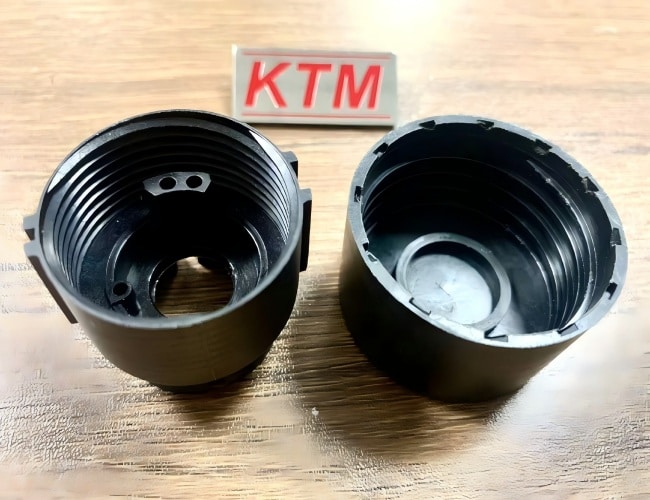
Unscrewing injection molds release internal threads on automotive caps and fittings through controlled rotation, helping protect thread geometry during repeated molded-part ejection.
Capability: geared unscrewing mechanisms.
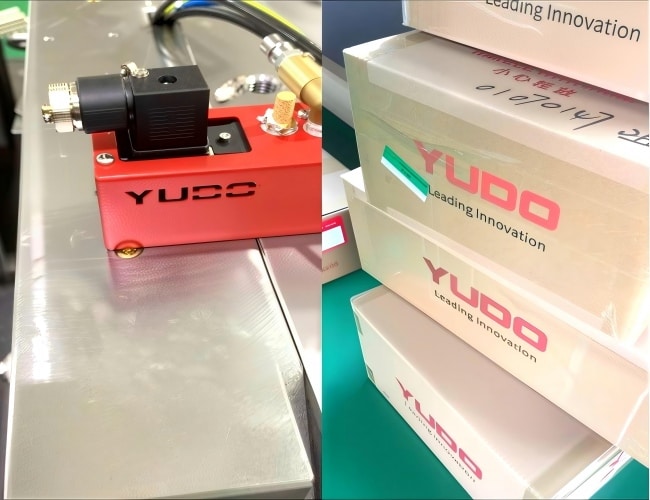
Hot runner molds balance filling across multi-cavity and large automotive parts, with gate strategy matched to surface quality, consistency and cycle-time requirements.
Capability: YUDO, INCOE, HRS and Mold-Masters.
Large part injection molding needs more than a large cavity. Cooling, flow balance, part handling and press capacity must match the projected area, material and surface requirement.
The mold concept is only one decision. The next is whether the tool ships to your plant or runs under an agreed production plan.
FLEXIBLE ENGAGEMENT
You decide where the steel lives. Some teams run their own presses and want a qualified mold shipped to their plant; others want molded components delivered against release schedules. KTM supports both routes, with documented automotive tools exported to the United States and Europe alongside programs that remain in our in-house production system.
MODEL A
You receiveThe qualified mold, prepared for your press interface.
Best whenYou hold press capacity and need production on-site.
Project focusTool handover, documentation and shipment planning.
You controlProduction scheduling, resin sourcing and maintenance planning.
MODEL B
You receiveMolded components delivered against agreed releases.
Best whenYou need tooling and molding managed in one project.
Project focusMolding schedule, inspection and delivery planning.
You controlOne accountable source for tooling, molding and documented release.
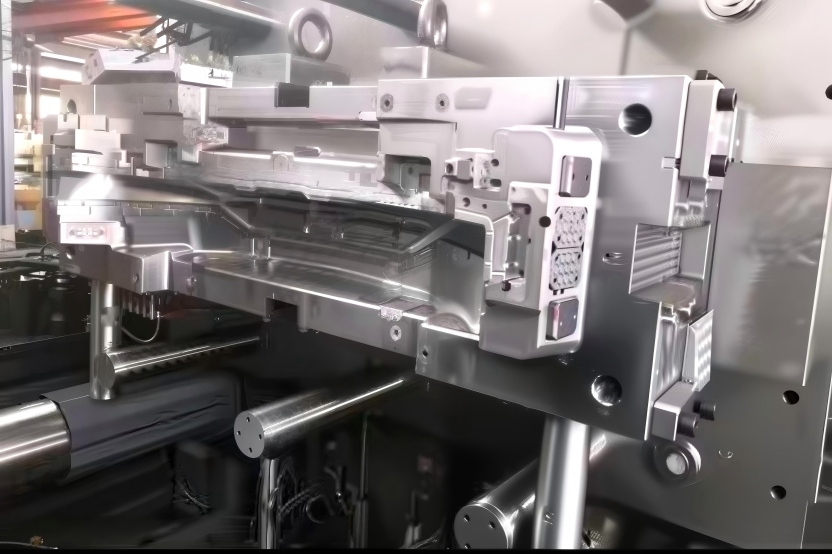
PLAN THE ROUTE EARLY
Either model can start with a prototype mold or a production mold. A prototype tool validates geometry and surface before a multi-cavity investment; a production tool is designed from the start for cycle time, maintenance and robot-compatible running.
Annual volume, resin abrasiveness, surface finish and maintenance access guide cavity count and steel selection. A prototype tool may prove fit and ejection without demonstrating production tool life or cycle time. Compare single- and multi-cavity options against launch timing and expected part cost before committing to production steel.
Discuss Your Mold Export or Production PlanTOOLING EXAMPLES
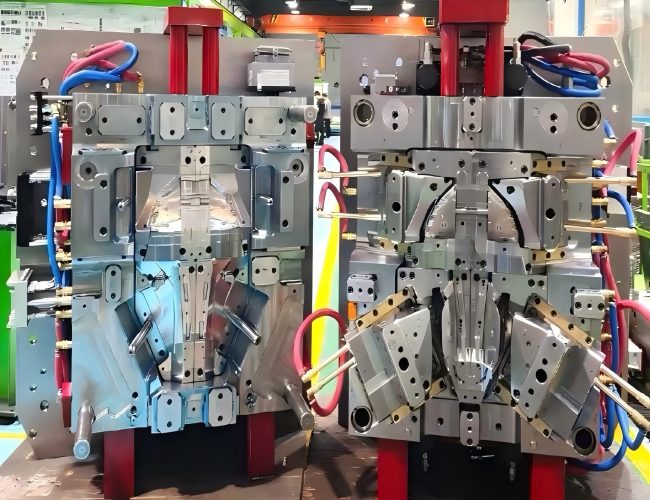
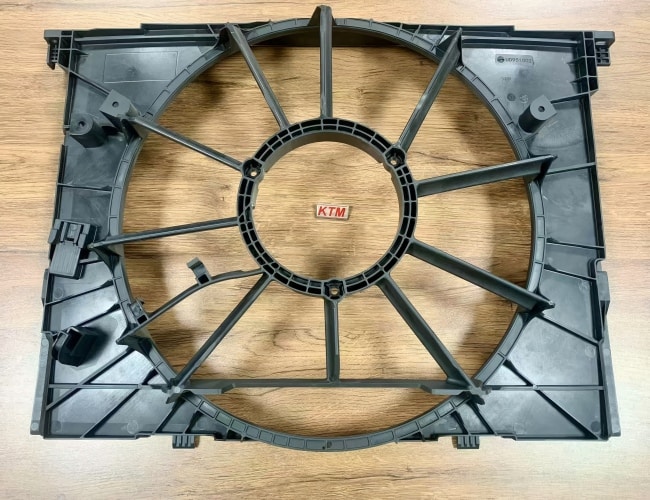
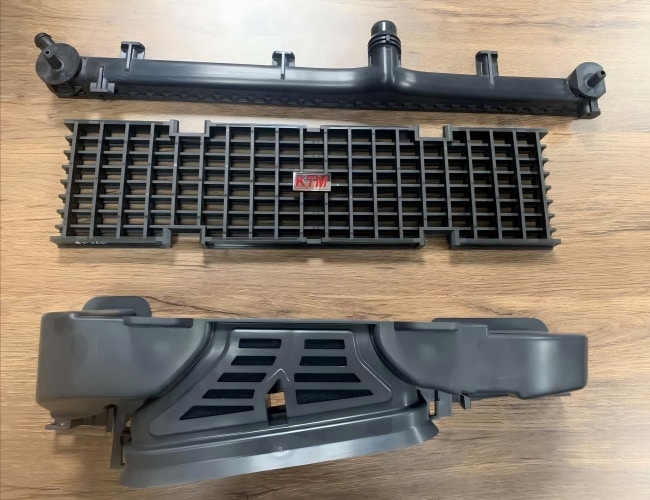
Compare six automotive tooling examples by material, tool construction and the engineering risk each design addresses. The first five include reported trial and approval stages; the gas-assisted housing links to its published case details. These are project references, not guaranteed specifications or lead times for a new part.
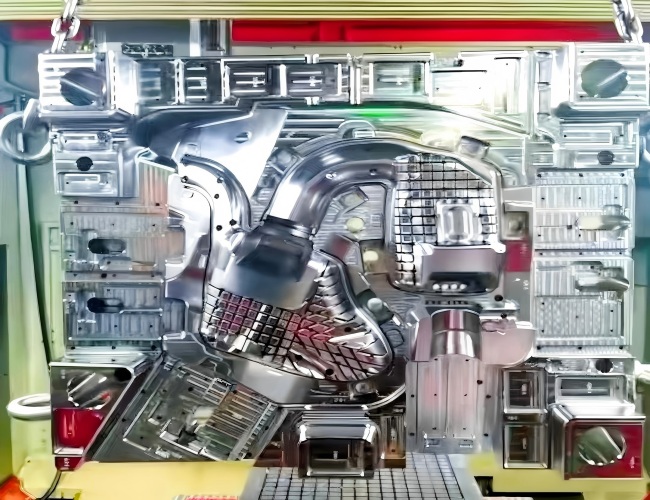
01
A multi-slider and lifter ejection concept for a deep-under-cut leather-grain component.
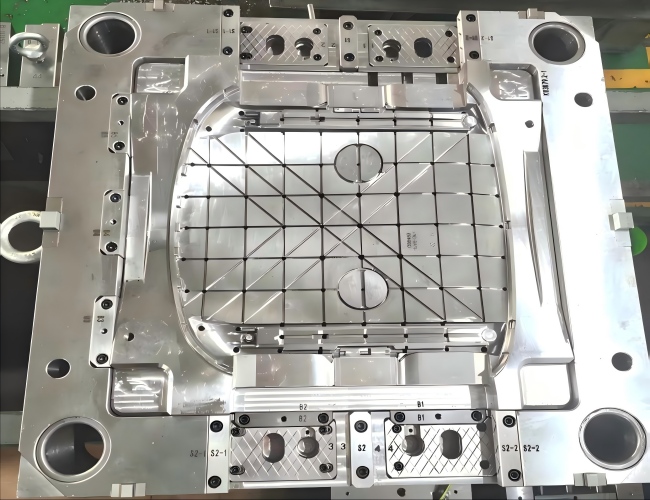
02
A leather-grain exterior surface with an ejection layout built around eleven lifters.
03
An optical PMMA lens where cavity finish and ejection were treated as a matched tool system.
04
A large glass-filled component reviewed for cooling balance and fixture-controlled flatness.
05
A glass-filled reservoir design with sliders and lifters developed for a controlled release.
06
An automotive housing with a thick reinforcement boss, using a gas channel to address visible surface sink.
These examples cover optical PMMA, glass-filled under-hood parts and textured interior surfaces. Their common requirement is a tool concept that addresses flow, cooling, ejection and visible surfaces before steel is cut.
Send the drawing and our engineers will review ejection feasibility before you commit to tool design or steel.
Review My Part’s Ejection RisksENGINEERING-LED QUALITY
Quality evidence is planned with the RFQ, not added at shipment. A preliminary DFM lets your team review wall sections, gate options and ejection risks on the actual part. The project quality plan then defines the sampling stage, CTQ measurements and documents required for the program.
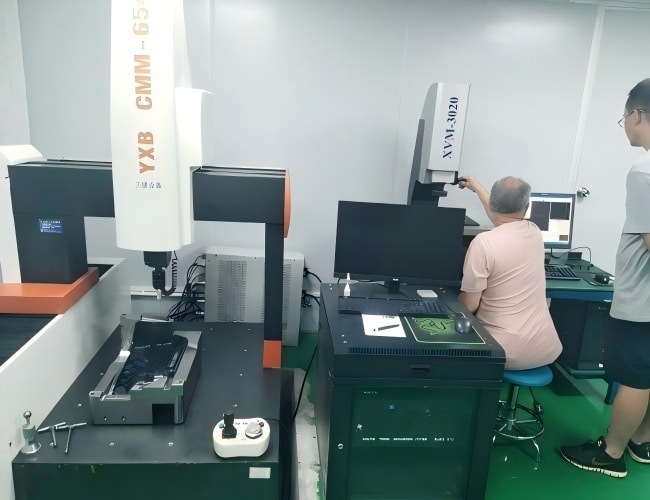
Report data is supported by named equipment: CMM, optical comparator, pin and plug gauges, go/no-go gauges, calipers, micrometers and height gauges. Tooling is machined on FANUC CNC centers and mold-steel hardness is checked in-house.
Because the engineers who prepare the automotive injection molding DFM also build the tool, a Moldflow or trial issue can become a documented corrective-action plan without a handoff gap. Traceability requirements are agreed in the project quality plan, giving procurement teams the records needed for internal review and supplier audits.
Review the evidence before placing an order. Ask which DFM, trial and dimensional-report formats apply to your part, and agree the critical measurements during quotation.
Discuss My Inspection & Report RequirementsMETAL-TO-PLASTIC CONVERSION
When a weight or cost target cannot be met in metal, converting a die-cast bracket or stamped housing to an engineered thermoplastic may be a practical option. It can reduce mass, combine several components into one molding and simplify assembly. The result depends on load case, creep, fatigue, thermal cycling, chemical exposure and fastening requirements.
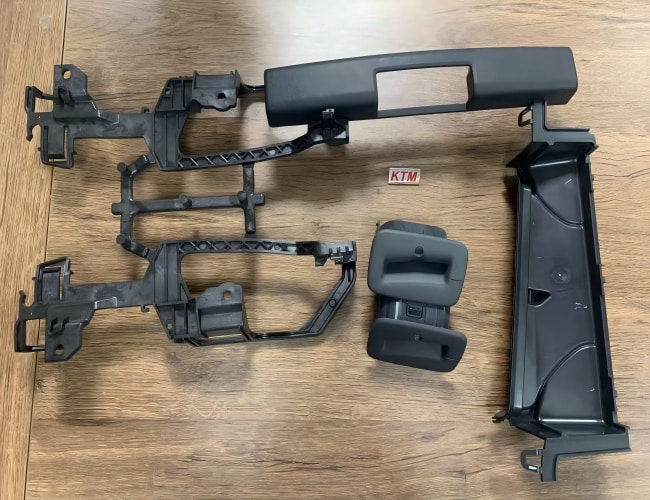
The key question is whether a load-bearing component will remain dimensionally stable after conversion. We address it before tooling by selecting the resin, reviewing wall sections and load paths in DFM, and matching gates, runners and cooling to the material. Where geometry requires it, a controlled support fixture may be specified for inspection and dimensional confirmation.
We mold structural and under-hood converted parts including battery enclosure covers, high-voltage connectors, mounting brackets and coolant components. Where a metal design uses a thread or stud, we assess insert molding or molded-in bosses to preserve the mechanical interface. Send the existing drawing and we will identify features that convert cleanly, plus those that need redesign or validation testing.
Assess Your Part for Metal-to-Plastic ConversionHOW WE WORK
KTM was built by an engineer, not a sales desk. Our founder studied mold design and manufacturing and has spent more than 20 years on the shop floor. He still leads feasibility reviews for complex parts, keeping tooling decisions close to the engineers who will build and validate the mold.
Your drawing is reviewed by the engineers who can change the tool. Ejection, sink, weld lines and grain transfer are resolved in the engineering loop, not forwarded through a sales chain.
You see the working record as the program moves forward: preliminary DFM, simulation where appropriate, T1 findings and agreed inspection data linked to the project.
Trial issues are recorded against the part and tool, then translated into a corrective action. We explain the cause, the proposed steel change and the next trial.
Quotes define the scope, tooling concept, materials and commercial assumptions. If the drawing or requirements change, the impact is reviewed with you before work proceeds.
English-speaking project engineers run scheduled reviews across time zones. Decisions stay close to the people responsible for tooling, sampling and delivery.
Sample approval, inspection records and tool handover requirements are agreed for your automotive program. This connects the accepted trial parts to mold export or the planned production release.
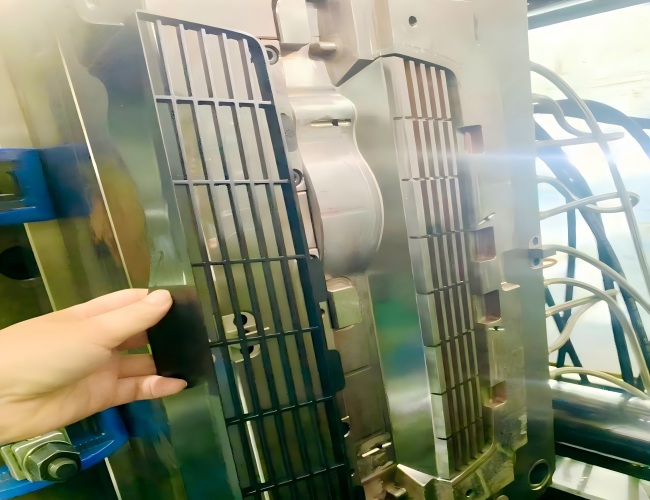
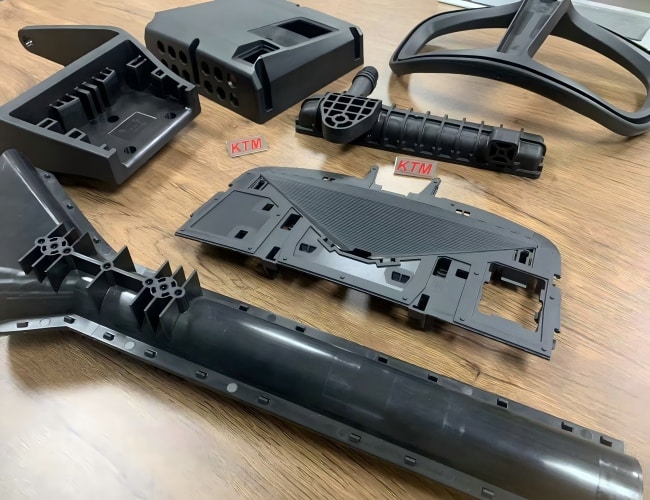
KTM operates under an ISO 9001 quality-management system. The project quality plan defines the inspection points, trial records and traceability documents required for each program.
Procurement teams usually have practical questions before they send a drawing. The answers below cover the points raised most often.
FAQ
Tool life depends on resin abrasiveness, steel grade and hardness, tool design, operating conditions and maintenance. Specify the target shot count and annual volume in your RFQ. The quotation should define the proposed steel, wear components, maintenance needs and any agreed tool-life warranty.
Yes. Two-shot, gas-assisted, overmolding, insert and hot-runner tooling are available for suitable automotive applications. Tooling scope and timing are confirmed after DFM review and the production requirements are defined.
KTM operates under ISO 9001. If your program requires IATF 16949, PPAP, IMDS or customer-specific documentation, state it during quotation so we can confirm the applicable quality scope before work begins.
In-house press capability and partner press scope are reviewed against projected area, material and part geometry at quotation. Large, two-shot and gas-assist requirements are confirmed with the production route before tooling is released.
We can sign an NDA before drawings are shared. Access is limited to the assigned project team, and handover requirements for molds and project records are defined in the quotation.
Yes. We can design and build a mold for your own presses, run trials to the agreed sampling scope, then prepare the tool and handover documents for export. Press compatibility and shipment details are confirmed during quotation.
A preliminary DFM is included with the quotation scope. After award, detailed DFM and, for high-risk geometry, Moldflow analysis are planned against the program requirements.
Cavity count, sliders and lifters, steel treatment, surface finish and purchased components affect the schedule. The first five examples above report 7–10 weeks to T1; these are project references, not a delivery promise. Confirm design approval, first trial, correction rounds and final acceptance as separate milestones.
Two ways to begin: send drawings for a free preliminary DFM, or request a quote and capability deck. In either case, an engineer reviews the part before you commit to tooling, so material, wall sections, gate location and ejection risks are discussed early.