Plastic Reels & Spools Manufacturer | Custom Molds & Molding – KTM
KTM Manufacturing

Plastic Reels & Spools:
Custom Molds,
In-House Molding &
Ready Stock

You can get your plastic reels and spools three ways from one factory:

  • Export a custom mold to run on your own machines
  • Keep the mold with us for in-house production
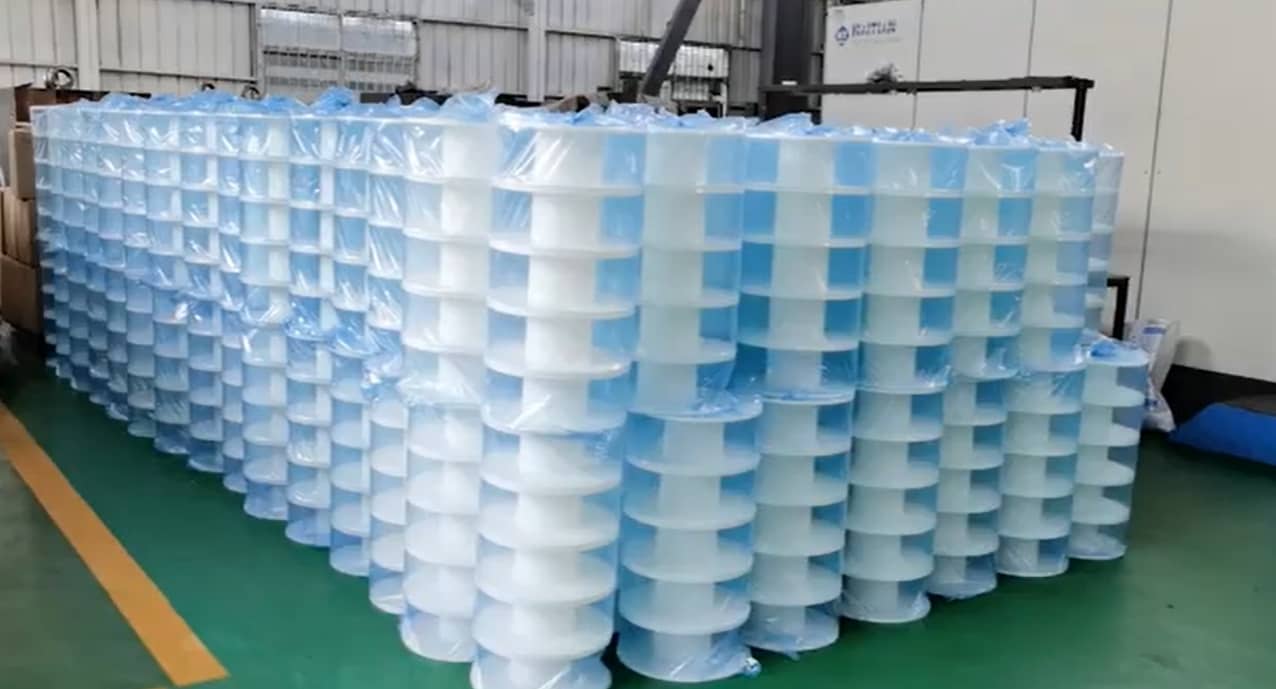
  • Order from 10+ ready reel designs we developed ourselves
Upload your drawing or concept → Get a free DFM

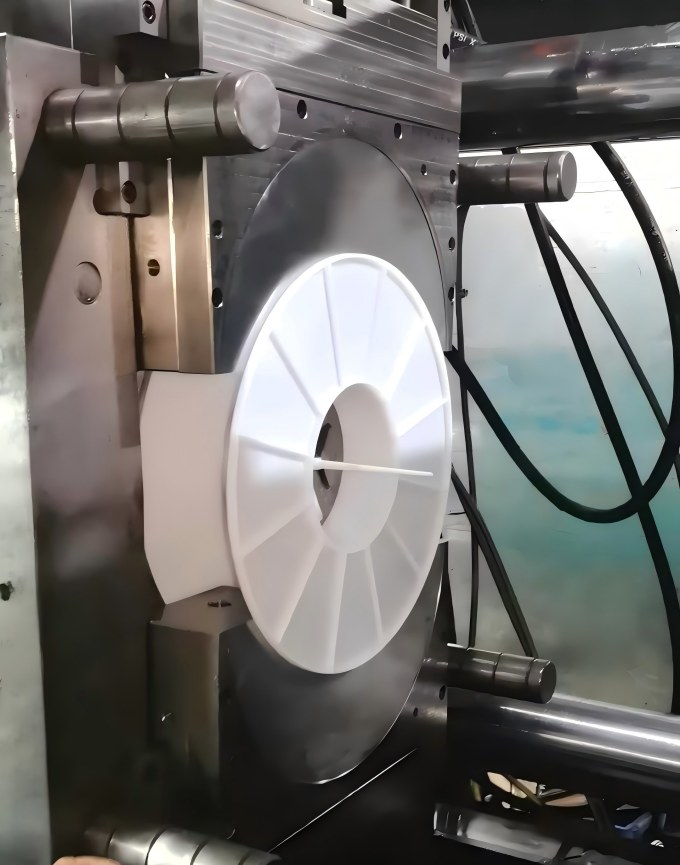
KTM is an engineer-led factory in Dongguan, founded by a mold-design-and-manufacturing engineer with 20+ years on the technical floor. We run 40 injection molding machines from 90-400T and our oldest US reel client has reordered every month for 10+ years.

ISO 9001
In-house mold shop
40 injection machines
FANUC CNC
Sodick mirror EDM
CMM inspection
Exporting to US, Germany, UK, France, Mexico and 20+ countries

Three Ways to Get Your Plastic Reels and Spools

A reel project rarely fits a single box. One supplier sells you tooling, another sells finished parts, a third sells stock items, and you end up managing the gaps between them. We built three paths instead, so you pick by where your production sits.

A
A — Export the mold

We design and build your custom plastic reel mold, then ship it to you. The mold IP belongs to you and runs on your own injection machines.

You own molding capacity and want tooling control.

Mold export, full ownership

B
B — We mold in-house

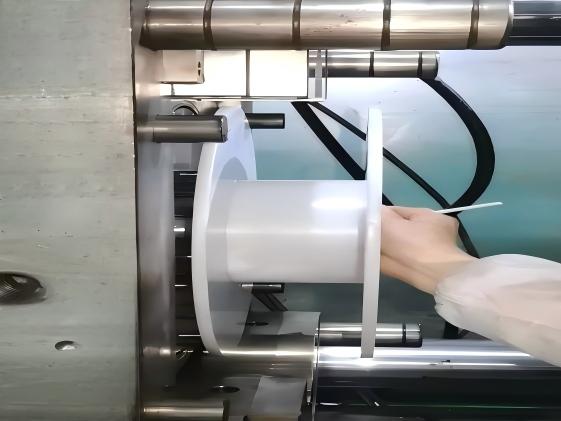
We build the plastic spool injection mold, keep it here, and supply finished parts. No MOQ — small or high volume.

You have no molding line, or want one supplier from tool to part.

Tool + molding, no MOQ

C
C — Order ready stock

Buy from 10+ in-house reel designs. If a size fits, skip tooling entirely. Free sample, you cover freight.

You need standard reels fast, no custom tooling.

Stock spools, free sample

Path A keeps tooling control with you. Path B removes the cost of coordinating two vendors. Path C skips tooling entirely when an existing size already works for plastic spools for wire, cable, or filament. The case below shows the engineering discipline that runs through all three.

How We Solved a Warping Reel for a 10-Year US Client

Warped PP
Flat HIPS

The Problem

A US wire-component brand came to us with a problem, not a drawing. They had a concept and a function in mind, no 3D model, no 2D prints. Several shops had already passed on the project, wary of the design hours before a part even existed.

The Design

On the first factory visit, our founder sketched a working reel form on the spot, straight from the customer's description. The customer saw that the design read his intent correctly, paid the design fee that same day, and we began iterating. Every revision he asked for, we made in front of him while he was on-site, then locked the geometry once he signed off.

The First Failure — and Fix

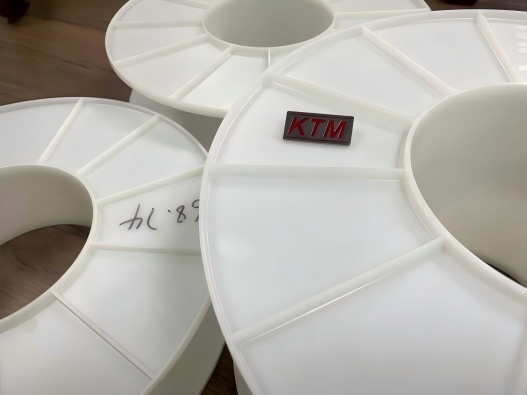
We cut the first tool and ran the first shots in PP. The parts warped. On a reel, the flange edges have no surrounding support, and PP is soft enough that the unsupported rim pulled out of flatness under its own shrink. The deflection sat outside what the customer would accept, and he was right to reject it.

We switched the resin to HIPS. HIPS holds a much higher modulus on those unsupported flange edges, and the warp disappeared. The reel then passed every functional test the customer ran. That single material decision is why HIPS is our default for industrial spools, while PP stays reserved for utility parts that can tolerate flex.

The Result

That customer has reordered different reel sizes every month for 10+ years. The project also taught us enough about reel geometry that we developed 10+ of our own spool designs, which now sit in our ready-stock catalog.

The lesson under the story is simple: warping, concentricity, and flange flatness are resin-and-rib problems, not luck. Most reel failures trace back to a wrong material call or a flange that was never reinforced for the wound load. That is the call the next section walks through.

Choosing the Right Material for Your Plastic Spool

Material choice decides whether your reel holds its shape under wound tension. The wrong resin shows up months later as a bowed flange, edge cracking, or a collapsed core. Here is how we match resin to load before any steel is cut.

For industrial reels we default to HIPS. Once wire is wound, the flange edge carries no support, and HIPS keeps that edge flat where softer resins bow outward. PP stays a good fit for utility and washdown spools, and we tell you upfront where its flexibility works against the part rather than letting you find out at first use.

If your build needs a flame-retardant grade or runs hotter, we move to PC or PC/ABS and confirm the choice in the DFM stage. Resin only works if the geometry behind it is sound, which is where most of our reel programs actually start.

HIPS

Default

Key property

High-impact, holds flat on unsupported flanges

Best for

Industrial wire & cable reels

KTM note

First choice for industrial spools

PP

Key property

Light, moisture & chemical resistant

Best for

Utility spools, hose, washdown parts

KTM note

Softer; flexes at unsupported edges

ABS

Key property

Rigid, durable through repeated reuse

Best for

Heavy-duty, multi-trip reels

KTM note

Handles rough handling

PC / PC-ABS

Key property

Heat and tensile strength, FR grade available

Best for

Specialty and 3D filament reels

KTM note

For high-temp or flame-retardant specs

Only a Concept, No Drawings? We Design It

You do not need finished CAD to start. Several of our reel programs began with a sketch on a call or a sample part with no model behind it.

Our founder studied mold design and manufacturing and has stayed on the technical floor for over two decades. He reviews part geometry, flange ribbing, and core support before tooling is quoted, so design intent and the cut steel agree from the start. You sign off at each step:

Engineer sketching reel design
Step
What happens
You receive
1

Concept

We discuss your wind, load, and arbor

Direction confirmed

2

Sketch

Geometry roughed out

Visual to react to

3

3D model

Full part design

CAD for review

4

DFM

Manufacturability check

DFM notes

5

Tooling

Mold built to signed model

Cut steel matches design

Because the same engineer owns design through tooling, there is no gap between what was drawn and what was machined. That continuity is also why we can move a custom plastic spool straight into proven, ready-to-ship production.

Plastic Reels and Spools by Application

Cable, Welding Wire, Fine Wire, Fiber Optic, and 3D Filament Reels

Every winding loads the flange and core differently, so we tune wall thickness, rib layout, and resin to the job rather than reusing one shell across all of them.

Wire & cable

High wound tension; reinforced core against crushing

Welding wire spool

Snag-free payout; clean inner flange surface

Fine / magnet wire

Smooth edges; no burrs that nick thin gauges

Fiber optic

Tight balance and concentricity for high-speed de-reeling

3D filament

Consistent hub diameter; clean wind across the barrel

Hose & tubing

Light, washable utility spools

For fiber and high-speed lines we hold concentricity in mind from the mold stage, since vibration at de-reel traces straight back to an unbalanced spool. These plastic cable reel and plastic wire spool profiles cover most standard winds. If your dimensions already fall inside our developed range, you can skip tooling.

Ready-Stock Reel Designs & Free Samples

We have developed 10+ plastic reel designs in-house, each built on our own tooling, so supply stays stable and repeatable order to order. If your spec falls inside the table below, you order finished reels directly — no mold cost, no lead time for new tooling.

(Representative sizes shown; full table and stock photos to follow. More sizes on request.)

Want to confirm fit before a volume order?

Request a free sample — you cover the freight only. Run it on your line, check the wind and payout, then place the production order knowing exactly what arrives. Every reel, stock or custom, ships with the documentation in the next section.

Design Size A Size B Size C Size D Size E Material
R-01 — mm — mm — mm — mm — mm HIPS
R-02 — mm — mm — mm — mm — mm HIPS
R-03 — mm — mm — mm — mm — mm ABS
R-04 — mm — mm — mm — mm — mm HIPS
R-05 — mm — mm — mm — mm — mm HIPS
As one of the few plastic spool suppliers running its own molds, we can also adjust arbor or width on an existing design faster than building from scratch. That control means we can adapt a reel to your spec, instead of limiting you to a fixed distributor catalog.

Traceable Quality: DFM, Moldflow, CMM & Material Reports

Every plastic spool injection mold we build ships with a paper trail you can audit. That removes the two failures engineers fear most: a tool that drifts from the approved drawing, and a supplier who cannot tell you why.

Stage
Document
What it confirms
At quote

Preliminary DFM

Wall thickness, draft, flange support, part geometry issues

After PO

Detailed DFM report

Final tooling plan against your 3D data

Complex parts

Moldflow analysis

Fill, warpage, and weld-line risk before steel is cut

First shots

Mold trial (T1) report

Dimensions and function on real parts

Pre-shipment

ISIR dimensional report (CMM if needed)

Every critical dimension against tolerance

Material

Material certificate

Resin grade and batch traceability

Simple geometries skip Moldflow — we do not bill you for analysis a part does not need. Measurement happens in-house, not at a third-party lab on someone else's schedule. Our QC room runs a CMM, an optical projector, a hardness tester, plus pin gauges, plug gauges, go/no-go gauges, calipers, and micrometers.
Concentricity and flange flatness, the dimensions that decide whether a reel runs quiet at high de-reeling speed, get checked on every production lot. Because each measurement is logged against the tool that made the part, an out-of-spec dimension traces back to its cause in minutes, not a week of emails.
Reorder a reel two years later and we pull the original CMM baseline to match it — the same reason our long-run clients keep coming back. The equipment and engineers behind those reports are what keep them repeatable across a decade of orders.

Why Engineers Choose KTM as Their Plastic Spool Manufacturer

Splitting a reel program across separate vendors creates predictable gaps. Here is where those gaps usually open, and how a single engineer-led factory closes them.

Common gap when work is split
How KTM closes it
×

Sales staff relay your question to an engineer you never reach

The founder, trained in mold design and manufacturing, leads tooling himself

×

Design, steel, and molding sit in different shops on different schedules

80 staff, 40 machines in-house (90–400T), 2K and gas-assisted setups, 450-3300T with partner network

×

Time-zone lag stalls answers for a day

Engineers stay reachable until 8pm local time to overlap US and EU hours

×

Quote rises mid-project once you are committed

The quoted number is the number you pay — no hidden line items, no mid-project increase unless you change the requirements

×

Schedule slips with no firm milestone

The T1 date is written into the quotation

This is also why buyers comparing plastic reel manufacturers stay with us once a first tool runs. We operate an ISO 9001 system, and because we machine specific components rather than assemble finished devices, we focus quality controls where they affect your part.

Plastic Reels and Spools — FAQ

The questions engineers ask before a first PO are answered directly here.

Yes. Before a high-volume order, we send a free sample of the ready-stock reel you are considering, and you cover the freight. Inspect the part, run it on your line, then commit.

It depends on the size, but most ship in 1–3 weeks. If your launch is tight, tell us the date and we will arrange rush handling on the bulk order.

A custom plastic spool mould typically takes 5–7 weeks, depending on spool size, part complexity, and your requirements. The T1 date is stated in your quotation, so you plan against a milestone, not a guess.

A hardened production tool runs 500,000–1,000,000+ cycles with routine maintenance. We confirm the steel grade and cavity count against your annual volume during the DFM stage, so the tool is sized to your real run, not over or under-built.

Yes. We build the tool, qualify it, and ship it to you for production on your own machines. The mold IP is yours.

Yes. We sign an NDA before reviewing your files, and your design and tooling stay yours. Several of our reel programs started from nothing but a concept, so protecting that early IP is part of how we work.

STEP, IGES, X_T, and 2D PDF all work. If you only have a sketch or a sample part with no model, send that — we build the 3D from there.

No. We run jobs from a single prototype reel to monthly production volumes.

No. The number we quote is the number you pay. No hidden tooling items, and no mid-project price increase once the steel is cut.

No. We run Moldflow on complex or warp-prone geometries and skip it on simple parts, so you only pay for analysis the part actually needs.

We size the core and side ribs to your wind tension, then check balance and flange flatness on every lot so the reel runs steady under load and at speed.

When your questions are answered, send the file and we will start the DFM.

Request a Quote, DFM Review or Free Sample

Send what you have — a drawing, a STEP file, or just a concept. An engineer reviews it and replies within 1 business day.

ISO 9001 Certified

Quality management system in place since founding.

40 Injection Machines

90–400T capacity, plus partner network to 3300T.

Global Export

US, Germany, UK, France, Mexico and 20+ countries.

STEP, IGES, X_T, PDF, JPG — drawing, model, or concept

Maximum 500 characters