Vacuum Casting Services in China for Urethane Prototype Testing
KTM's urethane casting service turns your CAD design into vacuum-cast polyurethane prototypes for assembly and selected functional tests. KTM reviews the part, coordinates master patterns and silicone-mold production with its casting partner, and manages the project through finishing and agreed inspection. If your plastic part needs tighter, repeatable production dimensions, our mold engineers can help plan the injection tool.
No MOQ — one-off prototypes accepted
Typical 5–20 business days, quoted by project
Material and finish matched to the application
Casting DFM plus future tooling input
Typical silicone mold life: about 10–15 castings, depending on geometry and demolding. For larger runs or tighter repeatable tolerances, consider an injection mold.
What Is Vacuum Casting? See the Urethane Casting Process
Vacuum casting starts with a master pattern. A flexible silicone mold copies its surface and shape; liquid polyurethane is mixed, degassed and cast into the cavity, then cured and finished. The process suits assembly and selected functional testing before production tooling is justified. It can mimic selected features of a future molded plastic, but the cast resin is a different material and its dimensional accuracy is lower than that of a production injection-molded part.
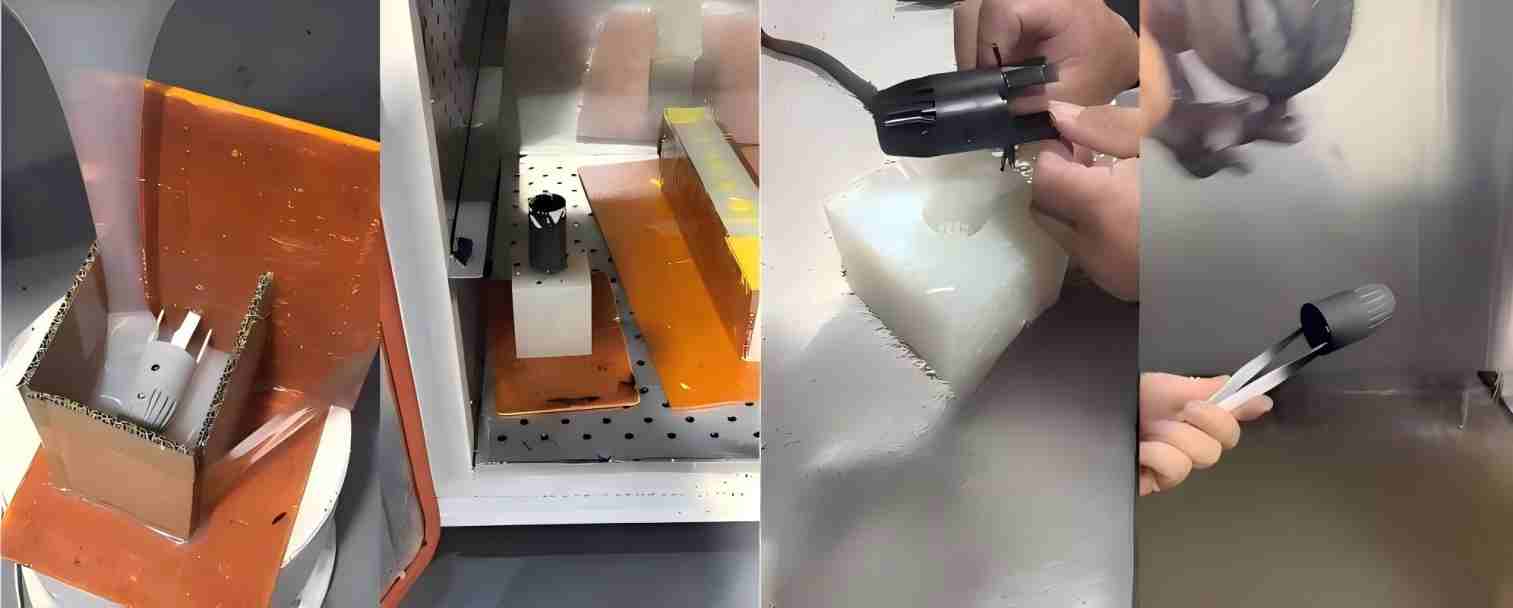
Watch the master pattern, silicone mold, urethane pour and finished part sequence. For your own part, the mold split, resin, surface finish and number of molds are decided after drawing review.
A vacuum casting prototype can help you check assembly, handling and selected functions. It does not establish the precision or long-term material behavior of a finished injection-molded part.
KTM manages the casting project through a production partner and brings mold-engineering input when the design may later move to injection molding. You keep one project contact while each manufacturing step is assigned to the right production team.
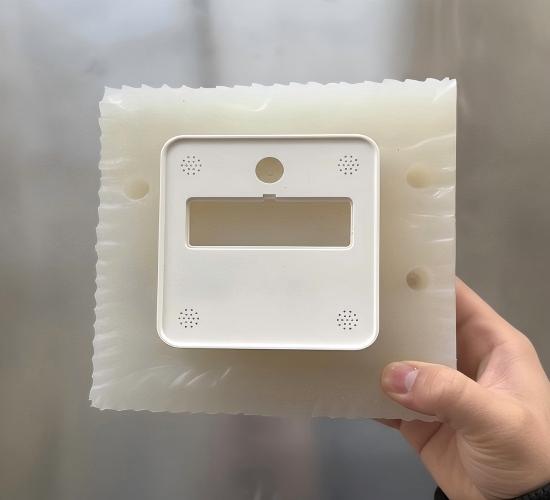
Master-pattern and silicone-mold preparation for vacuum casting.
The Vacuum Casting Process: From Master Pattern to Inspected Part
Each step affects the finished part. Master-pattern finish transfers into the silicone mold; the mold split and vents influence seams and trapped air; resin choice and cure affect dimensions and handling. KTM reviews these interactions before production, then agrees which features need measurement or a trial casting. This is especially important for mating surfaces, inserts and cosmetic faces. On the drawing, mark acceptable gate traces and parting lines as well as the surfaces a customer will actually see or touch. That gives the vacuum casting partner a usable finish target before the mold is cut.
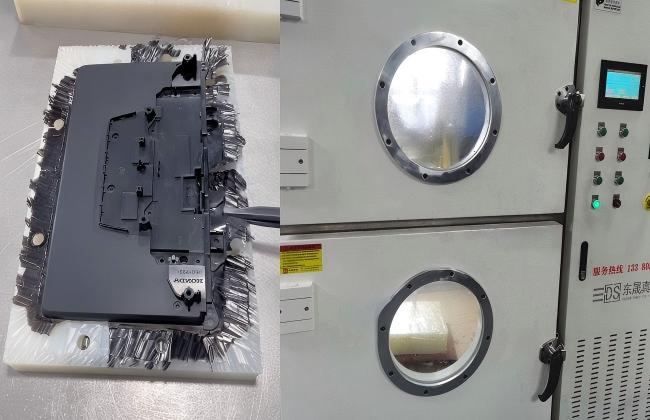
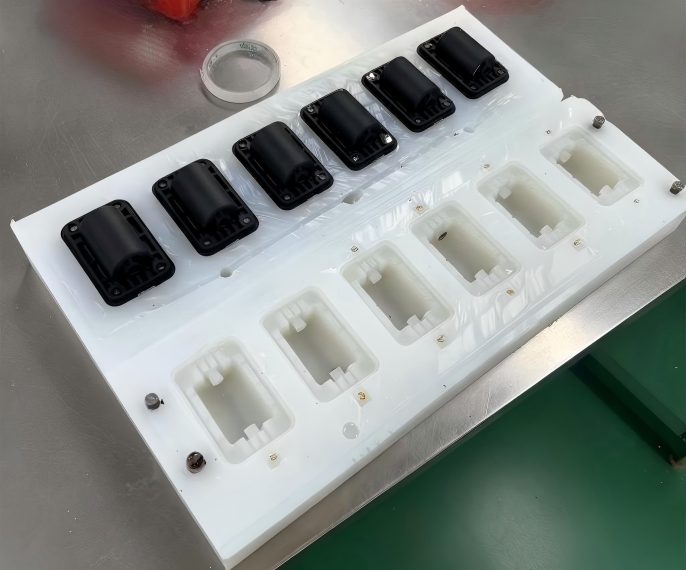
Silicone tooling and vacuum equipment used during prototype production.
01
Master Pattern Creation
We prepare the pattern from the approved CAD revision using CNC machining or a suitable additive process. Visible surfaces are finished to the agreed standard because scratches and texture on the pattern can transfer to every casting made from its mold.
02
Silicone Mold Planning
The casting partner selects the parting direction, gates, vents and any insert fixtures for the geometry. A flexible silicone mold can release some undercuts that a rigid steel tool cannot, but deep or fragile features still need a production review.
03
Urethane Mixing and Vacuum Casting
The selected two-part resin is mixed and handled to its supplier instructions. Degassing and vacuum pouring help reduce entrapped air and fill fine details. Material moisture, venting, wall sections and timing remain important to the final result.
04
Cure and Demolding
The casting is cured or post-cured as specified for its resin, then removed from the mold. Cure time and temperature are selected for the grade and geometry; they are not a universal setting for every polyurethane part.
05
Trimming and Surface Work
Gates, flash and parting lines are cleaned before any quoted painting, printing, texture or polishing. We identify cosmetic faces and assembly interfaces so finishing improves appearance without changing a critical fit unexpectedly at the specified inspection points.
06
Inspection and Release
The agreed dimensions and visible surfaces are checked using suitable tools and sampling. Photos or reports are supplied to the scope stated in the quote. A first-off check helps catch mold, resin or finish issues before the remaining batch.
DFM for Casting Now and Injection Molding Later
Our first review checks whether your design can be patterned, molded, filled, demolded, finished and inspected by vacuum casting. If the project may later use injection molding, KTM's mold engineers also identify draft, undercuts, wall sections, parting direction and gate-related questions for the production tool. These are separate design decisions: a feature that casts successfully in silicone may still need changes for steel tooling.
Tolerance, Size and Lead Time
Parameter
Project capability
General tolerance
Typical general tolerance: ±0.3% of nominal dimension; for dimensions below 100 mm, evaluate a minimum of ±0.3 mm. Confirm critical dimensions from the drawing and first-off part.
Wall thickness
Reviewed against resin, local geometry and handling; very thin walls require a trial and may need redesign.
Maximum part envelope
Up to 1,500 × 1,000 × 800 mm subject to geometry, resin, mold support and equipment review.
Parts per silicone mold
Estimated by part complexity, resin, demolding and cosmetic requirements for the quoted project.
Production lead time
Typical 5–20 business days after approved scope; final schedule depends on quantity, pattern, finish and inspection.
Vacuum casting is intended here for assembly and selected functional tests. It is not a substitute for an injection-molded plastic part when tight, repeatable production dimensions are required. For that requirement, review KTM's Injection Moldmaking Services and plan the production tool against the final resin and drawing.
Polyurethane Vacuum Casting Materials: Choose by the Test Requirement
“ABS-like” and “PC-like” describe an approximate target, not a material equivalence. A vacuum-cast PU part is not made from the final injection-molded thermoplastic. KTM reviews the expected load, impact, heat, chemical exposure, flexibility, color and appearance before a specific urethane casting material is selected. When performance matters, the quote identifies the chosen grade and the supplier data used for selection.
Category
Good starting application
Confirm before production
ABS-like rigid PU
Paintable housings for assembly and selected function checks
Impact, stiffness, thickness and paint adhesion
PC-like rigid PU
Enclosures needing a harder or heat-oriented formulation
Actual grade, HDT, load and operating temperature
PP-like / PE-like PU
Parts where flexibility or chemical contact matters
Snap-fit life, chemical resistance and creep in use
Rubber-like PU
Grips, seals and soft-touch features
Shore hardness, compression, compression set and media
Clear PU
Covers and display windows
Haze, transparency, UV exposure, polishing and scratch acceptance
Heat-resistant PU
Short-run parts exposed to elevated temperature
TDS test method, cure state, load and service duration
Flame-retardant PU
Electrical prototypes requiring documented material behavior
Exact grade, UL94 test thickness/color and end-product requirements
Quick Material Guide
Compare urethane casting materials against one primary requirement—appearance, impact, clarity, flexibility, heat or flame performance—and state which property must be verified on the cast part. This lets the engineering review narrow the resin list without implying that a “like” label proves final-product performance.
Surface Finishing for Vacuum-Cast Urethane Parts
The mold copies the master pattern, so the desired appearance starts before the first pour. KTM reviews which faces need paint, printed graphics, texture, polishing or threaded inserts and includes the chosen operations in the written quote. For clear covers, specify the viewing area and acceptable haze or scratches. For inserts, provide the assembly drawing and load requirements. This makes the finished sample easier to assess and prevents a decorative finish from disturbing a critical interface.
Specify color by RAL/Pantone or a physical reference sample.
Mark cosmetic faces, printed areas and mating surfaces on the drawing.
Confirm whether inserts are cast in or installed after cure.
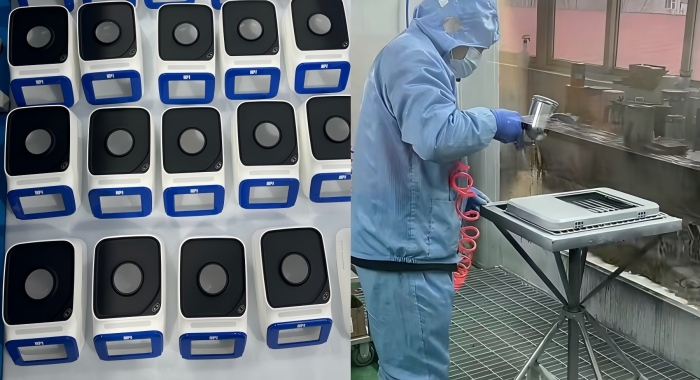
Surface finishing selected for the PU grade and quoted project.
Available options include painting, silk or pad printing, water-transfer decoration, compatible plating, UV coating, laser marking, polishing, texture and insert assembly. Each option is reviewed for the selected PU grade and quoted when applicable; the list does not mean every finish is included by default.
Finish or operation
What the quote should define
Painting / spray coating
Color reference, gloss, masking and visible faces
Silk screen printing
Artwork, print area, ink color and adhesion check
Pad printing
Curved surface, registration, artwork and color
Water-transfer decoration
Pattern, base coat, wrap area and protective finish
Compatible metallic coating
Resin preparation, coating method, appearance and adhesion
UV coating
Gloss/matte target, exposure requirement and compatibility
Laser marking
Mark content, contrast and substrate/finish response
Clear-part polishing
Viewing area, haze/scratch target and inspection light
Sandblasting / texture
Reference sample, texture area and critical-face masking
Threaded inserts / assembly
Thread size, location, installation route and load check
01
Clear Parts and Optical Finishing
Polishing can improve the appearance of a transparent cast cover. Specify the viewing area, clarity target and inspection method before production. A polished clear PU prototype is not automatically an optical lens or a substitute for a production PC/PMMA part under heat, UV or long-term wear.
02
Threaded Inserts and Assembly
Threaded brass inserts can be planned before casting or installed after cure, depending on part geometry and load. Send thread size, position, mating hardware and required pull-out or torque performance. The installation method and any test requirement should be agreed before the silicone mold is made.
Low-Volume Vacuum Casting for Assembly and Functional Validation
01
Medical inspection equipment housing
For housings with threaded inserts and printed controls, the casting plan must define insert position, assembly fit and label placement before the silicone mold is built. Agree on the inspection points that affect panel assembly, then check them on the first-off part.
02
Industrial clear cover
A transparent housing needs more than a clear resin name. Mark the viewing area, specify the required clarity and identify the faces to polish. The finished cover should be checked for fit, visible defects and the appearance standard agreed for the project.
03
Automotive bumper prototype
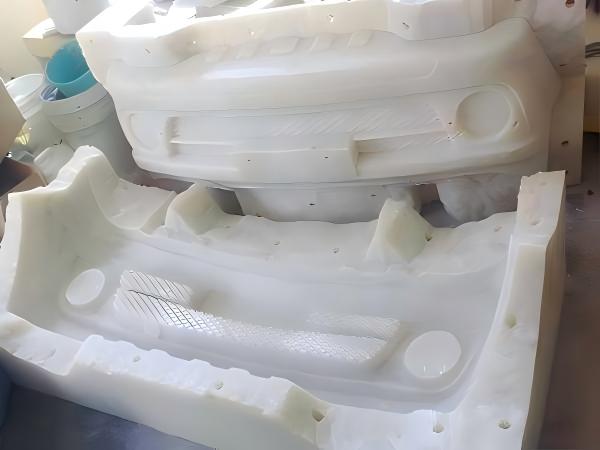
The pictured silicone mold belongs to a bumper project. Large exterior forms need a supported mold, a clear surface standard and a demolding plan that protects visible edges. Use a first-off part to review shape, finish and handling before repeating the casting run.
Vacuum Casting vs Injection Molding: Compare the Total Program
Vacuum casting can be a better starting route while geometry is changing or quantity is low. Injection molding can become more economical once the design, production resin and lifetime volume justify tooling. Compare master and mold cost, unit price, finish, expected reorders, lead time and validation needs; there is no universal 500-piece break point. KTM can review both routes from the same drawing.
Project situation
Route to evaluate first
Decision variable
Design still changing
Vacuum casting
Pattern/mold revision cost, speed of learning and intended test
Repeated pilot tests
Compare casting with a production tool
Total repeat volume, mold replacement and finish cost
Stable design and sustained demand
Injection molding
Tool amortization, production resin and unit economics
Final-material behavior must be tested
Production-resin route or additional test
Heat, chemicals, fatigue and long-term performance
Inspection and Photo Records Matched to Your Vacuum-Cast Part
01
Agree on Critical Features
Mark functional interfaces, datum references and cosmetic faces on the drawing. Silicone-mold wear, urethane cure and part geometry can affect dimensions, so agree the critical limits and first-off inspection method before production.
02
Choose a Suitable Measurement Method
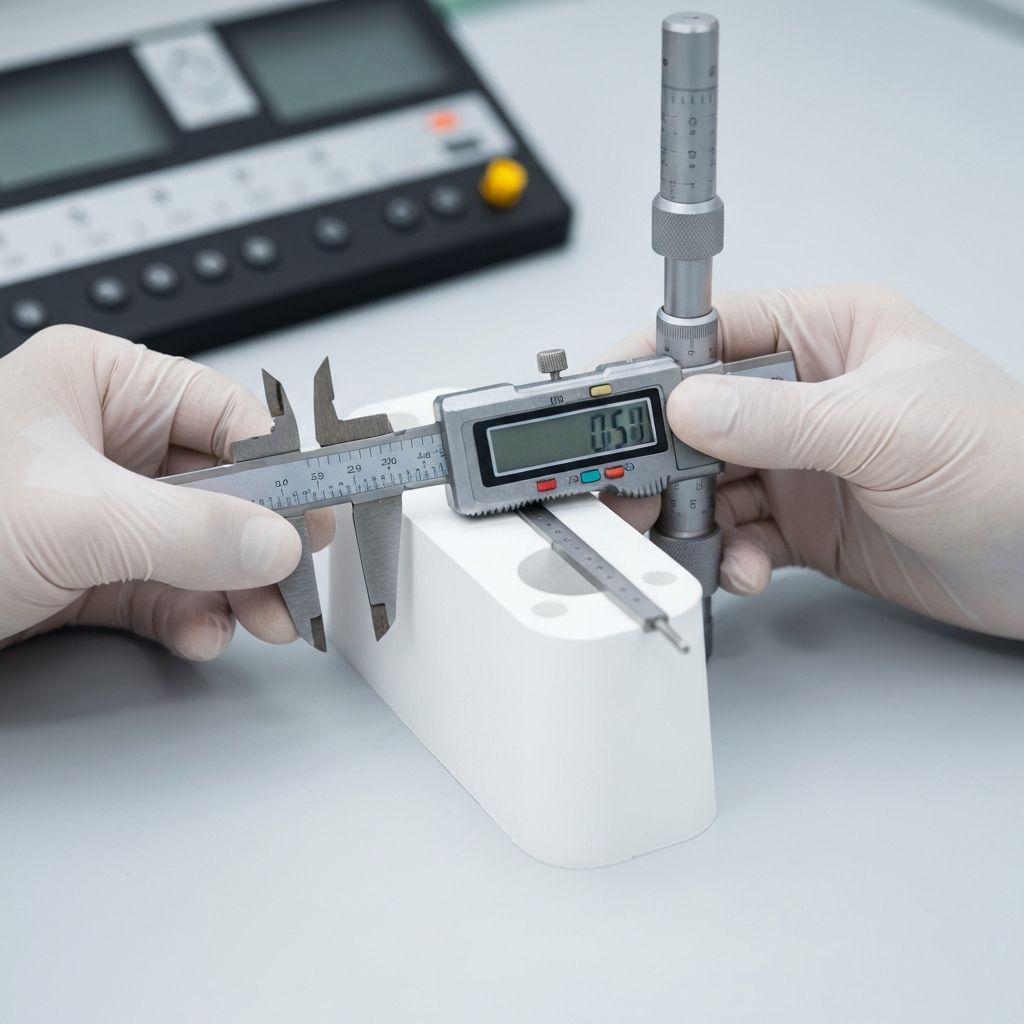
Use calipers, micrometers, plug gauges or a projector where suitable. Measurement verifies a cast part against agreed criteria; it does not give urethane castings the tighter, repeatable production tolerances of injection-molded parts. State report or special-test needs in the RFQ.
03
Document the First-Off and Agreed Checks
KTM coordinates the inspection plan with its casting partner. The quote records the first-off sample, dimensions, assembly fit, cosmetic acceptance, sampling quantity and photo or report deliverables. Request insert-position or assembly checks when they are called out on your drawing.
Inspection methods and photo records follow the agreed project scope.
From RFQ to Delivery: Five Steps for a Vacuum-Casting Project
We acknowledge your RFQ first. A firm quotation follows once the drawing, resin target, finish, inspection scope and open DFM questions have been reviewed.
01
Send the RFQ
Provide CAD, a dimensioned drawing, revision, quantity, finish, critical features, intended use and target date. Request an NDA before sharing confidential designs or customer-specific assembly details.
02
Review castability
KTM reviews the master pattern, silicone-mold split, material target and inspection needs with the production partner. Future injection-mold questions are flagged separately when relevant to the project.
03
Confirm the quote
The written scope identifies pattern, molds, resin, quantity, finish, inspection, documentation, schedule and shipping terms. Any unanswered performance requirement is stated clearly before approval.
04
Produce and report
After scope approval, the partner makes the pattern and molds, casts the parts and completes the agreed finishing. KTM coordinates progress and agreed first-off checks.
05
Inspect and ship
KTM checks the agreed acceptance evidence, resolves open questions and arranges delivery under the stated shipping terms. Final records match what was agreed in the quote.
Step
Buyer action or KTM output
Timing
1. RFQ
Buyer sends CAD, drawing, quantity and acceptance needs; NDA by request
At submission
2. Design review
KTM and partner identify casting/DFM questions
Confirm after complete files
3. Written quote
Scope, options, inspection and schedule are stated
Confirm after review
4. Production updates
Pattern, mold, first-off, finish and inspections as agreed
Per quoted schedule
5. Delivery
Accepted parts and agreed documentation
Per shipping terms
A Mold Engineer's Review with One KTM Project Contact
KTM combines mold-engineering review with management of its vacuum-casting partner. One KTM project contact coordinates your drawing revision, production scope and acceptance questions. This helps when a cast part must meet an assembly requirement now and may later become a production injection-molded part.
After the urethane prototype passes the agreed fit, assembly and functional checks, KTM can review an injection mold for sustained production volume or tighter, repeatable dimensions. The production tool and resin are evaluated against the approved design and end-use requirements; prototype acceptance alone does not qualify a final production material.
KTM coordinates casting with its production partner and reviews future tooling needs.
01
DFM for Both Manufacturing Stages
We review the part first for pattern making, silicone molding, filling, demolding and finishing. If injection molding is planned, KTM's mold team also flags features that may need draft, gate access or a different parting direction. The two reviews are connected but not confused.
02
Casting Partner Managed by KTM
The casting work is performed by a production partner while KTM coordinates the drawing revision, scope, schedule and questions throughout the project. Your quote identifies the planned pattern, casting, finishing and inspection work. That gives you a clear contact and an honest production model.
03
Finish and Assembly Planned Early
Cosmetic surfaces, printing, clear areas and inserts can change the mold and finishing route. We ask about those details before quoting so the delivered part is assessed against the intended use. The selected finish and any insertion or assembly test appear in the project scope.
04
A Clear Path to Tooling
When the prototype is accepted and volume grows, KTM can review injection-mold tooling from the approved geometry and lessons learned. The final tool, production resin and inspection plan are quoted separately. This preserves design knowledge without implying that a cast PU part proves the final molded material.
A useful quotation shows the total project scope, not only a unit price. Urethane casting cost changes with the master pattern, number of silicone molds, selected PU, batch quantity and finishing/inspection. KTM identifies the included work, optional work and the effect of a later drawing revision.
Cost driver
What affects your quotation
Master pattern
Size, complexity, manufacturing method and required master finish
Silicone molds
Expected mold life and number of molds needed for the quantity
Urethane material
Grade, color, performance documentation and handling requirements
Quantity and schedule
Batch size, parallel molds and any agreed expedited work
Finish and inspection
Painting, printing, polishing, inserts, reports and acceptance testing
The written quote lists pattern, mold, resin, finish, inspection, packaging and shipping/export scope as applicable. Price and schedule stay subject to the approved drawing and specifications; a requested change is re-quoted before work continues.
How KTM Manages Vacuum-Casting Project Risks
01
Drawing control
We agree on the CAD and drawing revision used for the pattern. If a design change affects the mold, quantity, finish or schedule, its impact is discussed before the next production step.
02
Material choice
The selected PU grade and relevant TDS are recorded for the project when performance matters. “ABS-like” or “PC-like” is not treated as proof that a cast prototype equals the final production plastic.
03
First-off review
Key fit, visual and insert requirements are checked on an agreed first-off part before the rest of the batch is released. The inspection method and any report are defined in the quote.
04
Issue resolution
If a delivered part differs from the approved specification, KTM gathers photos and measurements, reviews the cause and proposes a disposition. The response timing and remedy follow the agreed project terms.
Vacuum Casting FAQ for Engineers and Buyers
There is no minimum order quantity; KTM can quote one prototype. Feasibility and price depend on the master pattern, silicone mold, resin and finish. For a larger validation batch, ask for the expected number of molds and unit-price steps.
Send a 3D model and dimensioned drawing with revision, quantity, material target, cosmetic faces, critical dimensions, inserts, intended use and required date. State if an NDA is needed before file review. KTM can then return the open DFM questions and quote scope.
Typical production takes 5–20 business days after the scope is approved. Pattern complexity, mold count, resin, finishing, inspection and quantity affect the actual date. Send the required date with your RFQ; the written quote confirms the feasible schedule.
A useful general starting point is ±0.3% of nominal dimension, with at least ±0.3 mm for dimensions below 100 mm. Mark mating or critical features separately. Geometry, resin, cure, mold condition and measurement method determine whether those features can meet your drawing.
There is no fixed output for every design. Deep undercuts, detailed texture, resin chemistry and release conditions affect mold life. KTM estimates mold count for the quoted quantity and confirms it during production; this avoids promising the same yield for simple and complex parts.
No. These labels indicate selected similar characteristics, not identical polymers or all-purpose substitutes. If impact, heat, chemicals, fatigue or long-term use matters, evaluate the supplier's TDS and test the final molded material separately.
Those material categories can be considered, but the exact grade and acceptance conditions must be agreed first. Transparency, HDT and UL94 classification refer to specific tests and conditions; a material rating does not certify the entire finished product.
These are common options, but resin compatibility, preparation, feature geometry and quantity affect the method. Show the appearance target and assembly drawing in the RFQ. The quote identifies the chosen operations and the inspection needed for color, print placement or insert position.
The pattern, number of silicone molds, resin, quantity, finish and inspection are the main cost drivers. A price comparison is meaningful only when these items and shipping scope match. Ask KTM to show optional finishes or extra documentation separately.
Compare lifetime volume, design stability, production material, tool cost, unit price and required lead time. No single 500-part rule fits every product. KTM can review the cast prototype's lessons and quote a production tool when the design is ready.
Send Your Vacuum-Casting Project for Engineering Review
Share your CAD model or dimensioned drawing, target quantity, material properties, visible surfaces, critical fit features and required date. KTM will review castability with its production partner and identify the resin, mold, finish and inspection decisions needed for a reliable quote. If you expect to move to injection molding, say so in the inquiry so the mold team can flag future tooling questions. Request an NDA before confidential file review.
We first acknowledge the project details, then clarify any missing drawings or specifications before issuing a firm scope and schedule. You will know which assumptions the quote is based on before production begins.