Hot Runner Molds | KTM Plastic Injection Molding Services

Hot Runner Injection Mold Manufacturer — Engineered by a 20-Year Technical Founder

KTM designs and builds hot runner molds engineered for clean gate vestige, zero runner scrap, and stable multi-cavity cycles. Every hot runner injection mold ships to the the US, Germany, UK, France and other countries with DFM, Moldflow, and CMM documentation — reviewed by our founder-engineer before steel is cut..

  • 200+ hot runner molds delivered across YUDO, INCOE, HUSKY, Mold-Masters,HASCO etc.
  • 8 hot runner brands supported valve-gate, open-gate, pin-point systems, 1 to 64 cavity or more.
  • 95% of projects run on KTM-sourced systems one PO, one accountable engineer, one warranty contact.
  • Free heater bands, seals, and O-rings on every KTM-sourced Chinese premium hot runner.
  • Mold exports, or stays in-house for downstream injection on 40+ Fanuc and Haitian machines
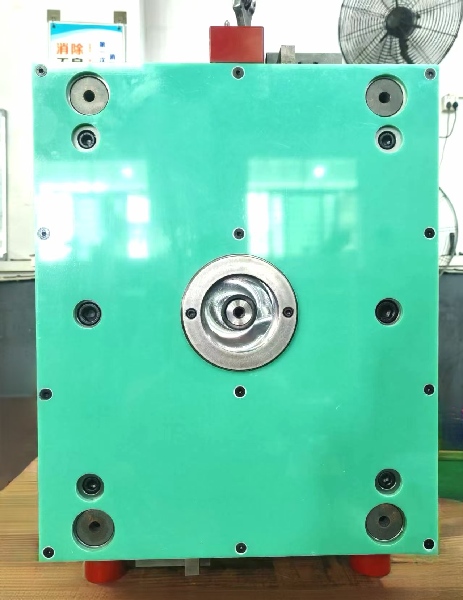
Hot runner injection mold system

What Is a Hot Runner Mold?

And Which 6 Injection Molding Problems Does It Solve?

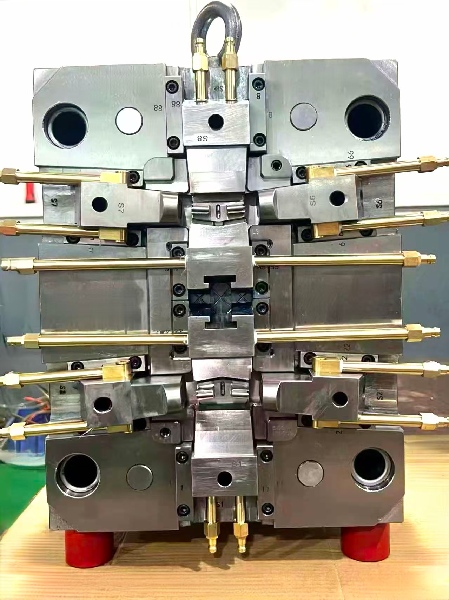
Hot runner manifold system

A hot runner system injection molding setup keeps the polymer melt at process temperature from the barrel to the gate, so no runner solidifies between shots. A hot runner injection mold pairs a heated manifold with individually zoned nozzles and feeds each cavity directly. The result is zero runner scrap, tighter shot-to-shot repeatability, and faster cycles on thin-wall geometry.

Core Components of a Hot Runner System

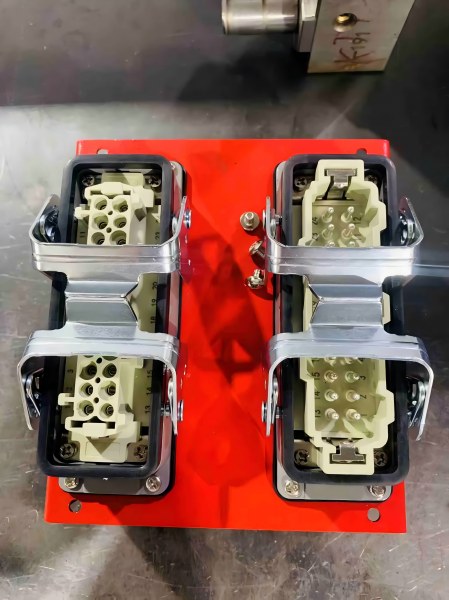
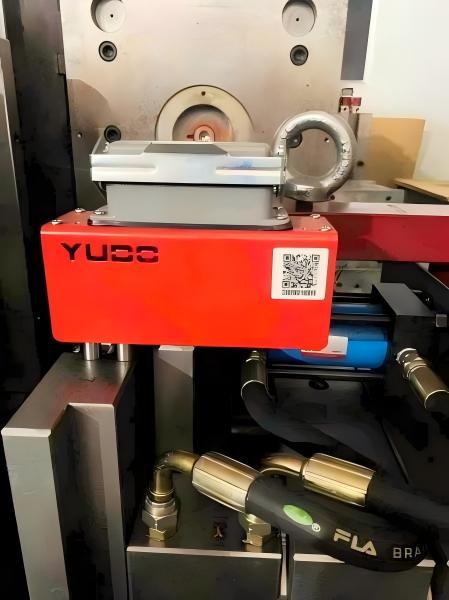
  • Heated Manifold — heated distribution block routing melt from the sprue bushing to each nozzle drop.
  • Nozzles & Gate Tips — open-gate, valve-gate, hot-tip, or pin-point tips at each cavity entry point.
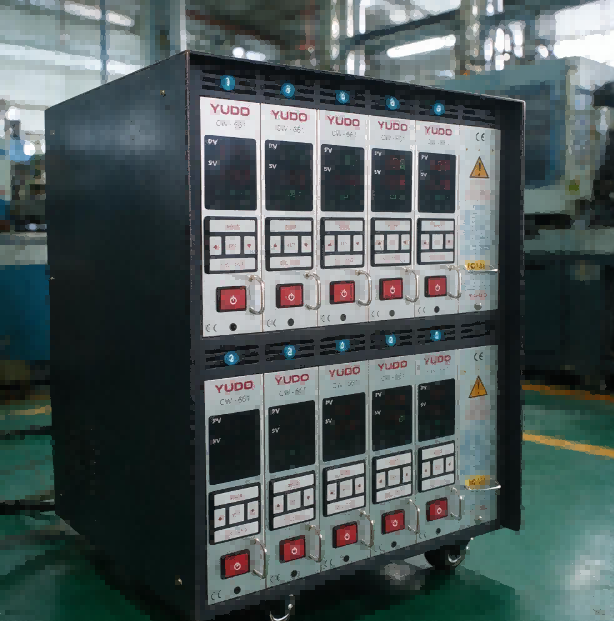
  • Temperature Controller — independent PID zones, typically 4 to 128 zones per system.
  • Thermocouples & wiring — sealed to withstand injection pressure and repeated thermal cycling.
  • Internally Heated vs Externally Heated Hot Runner Systems

  • Externally heated systems band heaters wrap the manifold and nozzle body. Melt flows through an unobstructed steel bore, giving low shear and clean color changes. Best for shear-sensitive resins (PC, PMMA, PC+ABS) and programs with frequent color swaps. Used on ~90% of KTM projects.
  • Internally heated systems a heated torpedo sits inside the flow channel. Excellent temperature stability on long, single-color runs, at the cost of higher shear and difficult color changes. Reserved for PET preform, HDPE closures, and high-cavitation programs above 32 cavities.
  • When to choose which: Externally heated is the default. Switch to internally heated only when color changes are rare and cavity count exceeds 32.
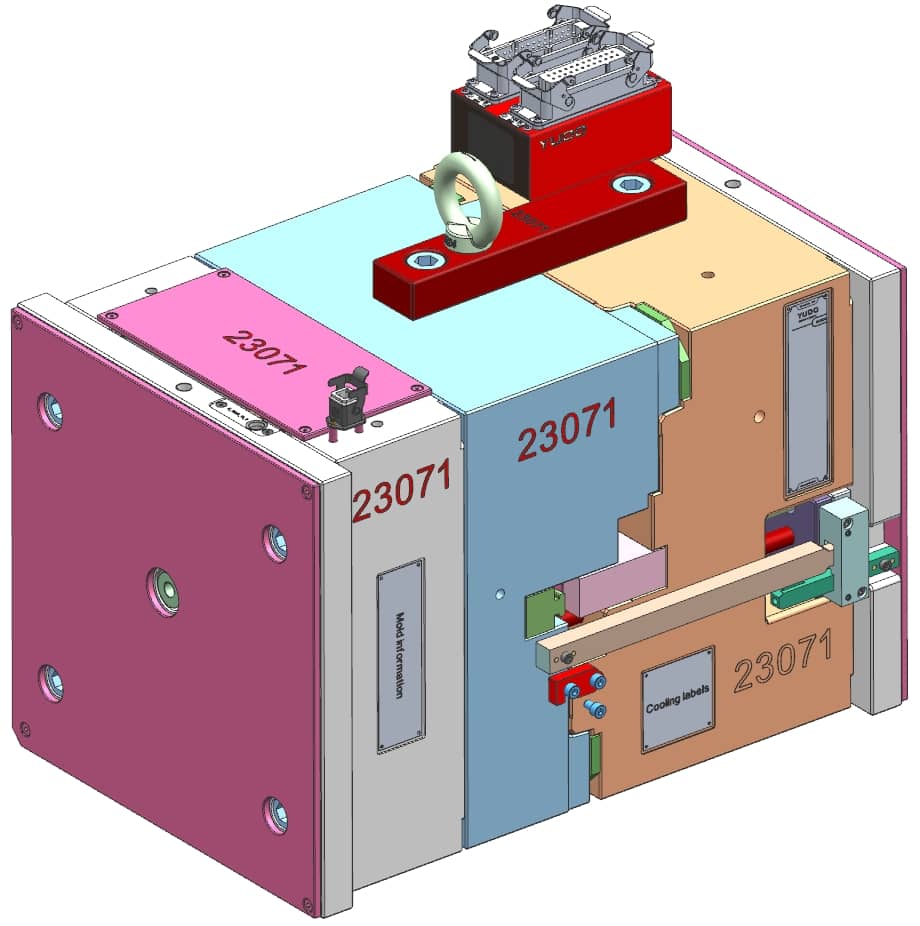
    3D CAD mold design

    6 Benefits of Hot Runner Molds — And the Problems They Solve

    Faster Cycle Times on Plastic Parts

    A 0.8 mm consumer housing that ran a 25-second cycle on a cold runner dropped to 15 seconds after switching to a valve gate hot runner mold. No runner cool time, no post-trim.

    Zero Material Waste in High-Volume Runs

    Cold runners burn 15 to 30% of shot weight as scrap. On a 2 million-part PC+ABS program, the hot runner saved roughly 8 tonnes of resin per year.

    Consistent Fill Balance on Multi-Cavity Molds

    With independent nozzle zones and Moldflow-verified layout, we hold cavity-to-cavity fill delta under 5% on 16-cavity molds and under 3% on 48-cavity molds.

    Clean Gate Vestige on A-Surface Parts

    Valve gates and pin-point tips leave sub-0.2 mm marks, which passes cosmetic inspection on visible housings without secondary trimming or manual polishing.

    Access to Advanced Molding Processes

    Stack molds, 2K molds, family molds, and PET preform tooling all depend on hot runners to route melt across split levels or between shot stations.

    Enables Automation Runs

    Direct-gate parts eject clean without a runner sprue, feeding straight into robot pick-and-place. All 40+ Fanuc and Haitian machines on our floor run with automation, holding 24-hour production on stable molds.

    Integrated Hot Runner Systems

    Brand Compatibility Matrix for Your Hot Runner Mold

    The right hot runner brand for your hot runner system injection molding project is decided by three inputs — your budget, your end-market approval requirement, and your annual volume. Product type does not decide it. A 32-cavity closure mold can run on YUDO, HUSKY, or a Chinese premium manifold — same geometry, same cycle envelope, three very different price points. Our job as a hot runner mold supplier is to match the brand to your project economics, then integrate it cleanly into the steel.

    Global and Regional Brands We Integrate

    Brand Best For Cost Tier KTM Experience
    Chinese Premium Cost-optimized, non-critical drops $ Zero major failures to date
    YUDO High-volume consumer, cost-sensitive programs $$ 120+ projects, our most-used system
    HRS / SYNVENTIVE / EWIKON Specialty European end-markets $$$ Available on request
    HUSKY PET preform, high-cavity packaging $$$ Available on request
    HASCO / DME HASCO / DME European engineering standards $$$$ Client-supplied integrations
    INCOE US automotive, precision tolerance $$$$ 10 projects in the past 5 years
    Mold-Masters Medical, complex valve gate applications $$$$$ Available on request

    How Brand Selection Actually Happens on Our Floor

    Around 70% of clients arrive with the brand already specified — locked in by end-customer approval, an existing spare-parts pool, or an internal engineering standard. In those cases we integrate the unit you ship under Model A, or we source the exact brand you name under Model B.

    For clients who ask us to recommend, two questions decide the shortlist: your target budget for the hot runner line item, and whether your end customer requires a named brand on file. Once those two answers are on the table, the choice usually narrows to two systems. YUDO hot runner and Chinese premium manifolds cover cost-sensitive volume programs. INCOE hot runner, Mold-Masters hot runner, and HUSKY hot runner enter the conversation when tight tolerance, medical approval, or high-cavity PET preform work is on the RFQ. HASCO hot runner appears when European tooling standards are contractually required. Resin, gate type, and cavitation are downstream design choices that fit inside whichever brand you pick.

    For multi-shot programs, we also integrate hot runner systems into our 2K molds.

    Trademarks: YUDO, INCOE, HUSKY, Mold-Masters, HASCO/DME, HRS, SYNVENTIVE, and EWIKON are registered trademarks of their respective owners. KTM is an independent mold manufacturer and is not an authorized dealer, partner, or distributor of any listed hot runner brand unless explicitly stated in a specific project agreement.

    With the brand locked, cycle time and gate cosmetics turn on which gate technology sits at each drop.

    Get a Free Hot runner vs Cold runner Feasibility Check →

    Hot Runner System Types & Gate Technologies for Your Mold

    Gate selection drives cycle time, part cosmetics, and scrap rate more than any other single decision in hot runner mold design. The manifold and nozzle system is engineered by the brand — our role is to specify the right gate family for your resin, cavitation, and A-surface requirement, then integrate it into the steel with the correct pocket geometry and thermal isolation.

    Open Gate — Lowest Cost, Widest Processing Window

    An open gate hot runner uses thermal gating with no valve pin. The forgiving processing window covers PP, PE, ABS, PS, PA+GF, PBT, and POM. Typical applications include industrial housings, tool boxes, PE crates, and overmolded soft-touch parts where minor stringing on the substrate is acceptable. Vestige height sits at 0.3–0.8 mm. Lowest system cost, and the default choice on non-cosmetic packaging drops.

    Valve Gate — Flush Vestige and Sequential Fill Control

    A valve gate hot runner mold shuts each gate with a pneumatic or hydraulic pin. You get a flush witness mark under 0.1 mm, sequential filling on long parts to control weld line position, and repeatable cavity-to-cavity balance across 16 to 64 cavities. YUDO valve gate fits PC+ABS consumer housings and cost-driven cosmetic covers. INCOE and Mold-Masters valve gates handle PA66-GF, PBT-GF, and other engineering resins where fiber shear at the gate has to stay below 50,000 1/s to preserve pull-strength.

    Hot Tip & Pin Point Gate — Direct Nozzle Contact for Small and Cosmetic Parts

    Hot tip gate mold and pin point gate hot runner systems share the same principle - a heated nozzle tip in direct cavity contact - but differ in gate diameter and residual vestige:

    • Hot tip — Ø1.0-2.0 mm gate, nozzle pitch down to 18 mm. Used on POM gears, PA connectors, and PP closures where cycle time and gate-freeze control outweigh cosmetic economy.
    • Pin point — Ø0.5-1.0 mm gate. Used on PC lenses, PMMA optics, ABS cosmetic covers, and insert-molded parts where the metal insert must seal clean against a Class-A surface.

    Gate Selection Matrix — Material, Vestige, and Cavitation

    Gate Type Recommended Resins Cost Tier Vestige Height
    Open Gate PP, PE, ABS, PS, PA+GF, PBT, POM etc $ 0.3–0.8 mm
    Hot Tip PC, PMMA, ABS, PP, POM etc. $$ 0.2–0.4 mm
    Pin Point PC, PMMA, ABS, POM,PP etc. $$ Available on request
    Valve Gate PC, PC+ABS, PA, PBT, PA+GF, PBT+GF, POM etc. $$$ under 0.1 mm

    Gate type answers the "how." Cavitation answers the "how many" — and that decision reshapes the entire tooling budget.

    Single-Cavity to 64-Cavity — Full Range of Hot Runner Cavitation

    Cavitation is the largest cost driver in a hot runner mold quote after steel grade. We size cavitation against three inputs — annual volume, part weight per shot, and machine tonnage available at your plant. Get one wrong and you either bleed unit cost across a million shots or stall the machine on every cycle.

    Hot runner manifold system

    1–2 Cavity — Large Automotive & Industrial Parts

    • Shot weight per cavity: 200 g to 10+ kg
    • Machine range: 400T to 3,300T (partner capacity above 800T)
    • Applications: dashboard housings, HVAC ducts, bumper substructures, interior trim
    • Typical system: YUDO or INCOE single-drop valve gate

    8–16 Cavity — Consumer Electronics & Small covers & Housings

    • Shot weight per cavity: 5 g to 200 g
    • Machine range: 160T to 400T on in-house Fanuc Roboshot and Haitian
    • Applications: shell, camera housings, PA connectors, appliance covers
    • Typical system: YUDO valve gate, Moldflow-verified balance before steel is cut

    32–64 Cavity — Caps, Closures, Medical & PET Preforms

    • Shot weight per cavity: 0.5 g to 5 g
    • Machine range: 250T to 650T with hydraulic accumulator for fast injection
    • Applications: 32 cavity hot runner mold and 48 cavity hot runner mold work for beverage closures, medical droppers, pipette tips
    • 64 cavity hot runner mold projects — including hot runner PET preform mold work — run on HUSKY or high-end YUDO

    Two Ways to Work with Us

    And Who's Accountable When the Hot Runner Fails

    Every hot runner system injection molding project runs under one of two commercial models. The choice decides who holds the brand relationship, who tracks the warranty clock, and who answers your engineer's Monday-morning email when a heater zone drops out mid-shift.

    Model A

    KTM-Sourced Hot Runner (90% of Our Projects)

    We quote the hot runner as a line item inside the tooling cost. We select the brand with your engineering team, place the PO with the manufacturer, integrate the system, and coordinate every warranty claim on your behalf for the life of the mold. One PO, one project engineer, one point of contact — not four vendors on a warranty conference call.

    As a hot runner mold supplier running OEM hot runner mold and customized hot runner mould projects across 8 brands, we hold established purchase channels with YUDO and premium Chinese systems, plus active supplier lines with INCOE, HASCO, HRS, and Mold-Masters.
    Responsibility
    • Hot runner purchase:KTM
    • Brand selection:Client or KTM recommend
    • Mold design: KTM
    • Hot runner design & approval in mold: Brand+Client+KTM
    • After sales service coordination: Client and hot runner brand.

      For Chinese brand: KTM (Wear part replacement for free)

    • Cost visibility: Bundled, itemized quote
    Model B

    Client-Supplied Hot Runner System

    You purchase the hot runner from YUDO, INCOE, HUSKY, Mold-Masters, or a European brand and ship it to our floor. We machine the plate pockets to your drawings, integrate the manifold, wire the controller to your target voltage (110V / 220V / 380V), and run T1 with your resin. Warranty and troubleshooting route directly to your brand's regional service office. We stay available for mechanical diagnosis but cannot invoice the brand on your behalf.

    When Model A fits: your end-customer has specified the brand, you already hold a service contract with the brand, or your procurement policy requires direct purchase.
    Responsibility
    • Hot runner purchase:Client
    • Brand selection:Client / end-customer
    • Mold design:KTM
    • Hot runner design & approval in mold: Brand+Client+KTM
    • After sales service coordination: Client and hot runner brand
    • Cost visibility: Sourcing-dependent

    Free Wear Parts on Chinese Premium Systems

    Heater bands, thermocouples, seals, and O-rings are the four components that account for roughly 85% of hot runner service calls — global or domestic brand alike. Fix the wear part fast, and a stopped press restarts in 90 minutes. Fix it slow, and one shift of a 48-cavity closure line costs more than the hot runner itself.

    If you selected a global brand (YUDO, INCOE, HUSKY, Mold-Masters, HASCO), heater and O-ring service runs through the brand's regional office under their warranty terms — we escalate on your behalf but the parts ship from them.

    If you selected a Chinese premium hot runner on our recommendation, we ship replacement heater bands, thermocouples, seals, and O-rings free of charge for the first 2 years of production. Air freight within 5 working days of your email. No PO, no dispute, no warranty paperwork loop.

    1
    Manifold Checking
    Before hot runner system assembly
    2
    Torque-Sequenced Nozzle Install
    Per OEM spec
    3
    Heat-Up Leak Test
    Before first shot
    4
    Thermocouple & Wiring Mapping
    Zone-by-zone documented
    5
    Moldflow Shear & Residence Check
    Prevents resin degradation

    Have an OEM hot runner ready to ship, or want us to recommend one?

    Start the conversation with an engineer

    Ready to Lock Brand, Cavity, and Budget on Your Next Hot Runner Mold?

    Send us your 3D file with target resin and annual volume. Within 24 hours, a mold engineer returns three named deliverables:

    Upload your STP file → Or email our engineering team directly
    Preliminary DFM
    Hot runner brand recommendation
    Cavity proposal

    How We Build a Hot Runner Mold You Can Trust — 5-Stage QA Process

    Every hot runner injection mold succeeds or fails on five specific control points. Each stage below screens for a hot-runner-specific failure mode — not a generic mold defect. What's written next to each stage is the failure mode we've actually caught in production over the past two decades.

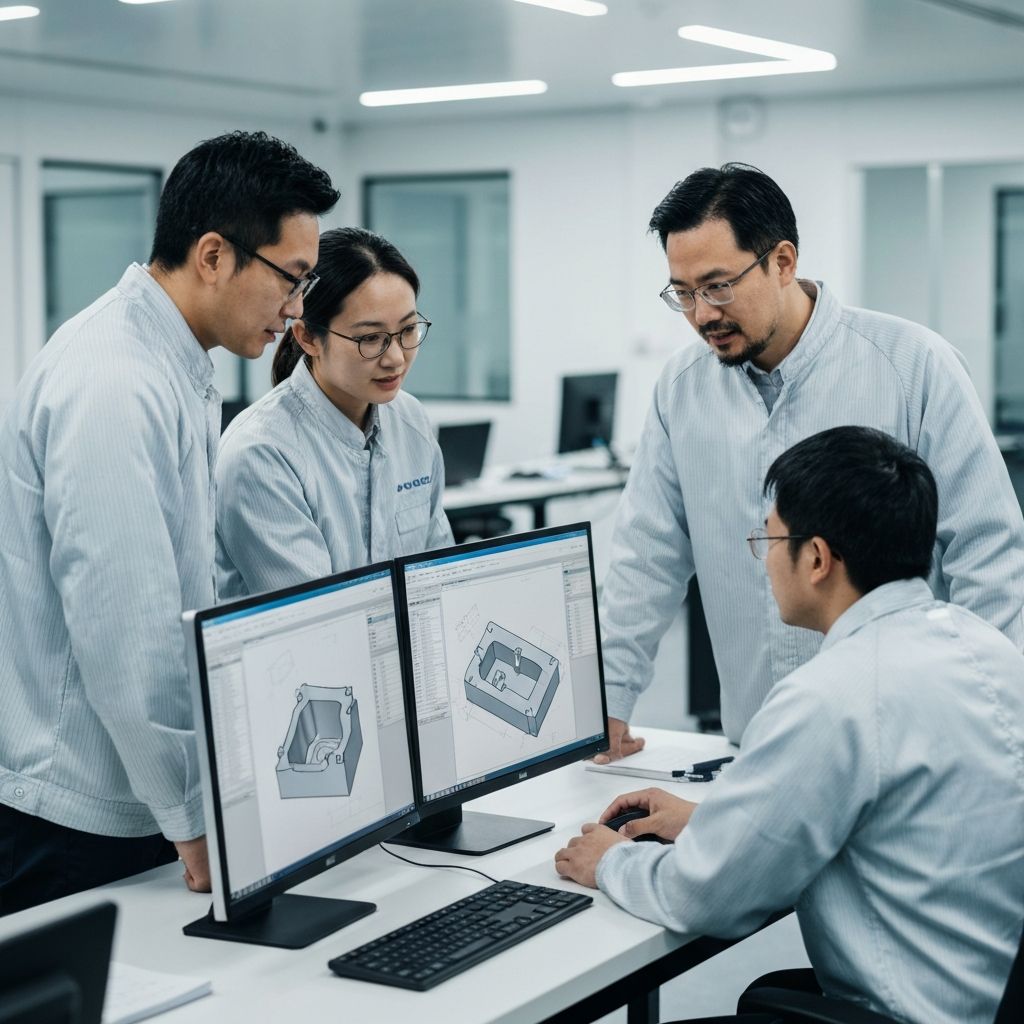
    KTM engineering team
    3D CAD mold design

    Stage 1 — Hot Runner DFM

    Manifold layout feasibility, nozzle drop pitch versus cavity spacing, thermal isolation clearance (12–15 mm between manifold and plate on most builds), gate position mapped against A-surface, and valve pin actuation space for pneumatic or hydraulic drivers.

  • Deliverable: preliminary DFM PDF within 48 hours
  • Failure mode caught: nozzle-to-cavity interference, thermal short to mold plate, valve pin cylinder collision with waterline
  • Stage 2 — Moldflow Simulation with Hot Runner Focus

    Cavity-to-cavity fill balance target ≤5%, shear rate through manifold branches held under 50,000 1/s to preserve glass fiber length on PA66-GF30, valve pin sequence timing on sequential-fill systems, and gate freeze time cross-checked against cycle target.

  • Software: Autodesk Moldflow Insight
  • Failure mode caught: unbalanced fill on multi cavity hot runner mold, fiber breakage at gate, premature gate freeze on thin-wall parts
  • Stage 3 — Precision Machining of Hot-Half Interfaces

    Three geometries drive hot runner reliability, and we inspect all three before hot half assembly: manifold pocket flatness (0.02 mm across pocket), nozzle bore concentricity (±0.01 mm), and thermocouple channel routing.

  • Equipment: Fanuc CNC, Sodick mirror EDM
  • Failure mode caught: manifold leakage between pocket faces, nozzle heater dead zone from bore misalignment
  • Stage 4 — In-House Trial with Full Thermal Mapping

    First trial runs on our Fanuc Roboshot (90T–400T) with your target resin. We log temperature at every heater zone, weigh parts from every cavity, and inspect gate vestige under 10x magnification. Any zone drifting more than 3°C from setpoint is diagnosed before packing.

  • Deliverable: trial report with short-shot, cavity weight balance, and first-off dimensional data
  • Failure mode caught: hot spots, cold drops, thermocouple drift, uneven cavity fill missed by simulation
  • Stage 5 — Hot Runner Electrical Test + CMM + Material Certification

    Before packing, every hot runner zone runs through three tests: heater resistance check, thermocouple continuity, and insulation resistance to ground. Any zone outside spec is repaired or replaced. Full ISIR/CMM reportDeliverables: CMM report, mold steel mill certificate, hot runner factory electrical test certificate

  • Deliverables: CMM report, mold steel mill certificate, hot runner factory electrical test certificate
  • Failure mode caught: shorted heaters, open thermocouples, insulation breakdown that would trip your controller in month two of production
  • Sample DFM, Moldflow, and CMM reports available under NDA on request.

    Which failure modes we watch hardest shifts by industry — six sectors drive our hot runner mold volume.

    Industries We Serve with Hot Runner Molds

    Failure modes shift by sector. Six industries drive most of our hot runner mold volume — the brand, gate, and steel we recommend flows from where your part ships.

    Automotive

    — Interior trims, connectors, HVAC housings. YUDO and INCOE valve gate systems on PA66-GF30 and PC+ABS, A-surface vestige under 0.1 mm, mold steel 1.2344 at 48–52 HRC. Hot runner mold for automotive programs shipping to US Tier-1 and Tier-2.
    Medical

    — Droppers, syringe barrels, diagnostic housings. Mold-Masters valve gates on S136 stainless (52–54 HRC), clean-room-compatible surface finish Ra 0.4. Hot runner mold for medical parts under material traceability.
    Consumer Electronics

    — Device housings, camera frames, POS terminal enclosures. Pin point and hot tip gates on PC, PC+ABS, and ABS. Vestige under 0.05 mm on cosmetic Class-A surfaces.
    Packaging

    — Caps, closures, thin-wall containers, PET preforms. 32 to 64 cavity hot runner mold work on PP, HDPE, and PET, sequential valve gate for balanced fill.
    Home Appliance

    — Hair dryer shells, kitchenware bodies, appliance side panels. Open gate systems on PP, PS, ABS. Cycle-optimized 4 to 16 cavity layouts.
    Industrial

    — Irrigation fittings, crates, tool housings, sailboat hardware. Multi cavity hot runner mold builds with Chinese premium manifolds for budget-driven programs.
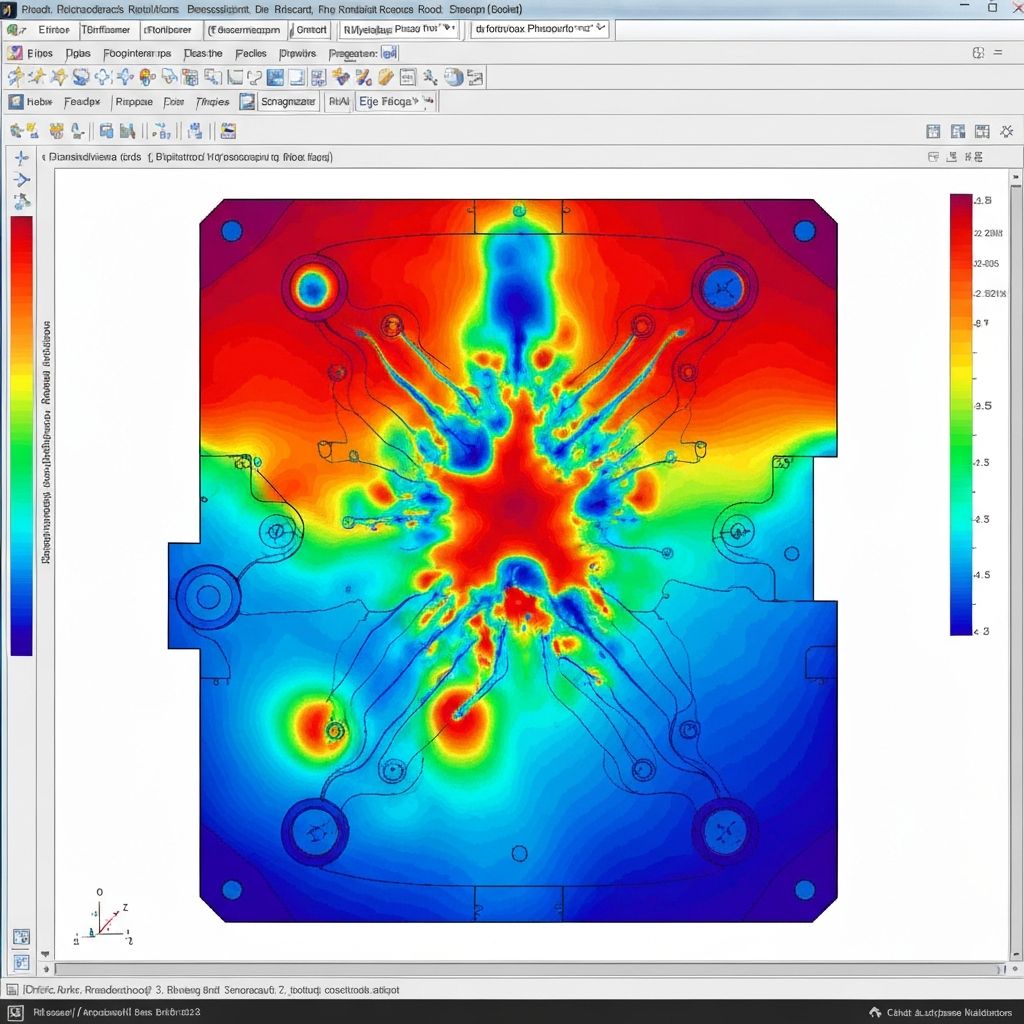
    Moldflow simulation

    Moldflow simulation for optimized filling

    Our Documented Hot Runner Mold Projects Cases

    Projects below are pulled directly from mold acceptance protocols — one YUDO, one Chinese local brand and one INCOE hot tips. Steel grades, HRC readings, fill balance percentages, and lead times are lifted verbatim from the sign-off sheet the client engineer countersigned. other brands are available on request.

    Field Detail
    Customer US Automotive Connector
    Cavity 4
    Hot runner INCOE hot tip system, customer supplied
    Mold Steel 1.2344, 50–52 HRC
    Resin PA66 with 10% glass fiber
    Volume 500K shots.
    T1 lead time 7 weeks
    Challenge:

    glass-fiber shear at the gate caused localized burn marks and fiber breakage. Pull-test failed the 320 N OEM spec on 1 of 4 cavities.
    Solution:

    opened the INCOE hot runner tip diameter from 1.2 to 1.6 mm and polished the manifold flow path to Ra 0.4. Calculated shear rate at the gate dropped below 50,000 s⁻¹, preserving fiber length above 0.7 mm post-mold.
    Outcome:

    burn marks eliminated. Pull test averaged 380 N across ten cavities per shift — 60 N above spec. Tool cleared PPAP Level 3 on first submission.

    Challenge:

    the acceptance protocol demanded a 12s cycle and cavity-to-cavity fill balance under 5%.
    Solution:

    we routed an X-branch balanced manifold and staggered valve pin openings in 0.05s steps. Moldflow verified a 2.7% pre-steel delta on a 32 cavity hot runner mold layout. The domestic premium system delivered a 34% cost saving versus the European quote the client had in hand.
    Outcome:

    trial ran at 11s with 4.5% measured fill balance across all 32 cavities. Signed off in T2.

    Field Detail
    Customer Germany, Closures, 32-Cavities-Multi Cavity Hot Runner Mold
    Cavities 32
    Hot runner Chinese local valve gate, KTM-sourced
    Mold steel H13, 50-52 HRC
    Resin ABS
    Volume 1 million shots
    T1 lead time 9 weeks
    Field Detail
    Customer France, Consumer electronic device housing, A-surface visible
    Cavities 16
    Hot runner YUDO open gate, KTM-sourced
    Mold Steel S136 50–52 HRC
    Resin PC
    Volume two millions
    T1 lead time 8 weeks
    Challenge:

    the client's prior cold-runner tool left a 1.6 mm gate scar on the A-surface. Incoming inspection rejected 15% of parts on cosmetic grounds, forcing manual re-polish on the remainder.
    Solution:

    we relocated the gate to a hidden edge under the battery door and specified a YUDO hot runner valve gate sized for 0.9 g cavity shot weight. Moldflow verified 2.1% cavity-to-cavity fill delta before steel was booked.
    Outcome:

    cycle time dropped from 24s to 17s. Vestige measured 0.08 mm — below the 0.1 mm cosmetic threshold. Scrap held under 0.5% across the first six months.

    Project sitting on your desk right now?

    Send us your 3D file with target resin and annual volume. Within 24 hours, a mold engineer returns three named deliverables:

    Upload your STP file → Or email our engineering team directly
    Preliminary DFM
    Hot runner brand recommendation
    Cavity proposal

    Why Buyers Return to KTM for Their Next Hot Runner Mold

    Three reasons appear on every repeat purchase order — each specific to hot runner work.

    Brand-Neutral Recommendation Across 8 Hot Runner Systems

    Most mold makers push whichever brand pays the best distributor margin. KTM runs active projects on 8 brands, so recommending YUDO over INCOE for your consumer program — or a domestic premium unit over HUSKY on non-critical drops — is driven by your product criticality and target market, not our commission. Ask for the brand comparison spreadsheet built from our own project cost database.

    Hot runner mold for consumer electronics enclosures and device housings

    Cross-Brand Failure Diagnosis Library from 150+ Molds

    Hot runners fail in brand-specific ways: YUDO valve pins wear at the guide bushing, INCOE hot tips lose thermal stability on long resin residence times, domestic heater bands drift out of PID range near the 3M-cycle mark. When your valve pin sticks on cavity 12 in month 8, the diagnosis comes from a documented failure database, not the manufacturer's service manual.

    Multi-cavity hot runner mold for industrial equipment components

    Injection-Side Feedback Loop on Hot Runner Wear

    Molds staying at KTM for injection production feed real-world data back to design: actual heater band life by resin, valve pin cycles before drift, gate wear rate at high-cavity fill pressures. That data updates the next hot runner spec we quote you. Details on injection molding service on the linked page.

    Below are the questions engineers ask before releasing a PO.

    Hot Runner Mold FAQs

    The questions our engineers hear most often before a project kick-off.

    Hot runner mold system

    Didn't find your question? Ask our engineering team directly.

    Our engineering team is available to answer your specific questions about hot runner mold design, materials, and manufacturing processes etc.

    A hot runner injection mold uses a heated manifold, individually zoned nozzles, a PID temperature controller, and sealed thermocouples to keep the melt at process temperature from barrel to gate. No runner solidifies between shots. Cycle time drops 20–40% versus cold runner tooling, and runner scrap drops to zero.
    YCold runners solidify each shot and eject as scrap or regrind. A hot runner mould keeps the runner molten — no scrap, faster cycle, tighter cavity-to-cavity balance. Tooling costs 30–50% more upfront but typically pays back within 6–18 months above 100k parts/year. Full breakdown: Hot Runner vs Cold Runner Injection Molding Guide →
    It depends on product criticality, target market, and budget. YUDO hot runner covers cost-sensitive consumer and general-purpose work — 120+ builds on our floor. INCOE hot runner and Mold-Masters hot runner suit US and EU automotive or medical OEM approval. HUSKY hot runner handles PET preform and 48-cavity-plus closures. HASCO hot runner meets European engineering standards. Chinese premium brands cut cost 30–50% on non-critical drops. Send the drawing — we'll match brand to project, not margin.
    Five failure modes screened on every valve gate hot runner mold and open gate hot runner mold we build:

    1: Drooling and stringing at the gate — controlled by nozzle tip temperature stability at ±1°C and correct decompression stroke

    2: Gate freeze-off on thin-wall parts — corrected by gate diameter sizing and nozzle tip geometry at DFM stage

    3: Black specks and carbon buildup — prevented with streamlined manifold flow paths (zero dead zones) and documented purge protocol

    4: Cavity-to-cavity fill imbalance — solved by Moldflow layout verification before steel is cut; target ≤5% at 16 cavities, ≤3% at 48

    5: Manifold leakage — prevented by controlled thermal expansion clearance and lapped sealing surfaces at every nozzle interface

    Please check above the two different models details, For Chinese premium hot runners selected on our recommendation, heater bands, seals, and O-rings ship free of charge — one email, no PO required.
    DFM ships with every order. A full hot runner mold design report follows within 5–10 days after PO. Autodesk Moldflow Insight runs on any tool above 8 cavities, A-surface parts, or warpage tolerance below 0.3 mm. Lead time: single-cavity 5-6 weeks, 8–16 cavity 6–8 weeks, 32–48 cavity 10–12 weeks. Downstream production: injection molding service →
    1.2344 (H13) at 48–52 HRC for high-cycle production, S136 for medical and optical, NAK80 for fast-turn cosmetic, P20 for prototype. For 30% glass-fiber PA66, PBT, or PPS, we spec H13 or S136 with flow paths polished to Ra 0.4 and open nozzle tip diameters to preserve fiber length. All steel ships with mill certificates.

    Start Your Hot Runner Injection Mold Project

    Share your 3D file and part volume — an engineer (not a sales bot) will review it and reply within one business day with a DFM check, gate recommendation, and a clearly scoped quotation.

    KTM engineering teamKTM engineering teamKTM engineering team

    What Happens After You Submit

    1. 1 Engineer review — within 1 business day: Your files go directly to a tooling engineer.
    2. 2 DFM feedback + indicative quote — within 1–3 business days: Gate location, parting line, draft angle, and a cost range based on your requirement.
    3. 3 Final quotation with scope and lead time: A fixed quotation, mold steel list, hot runner brand, and committed delivery timeline.