Custom Plastic Enclosures
From Prototype
to Production
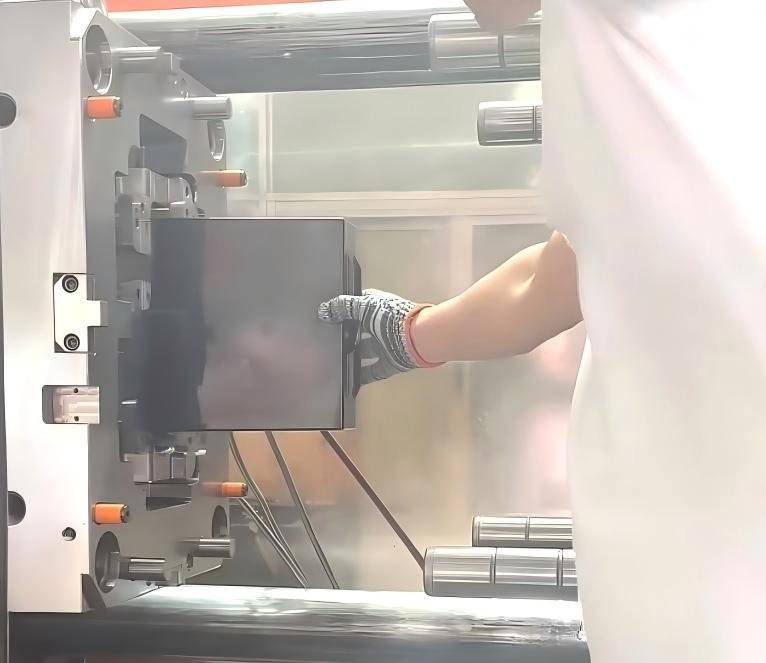
KTM Mold manufactures custom plastic enclosures for electronics, electrical equipment and industrial applications. We review your drawing, material, assembly requirements and expected volume to define a suitable manufacturing route, from CNC-machined or vacuum-cast prototypes to injection-molded production parts. Molded-in brass inserts are available where the design requires them.
- ✓Founder-led mold shop, 20+ years hands-on
- ✓40 injection machines, 90–400T, robot-loaded for continuous runs
- ✓In-house FANUC CNC and SODICK mirror EDM for tooling
- ✓CMM dimensional reports and material certificates
- ✓Molded-in knurled brass inserts for screw bosses
What Is Custom Plastic Enclosure Manufacturing?
Custom plastic enclosure manufacturing turns your housing design into molded production parts, using an injection mold built to your geometry instead of an off-the-shelf box. The important decisions are wall thickness, draft, bosses, sealing features, material, and process control. We review those details against the intended assembly and operating environment.
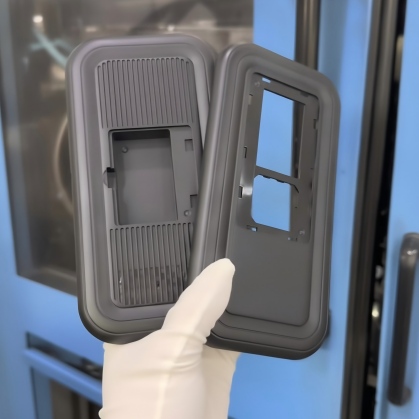
We've built these housings for POS terminals, power outlets, and industrial control boxes, so the failure modes below are grounded in production work. We review the design and process risks before steel is cut.
The Real Challenges Engineers Face
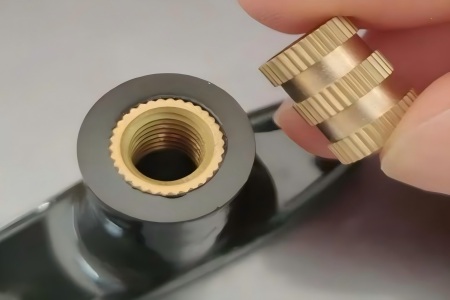
Brass inserts can spin or pull out; bosses can crack
Inserts without the knurl or seating geometry needed for retention

Sink marks and warpage can break the seal line
Uneven walls or late draft changes create avoidable molding risk

Your prototype shop cannot scale to production
The program stalls when the shop cannot support production tooling
How We Solve Them
Bosses designed for insert retention
Brass inserts are machined and knurled before molding, then positioned on core pins before injection. We review the insert profile, boss geometry, resin and assembly torque together. Plastic flows around the retention features during molding. Torque and pull-out requirements should be defined for the finished boss and verified through agreed testing.
Walls designed for stable filling
DFM reviews wall thickness, ribs, bosses, draft and parting lines. Simulation, where required for the project, supports evaluation of filling, packing, cooling and warpage. Findings guide design and tooling changes; molding trials then verify critical dimensions, fit and the sealing interface.
One process path across volumes
CNC machining supports functional prototype checks; vacuum casting is coordinated through our production partner for short runs. Before injection tooling, we review draft, wall thickness, ribs and fastening features for molding. Agreed changes are recorded in the drawing revision used for tooling and production.
The enclosure applications below show how these design and manufacturing decisions apply to different products.
Enclosures We Manufacture
We tool and mold custom plastic enclosures for consumer electronics, electrical equipment and industrial applications. Each housing is developed around your components, assembly method, operating environment and production volume.
Power strips & socket enclosures
Power strips, wall outlets, and extension units with bosses, cable paths, and front features coordinated for assembly, insulation, and the resin grade specified for the application.
POS terminal housings
POS terminal housings with dimensional control around displays, boards, fasteners, and cable exits. DFM reviews coordinate boss placement, draft, and assembly access.
Electronic device housings
Handheld, PCB, and instrument housings designed around board clearance, connector access, fastening, and service needs. Material and wall design follow the operating environment.
Home appliance housings
Small-appliance and white-goods covers with practical parting lines, draft, ventilation, and fastening features. Appearance requirements are reviewed together with molding and assembly constraints.
Industrial & electrical boxes
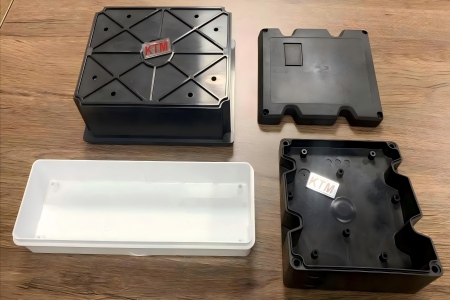
Control enclosures and larger machine covers planned around footprint, mounting points, seals, cable entries, and machine capacity. Press selection follows the drawing.

Daily-use product housings
High-volume consumer housings where repeatable filling, cosmetic surfaces, snap fits, and cycle economics matter. Resin selection and tooling layout are matched to the program.
The application images are illustrative. Many electronic enclosure builds use threaded brass inserts in the screw bosses. Insert geometry, boss design, and molding conditions are reviewed together to support repeatable assembly.
Brass Insert Molding for Secure Screw Bosses
Bosses are a common risk point in electronic enclosures because loads pass from the screw through the brass insert into the surrounding plastic. If an insert rotates or pulls out, the part may fail fit, torque, or service requirements. Brass insert injection molding addresses that risk when insert profile, core-pin fit, boss geometry and mold layout are designed together. We review the fastener, thread size, resin, expected assembly torque, and available boss space before the tool is cut. Knurled brass inserts are placed in the cavity before the shot, allowing plastic to form around the profile. Final retention depends on geometry, process control, and validation against the specified load.
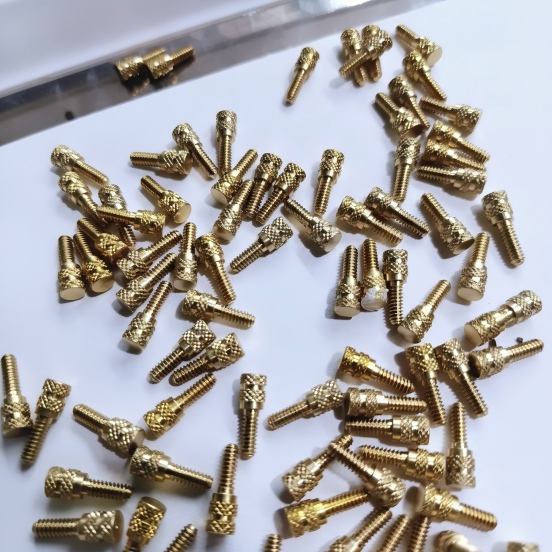
Custom CNC Brass Inserts & Knurling
We CNC-machine brass inserts and match the thread, knurl, and seating features to the fastener, boss diameter, resin, and specified assembly load. As the resin cools around the external profile, it forms a mechanical interlock:
- ▸Knurl pattern creates a mechanical key that resists rotation during screw tightening.
- ▸Annular grooves provide undercuts to help resist axial pull-out from the boss.
- ▸Thread and engagement match the screw length, tightening torque and available boss depth.
Boss walls and supporting ribs must leave enough material around the insert without creating thick sections that encourage sink marks. Share the service temperature and expected assembly cycles with your drawing.
In-Mold Insert Placement and Process Control
Inserts are located on core pins before injection. Resin fills around the external profile while the tooling supports the insert and protects the internal thread. Placement and molding controls are matched to the program:
- ▸Manual loading supports initial trials and lower-volume programs with controlled insert seating.
- ▸Robot loading supports repeatable placement and cycle planning for ongoing production.
- ▸Process checks address seating depth, thread protection, filling and flash around the insert.
Molded-in, heat-installed and press-fit inserts each have suitable applications. The choice depends on access, volume and required retention. Define torque and pull-out acceptance criteria for the finished boss rather than assuming the process alone guarantees strength.
Need to review a boss that may spin or pull out? Send the boss design, fastener, resin, and target assembly load. We can review the insert and boss geometry in a preliminary DFM.
Volume-Matched Manufacturing
The right process depends on geometry, target volume, material, finish and timing. CNC machining and vacuum casting support early samples; low volume injection molding becomes an option when the design is stable and production resin is required. We compare tooling cost, batch quantities and repeat releases before selecting the route.

Prototype and Low Volume: CNC and Vacuum Casting
- ▸precision CNC machining from solid PC or ABS for enclosure fit, assembly and dimensional checks before production tooling.
- ▸vacuum casting for short runs of cosmetic enclosure prototypes using selected urethane resins and silicone molds; cast properties are checked against the prototype requirements.
- ▸Screw-in inserts while the design is still moving, when molded-in inserts are not yet required.
Use prototype parts to review fit, sealing, and assembly before committing to production tooling.
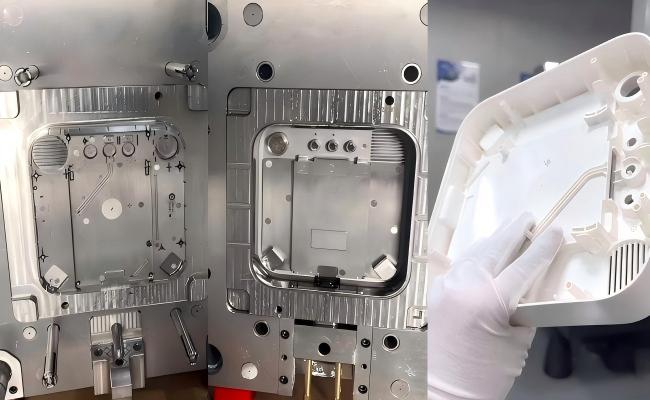
Production: Plastic Enclosure Injection Molding
- ▸In-house presses include robot-loaded production equipment; available machine, cycle, and staffing plans are matched to the program.
- ▸Partner press capacity from 450T to 3300T is available for larger industrial covers; the selected machine is matched to the drawing.
- ▸Two-color tooling for compatible material combinations, and gas-assisted tooling for suitable hollow or thick sections.
Through our custom injection molding service, production trials establish filling, appearance and critical dimensions before the agreed process is released.
Low-volume enclosure manufacturing and production molding use the approved drawing revision for each stage, with process-specific changes reviewed before release. The selected resin and thickness determine the applicable flame classification; material documentation ties the specification to the resin.
Materials and UL 94 V-0 Flame Classification
Some electronic enclosure programs specify a flame classification, so resin, grade, thickness, and application requirements are reviewed together. We mold three common enclosure resin families:

ABS
Cost-effective with good impact strength; often selected for indoor, temperature-controlled enclosure applications when the specified grade meets the requirements.

PC
Higher impact and heat resistance for demanding housings; outdoor use depends on the selected UV-stabilized grade and application requirements.
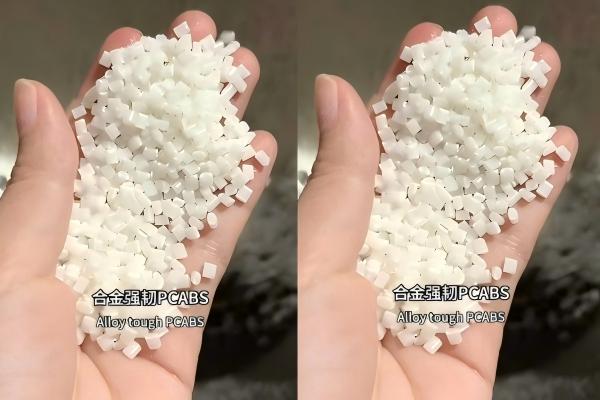
PC+ABS
A practical blend of PC toughness and ABS processability for larger covers; select the grade and thickness against impact, heat, and flame requirements.
UL 94 V-0 Material Grades
For electronic enclosures, we mold flame-retardant grades with a documented UL 94 V-0 classification at the specified thickness. Selection should check the exact resin grade, color and applicable thickness in the supplier's recognition record. Material certificates link the selected resin grade and batch to the program documentation.
A material's V-0 classification does not by itself certify a finished enclosure or electronic product. Final compliance depends on the complete design and the applicable product requirements.
Material control is one part of the quality record; the other is checking that the molded part measures against the drawing.
Our Quality & Documentation System
Documentation is planned from quote through shipment so the agreed checks are recorded. Reports and acceptance criteria follow the program scope; every dimensional release is based on recorded checks rather than a verbal "it looks good."
Documentation you receive:
- ▸Preliminary DFM at quote: moldability, wall thickness, draft, and insert-boss risks reviewed before tooling scope is finalized.
- ▸Full DFM after order, with Moldflow used for complex or thin-wall geometry when the program requires it.
- ▸T1 trial report with first-shot results and dimensional checks for the tooling validation program.
- ▸CMM dimensional reporting against the drawing as part of the agreed quality record.
- ▸Material certificates and lot records when required by the material and documentation plan.
Toolmaking and inspection equipment:
- ▸FANUC CNC and SODICK mirror EDM support tooling work in-house.
- ▸CMM measurement for critical dimensions, mounting features and mating geometry.
- ▸Optical projection for profiles, plus hardness checks on tooling.
- ▸Plug, pin, thread and go/no-go gauges for repeatable in-process checks.
- ▸Calipers, micrometers and height gauges for routine dimensional inspection.
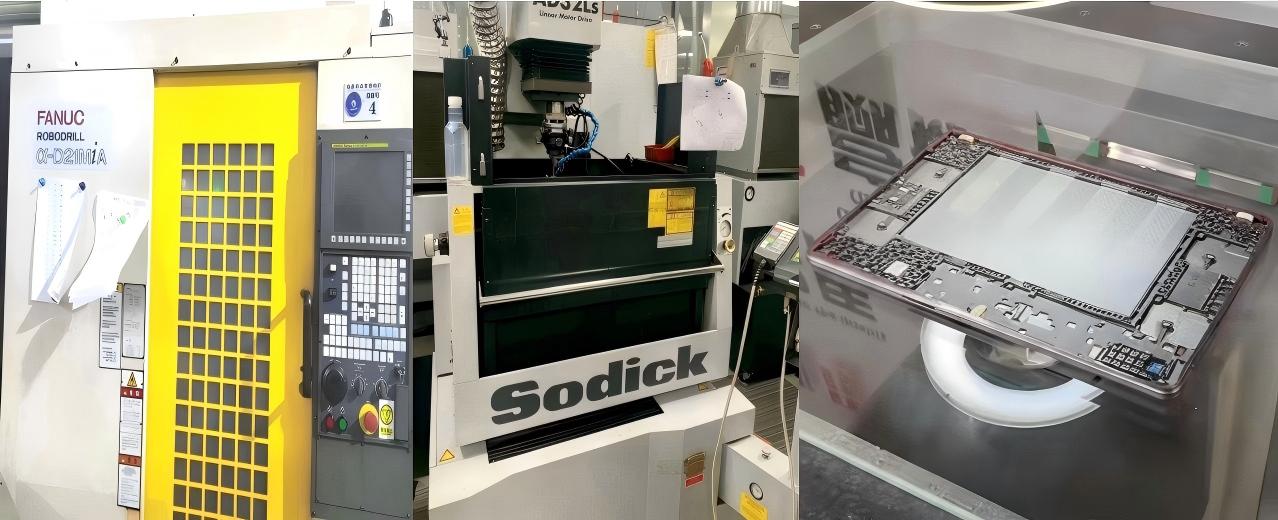
As a custom plastic enclosure manufacturer, we treat documentation as part of the program. Drawing and report retention, confidentiality terms, and access are set for each project. The quality record shows what was checked, against which revision, and with what result.
Want the full documentation trail before you commit? Send your enclosure drawing and talk directly with the engineer who would run your tooling.
Enclosure Mold Case Studies
Selected projects show how steel, cavity layout, and process choices are matched to the part. Customer names and confidential volumes are omitted where required; each example focuses on the engineering decision and the result for the program.
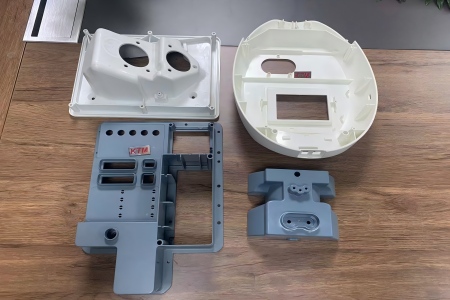
Case 1 — Consumer Electronics
Repeated assembly torque testing identified retention risk at the corner bosses, so the boss and insert geometry were reviewed against the program's assembly load.
DFM revised the boss geometry before tooling; after the cavity was cut and validated, knurled CNC-machined brass inserts were placed by robot for insert molding.
The revised bosses supported the assembly cycling plan, with retention criteria defined for the program.
Case 2 — Power Outlet Enclosure
A long-run program needed cavity-to-cavity consistency while tool wear and cycle count were monitored against the drawing.
H13 tooling and balanced cooling were selected for the material and production target, with cycle life set by the tool specification and maintenance plan.
The four cavities were monitored for dimensional stability through the production run against the drawing requirements.

Case 3 — Industrial Control Box
Warpage on the large flat faces threatened the seal line and required review of filling, cooling, and support conditions.
Moldflow supported the gate-location review. Control of the sealing faces also requires evaluation of wall and rib geometry, packing, cooling and resin shrinkage. Final flatness and sealing performance must be checked on trial-molded parts.
The revised process brought flat faces and the seal line into alignment with the drawing requirements.
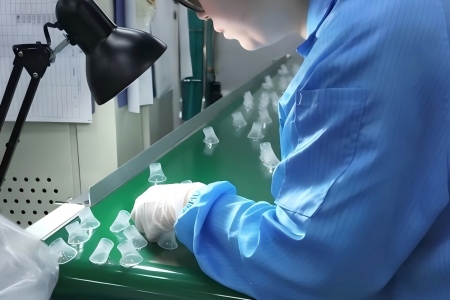
Related Tooling Example — PA66 Internal Component
Tooling review for this PA66 internal component focused on corrosion resistance and dimensional control.
S136 corrosion-resistant stainless tooling was selected, with first-article and in-process CMM checks against the drawing.
Dimensional stability at volume was monitored, with CMM reporting retained for the program.
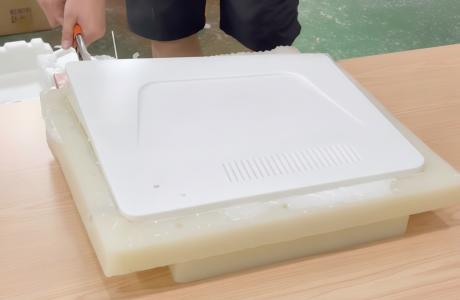
Case 5 — Prototype Enclosure
Field samples were requested for fit and assembly checks before the team committed to production tooling.
Vacuum casting in silicone molds produced prototype housings for fit and assembly checks. The casting resin and insert method were selected for the prototype requirements.
Functional units supported fit and assembly validation before the design moved into injection tooling.

Case 6 — Large Industrial Cover
The shot size and part footprint exceeded the in-house machine range, requiring a larger press option for the program.
Production used an 800T machine on a partner line, while KTM coordinated tooling and inspection responsibilities for the program.
The oversized cover ran through the partner press arrangement without splitting tooling and quality ownership across suppliers.
Mold steel, cavity layout, and process are only part of the decision; the supplier's change and quality process matters when the design evolves.
Why OEMs Choose KTM
Choose a custom plastic enclosure manufacturer by how it manages tooling, assembly risks and design changes. KTM coordinates drawing reviews, moldmaking and production planning around the agreed requirements.
Technical founder on the floor
Our founder is degreed in mold design and manufacturing, with more than 20 years of hands-on tooling experience. That background connects enclosure design decisions with practical moldmaking, injection molding and assembly requirements.
Engineer-to-engineer communication
Your engineering contact reviews draft angles, gate locations, shrink, weld lines, boss design, and assembly constraints so the drawing, DFM decisions, and tooling scope stay aligned from quotation through trial.
Time-zone overlap
Our project team works until 20:00 China time to provide overlap with US and European customers. This supports direct discussion of drawings, trial feedback and production questions, with timing arranged around each project.
Transparent pricing
The approved quotation defines the included scope, cavity count, materials, tooling, and lead-time assumptions. Any change is documented and agreed before work proceeds, so pricing reflects the tooling and production requirements.
Our repeat-business history includes customers who have stayed with us past 10 and 15 years, reflecting the value of long-term supplier support. The questions below cover common enclosure sourcing decisions.
Custom Plastic
Enclosures FAQ

PC, ABS, and PC+ABS are common enclosure resin families. PC can suit higher impact or heat demands, ABS often suits indoor cost-sensitive parts, and PC+ABS can balance toughness and processability. The final grade, thickness, environment, and any UL 94 classification should match the product specification.
Send Your Enclosure Drawing
Send your drawing, material requirements and expected volume for a free preliminary DFM review. We will clarify tooling, molding and documentation scope in the quotation. If you need an NDA, arrange it with us before sharing confidential files.