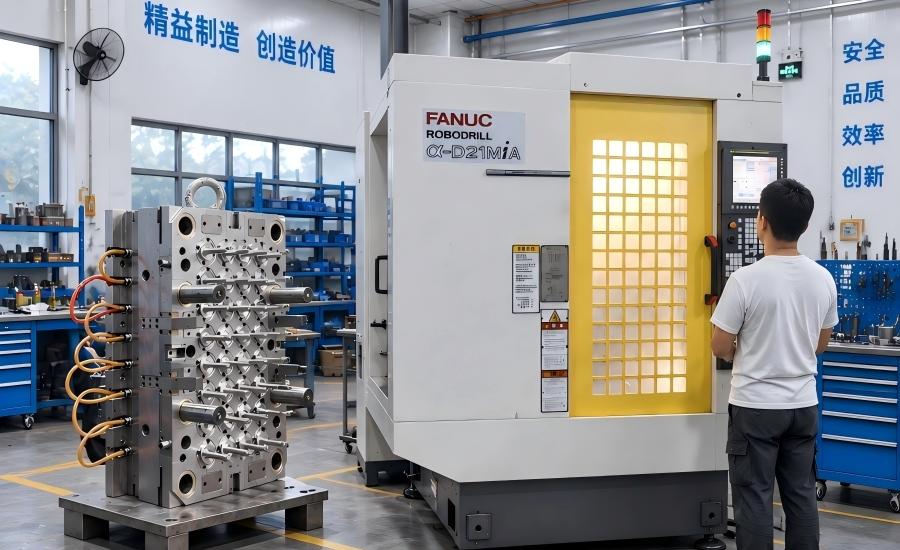
Custom Injection Molds — Engineered for Your Production
A custom injection mold should fit your part, resin, production plan, and inspection requirements. KTM reviews these inputs before mold design so the tooling and acceptance criteria are clear before manufacturing begins.
KTM is an engineer-led mold factory in Dongguan, China. You work engineer-to-engineer, and KTM coordinates engineering questions with its in-house moldmaking and CNC teams.
- Preliminary manufacturability review based on the files you provide
- DFM, simulation where appropriate, trial and inspection scope agreed by project
- Tooling material selected for the part, resin and production plan
- Quotation scope and design changes reviewed with your team
- Export the tool or keep it in our factory for production
Choose Your Injection Mold Delivery Route
KTM manufactures the mold and reviews the route with you before production: export the tool for your own presses, or discuss KTM-managed molded-part supply. Tool ownership, maintenance, transfer and acceptance terms are defined in the project agreement.
| Decision | Export the mold | KTM-managed production |
|---|---|---|
| Buyer input | Drawing revision, resin, intended press and tool specifications. | Drawing revision, resin, expected volume and part acceptance criteria. |
| Trial and approval | Review agreed samples, critical dimensions and tool handover requirements. | Review agreed samples and production conditions before part supply. |
| Documents and upkeep | Handover, maintenance and any transfer terms agreed for the tool. | Maintenance, records and any later tool transfer agreed for the project. |
KTM performs moldmaking and CNC machining in-house. Heat treatment is outsourced; 800T, 1000T, 2100T and 3300T molding is supported by long-term partners. See custom injection molding services for ongoing part production.
Discuss Your Mold RouteOur Injection Mold
Tooling Capabilities
What Is Tooling in Injection Molding?
An injection mold includes the cavity and core, mold base, inserts, slides, lifters, ejection and cooling systems needed for the specified part. The mold design and quotation are reviewed against the drawing, material, production route and agreed acceptance criteria. To see how these parts work together during each shot, read our injection molding process guide.
For a small number of critical mold dimensions, ±0.005 mm may be specified where the customer 2D drawing and project requirements call for it. The applicable features and inspection method are agreed for each project.
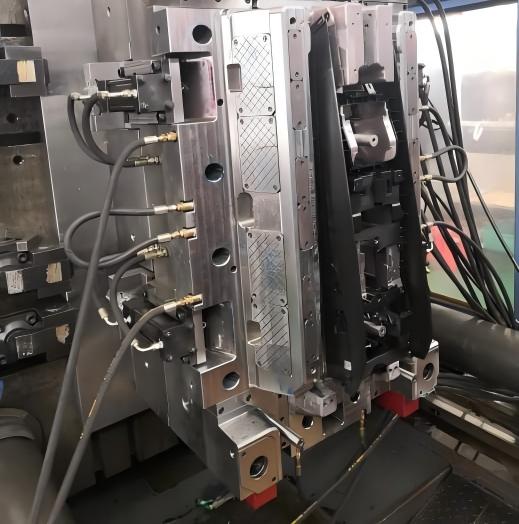
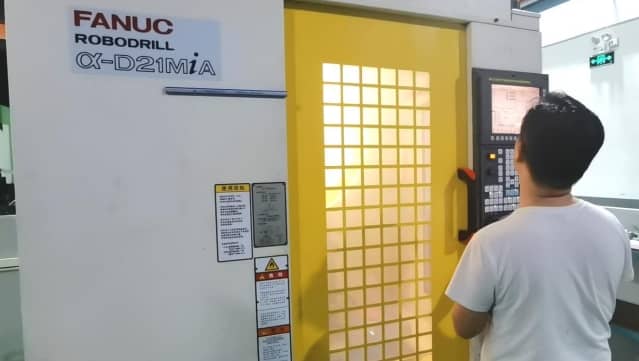
Moldmaking, CNC and Project Inspection
KTM manufactures injection molds and performs CNC machining in-house. Critical mold dimensions are defined from the customer 2D drawing and checked against the project inspection plan; ±0.005 mm is not a blanket tolerance for every mold or molded part. Heat treatment is outsourced.
CMM and other inspection methods can be used for the agreed critical features. Molding requirements and the scope of any partner-supported production are defined for the specific project; 800T, 1000T, 2100T and 3300T large-tonnage molding is supported by long-term partners.
Inspection methods and report scope, including any CMM or gauge measurements, are confirmed for the specific project.
Injection Mold Types
& Processes We Build
These mold and process options are evaluated against part geometry, resin, annual volume and the intended production route. KTM builds the molds; the location and equipment for specialized 2K or gas-assisted molding are confirmed per project.

Hot Runner Mold →
What it does: Eliminates cold runners and the scrap they create, and holds gate quality on cosmetic surfaces.
Best for: High-cavitation, high-volume parts where material waste and cycle time both matter.
Press: Standard injection press with hot-runner temperature control.
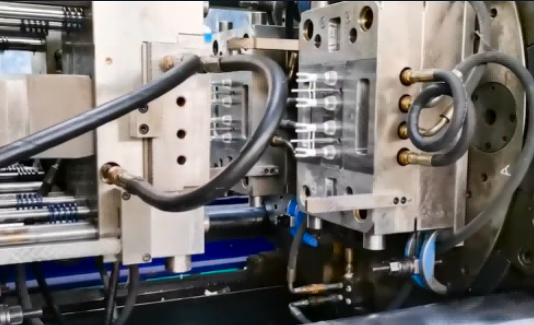
2K / Two-Shot Injection Molding →
What it does: Molds two materials or colors in one cycle, bonding them without a separate assembly step.
Best for: Soft-touch grips, bonded seals, and multi-color cosmetics.
A suitable two-shot machine; equipment ownership and production location are confirmed for the project.

Overmolding →
What it does: Bonds elastomer or a second resin onto an existing substrate for grip and sealing.
Best for: Handles, grips, and sealing surfaces over a rigid core.
Press: Press and tooling arrangement depend on the substrate and overmolding route selected for the project.
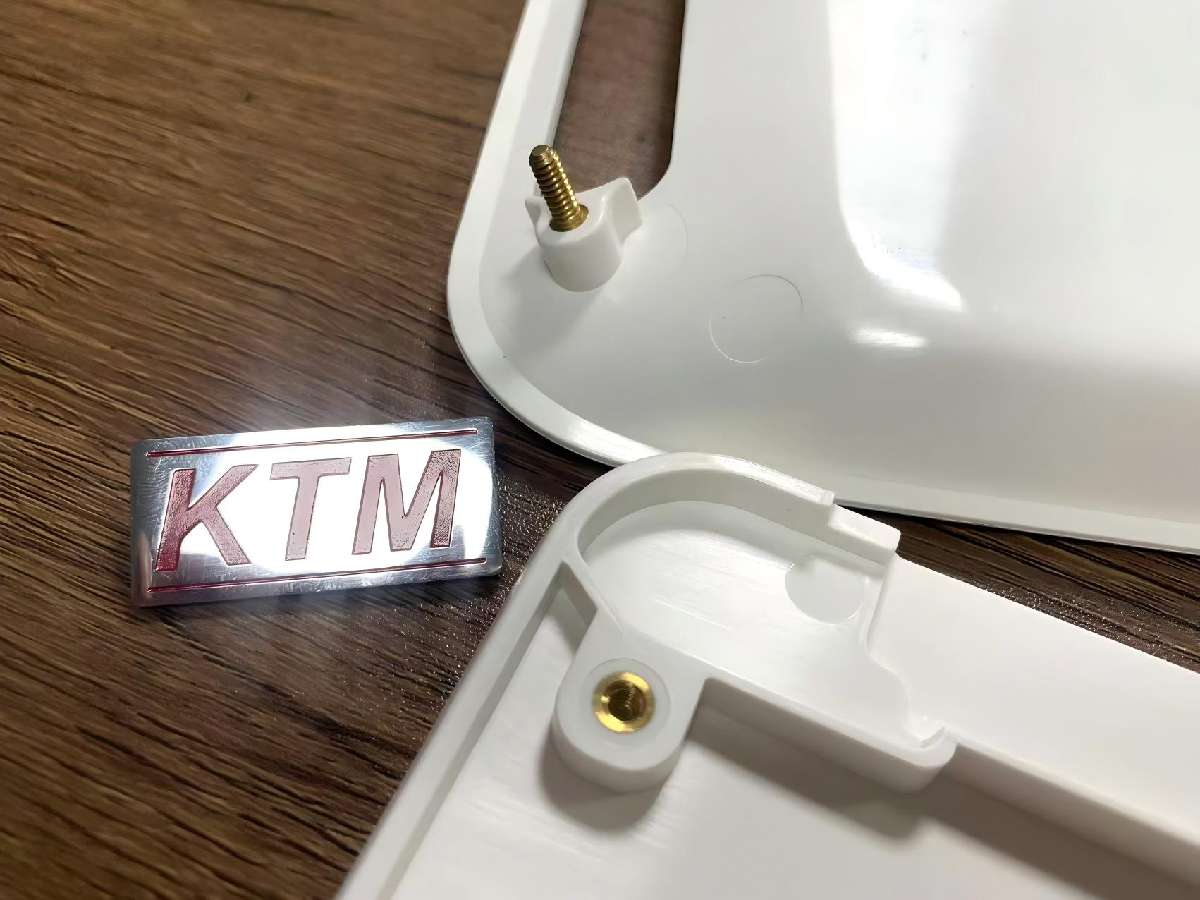
Insert Molding →
What it does: Encapsulates brass inserts,stainless steel inserts,aluminum inserts, pins, shafts or any metal products directly in the molded part.
Best for: Parts that would otherwise need a downstream press-fit or assembly step.
Press: Standard injection press with insert-loading process by hand or robot.
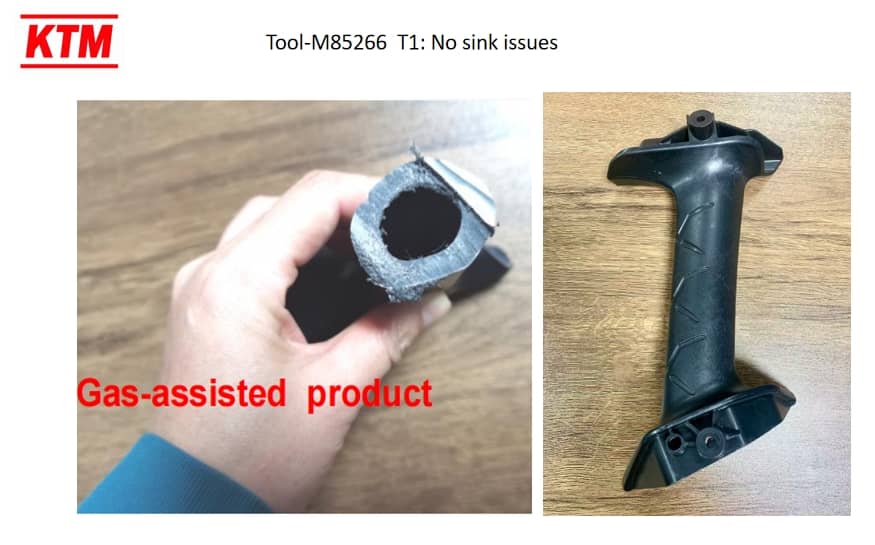
Gas-Assisted Injection Molding →
Gas assistance may reduce weight or sink risk on suitable parts; performance is confirmed through design review and trial.
Best for: Structural parts, handles, and large panels with thick sections.
Press: Standard injection press paired with dedicated nitrogen gas control unit.

Unscrewing Injection Mold →
What it does: Molds internal or external threads with a mechanical unscrewing action on ejection.
Best for: Threaded closures and caps where a rotating core is appropriate.
Press: Standard injection press with a geared or hydraulic unscrewing core.
Family & Multi-Cavity Molds — Sized to Your Annual Volume
When several related parts share a resin and shot size, a family mold may run them together where filling balance and production economics support it. When you need volume on a single part, a multi cavity mold balances fill and cooling across cavities to hold dimensions cavity-to-cavity. We size cavitation to your annual volume, not to a maximum.
Filling and dimensions are assessed separately through the agreed design, trial and measurement process.Tell us your part and target volume — we'll recommend the cavitation and steel that actually fit, not the most expensive option.
That choice ties directly to one more decision — aluminum or steel?
REQUEST A DFM REVIEW — UPLOAD YOUR PART FILE →Aluminum vs Steel Injection Molds:
Which Tooling Fits Your Volume?
Material choice depends on the part, resin, finish, operating conditions and maintenance plan. There is no universal shot-life figure for any steel grade.
| Tooling option | Selection factors | Review before approval |
|---|---|---|
| Aluminum / prototype mold | Prototype or bridge use where the part and production conditions make aluminum suitable. | Geometry, resin, expected volume, wear and maintenance. |
| Pre-hardened tool steel (for example P20) | Project-specific balance of machining, finish and production needs. | Steel supply state, cavity design, resin and operating conditions. |
| Hardened tool steel (for example H13 or S136) | Consider for demanding wear, corrosion or finish requirements. | Grade, heat treatment, part geometry, maintenance and inspection plan. |
Aluminum and Rapid Tooling — When It Pays Off
Aluminum tooling may suit prototype and bridge programs, depending on geometry, resin, volume and maintenance needs. Cooling performance and part quality still require design review and trial validation. For related routes, see prototype injection molding and low-volume injection molding.
Hardened Steel for Production Volume
For production tooling, steel selection depends on resin, part geometry, surface finish, production conditions and maintenance. H13 and S136 are possible grades, but neither grade nor hardness alone establishes a fixed mold life. Heat treatment is outsourced and its specification is set for the project.
The quotation should identify the selected steel, cavities, material, finish and design complexity.
Injection Mold Cost:
Factors Behind Your Quote
KTM does not publish a general mold price range because the scope varies by drawing, steel selection, cavities, plastic material, finish and mold complexity. Send the project requirements for a quotation with defined assumptions.
| Cost factor | What the quotation must define |
|---|---|
| Mold steel | Grade, supply condition and any required heat treatment. |
| Number of cavities | Cavitation and runner layout matched to target volume. |
| Plastic material | Resin and any wear, corrosion or processing considerations. |
| Surface finishing | Texture, polish and other specified finish requirements. |
| Mold complexity | Slides, lifters, unscrewing actions, size and inspection scope. |
The quotation is based on your drawing and agreed production route, with the scope and assumptions listed for review.
What Drives Injection Mold Cost — Part geometry & Complexity, Mold Steel,Resin & Surface Finishing
More than three things move the price, and an honest quote names all of them:
Part geometry & Complexity
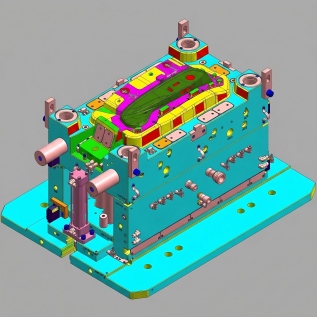
Bigger parts demand larger mold bases and higher tonnage. Side actions,lifters, and unscrewing cores add machining hours,a flat cover and a threaded closure never cost the same.
Cavity Count
Cavity count affects tool design, process balance and capacity. The suitable layout is reviewed against your annual volume and part geometry.
Mold Steel Grade
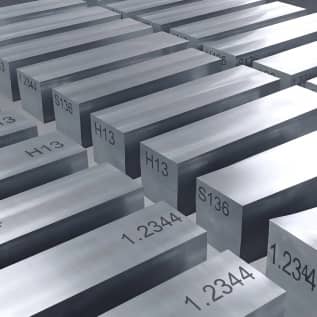
Aluminum, pre-hardened P20, or hardened H13/S136 each move both price and tool life. We set the grade by your target volume, not a default.
Molding Material
Glass-filled nylon and PVC are abrasive and corrosive — they wear cavities and attack the screw, so these molds cost more than the same part in ABS or PP.
Surface Finish
A lightly textured housing and a mirror-polished S136 optical surface are different jobs. Cosmetic and optical finishes add polishing hours the quote makes visible.
Delivery Route & Mold Specification
Export-tooling standards, component selection and any retained production arrangement are specified in the project quotation; neither route has a universal price advantage.

How to Compare Injection Mold Quotations
An incomplete quotation can hide steel, gate, inspection or change-scope assumptions. Review those items before approving the mold design.
The quotation should define the agreed design, material, inspection and delivery scope. Any later design change and its cost or schedule impact are reviewed with the customer before implementation.
Prototype and production-tool options can be quoted separately when both routes are relevant. The final choice depends on the part and planned volume.
Request a Project Quote →How We De-Risk Your Injection Mold
Before the First Shot
The existing five-step process helps align the drawing, design, trial and inspection work. Which reports and approvals apply is defined for each mold project.
DFM Review
For an initial review, send the current 2D/3D drawing and revision, resin, estimated annual volume, critical dimensions and datums, appearance and assembly requirements, and whether the tool will be exported or used for KTM-managed part production. We flag draft, wall, gate, ejection and unresolved design risks. The scope of detailed post-order DFM work is agreed for each project.
Mold Flow Analysis — Only When Your Part Needs It
Where suitable for the project, flow simulation compares possible filling, weld-line and related risks using stated resin and design assumptions. Simulation informs the design decision; actual part quality is checked at trial and inspection.
Mold Design Sign-Off & Weekly Mould Build Updates
Before mold manufacture, the customer and KTM review the drawing revision, mold layout, open DFM points and approval owner. Changes after sign-off are logged and reviewed for their impact on tooling, schedule and inspection.
Tool Trial (T1) Sampling Report
Trial samples and their conditions are reviewed against the agreed requirements. Any defects or dimensional deviations are recorded, corrected where needed, re-tested and submitted for customer approval before export or production. The number of trials and report scope are set by the project.
Final Inspection, Critical Dimensions & Metal-Safe
The acceptance package is agreed for the project and may include identified samples, trial conditions, results for specified critical dimensions, approved drawing revision, relevant material or outsourced heat-treatment evidence, issue closure and re-test records, and handover or maintenance information. Items are supplied where applicable and agreed; a full CMM report or FAI/ISIR/PPAP package is not assumed for every order.
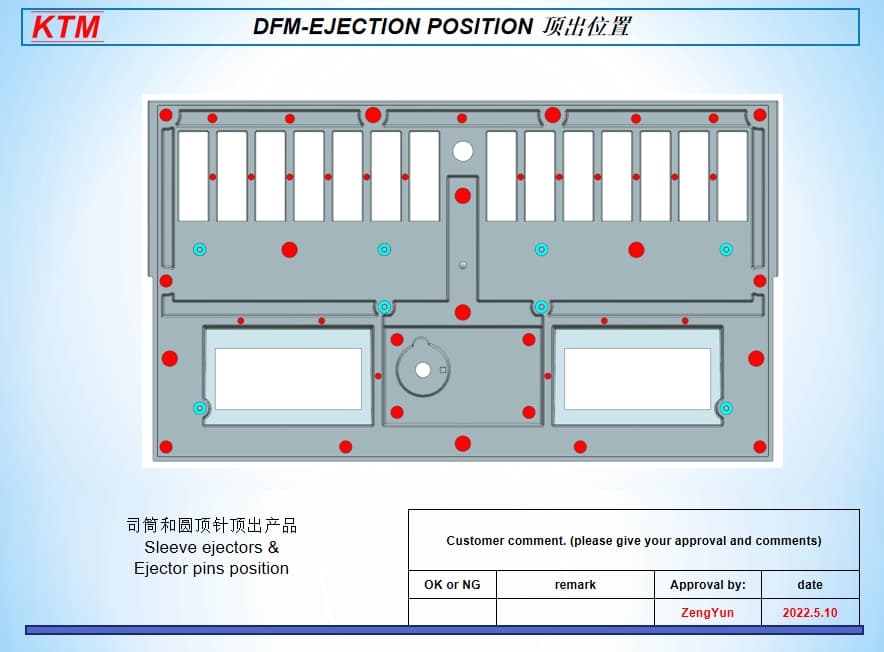
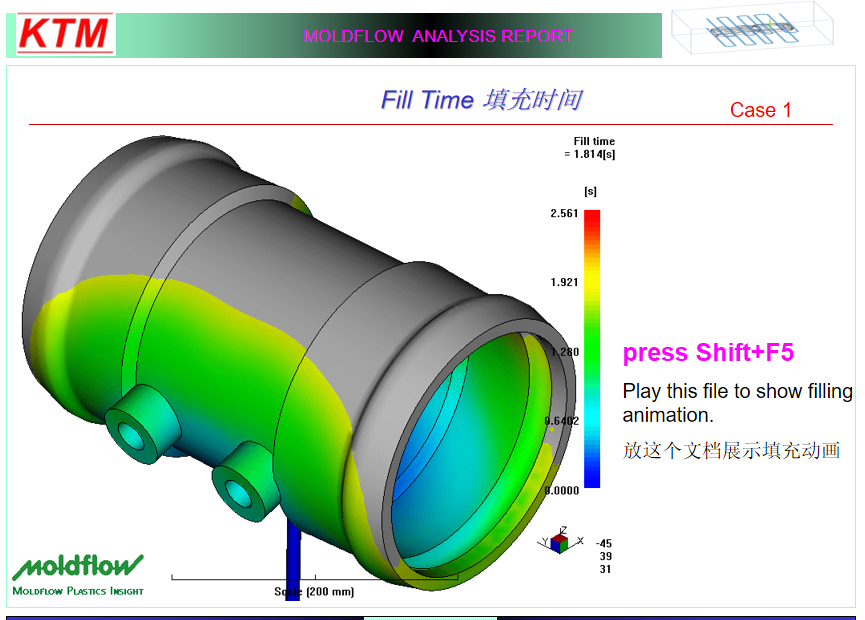
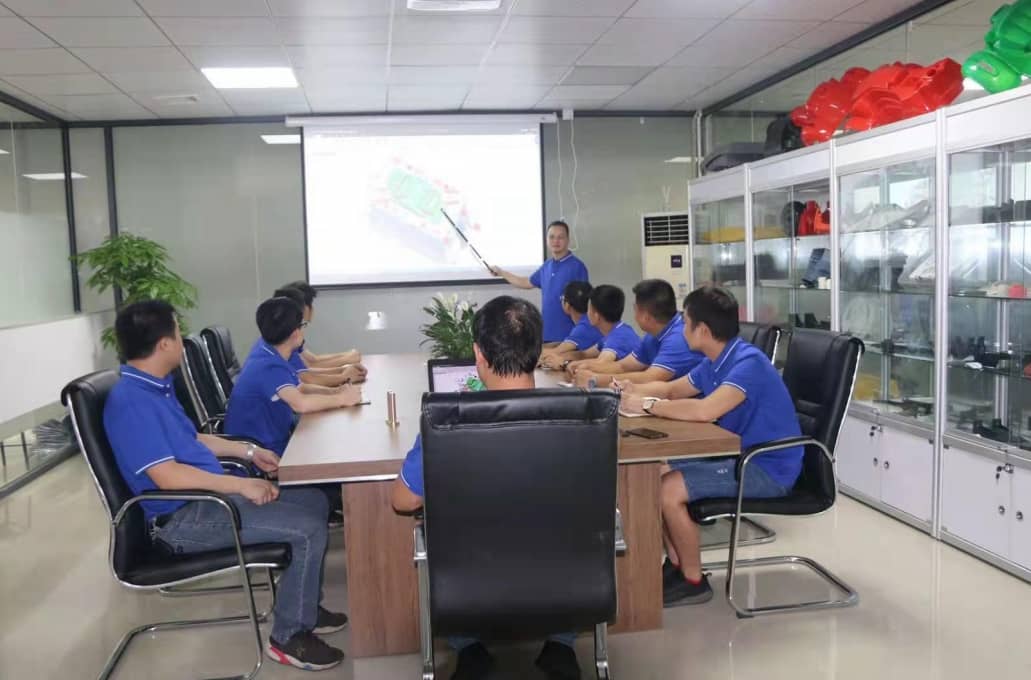
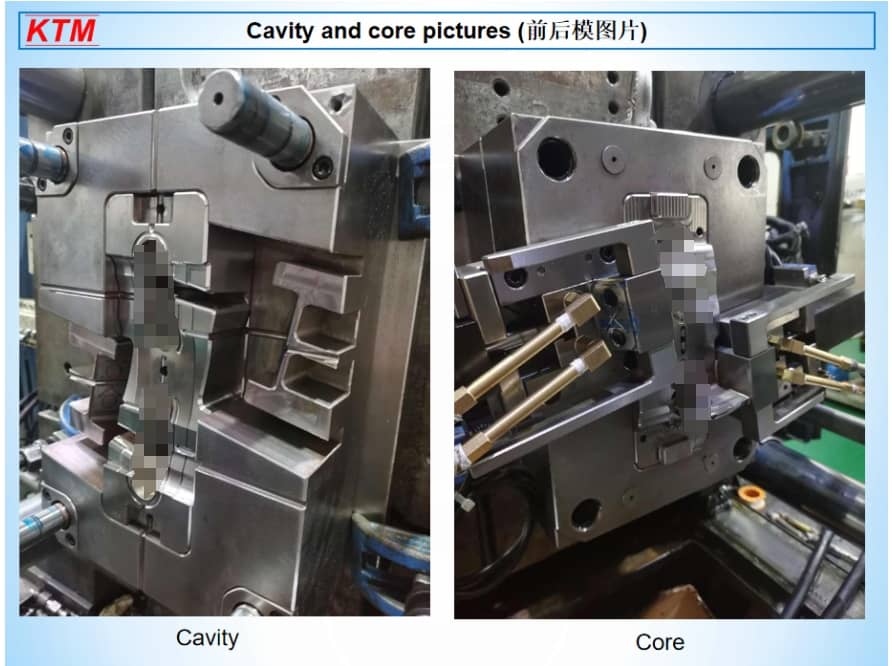

KTM coordinates moldmaking, CNC, external heat treatment and any partner-supported molding against the agreed inspection and approval plan. The customer can review open issues before the tool is released.
Send your latest drawing and project requirements for an initial manufacturability review. We will confirm the review scope and next steps for the project.
Request a DFM ReviewWhy Engineers Choose KTM as
Their Injection Mold Partner
For a custom mold, drawings, tooling decisions and inspection criteria need a clear project owner. KTM coordinates these discussions with its in-house moldmaking and CNC teams and identifies outside process support when required.
One Team Owns the Entire Build
KTM manages the engineering and moldmaking work, including in-house CNC, while coordinating outsourced heat treatment and any partner-supported molding. Design issues and inspection findings are reviewed within the project team.
Material-Specific Tooling Review
For abrasive or corrosive resins, steel and process suitability need a project-specific review. The tool grade and molding setup are confirmed against the selected material and the agreed production route.
Controlled Drawings and Project Records
KTM supports repeat moldmaking programs through project drawings, revisions and inspection records. Customer examples and program history can be discussed where disclosure is permitted.
Project Updates Across Time Zones
Our project team coordinates design questions and progress updates with overseas buyers. Review cadence and response expectations are agreed for the program.
Review the drawing, project scope and acceptance evidence before production begins.
Injection Molds Proven Across Six Demanding Industries
Knowing your application is the difference between a mold that ships and a mold that comes back. As an injection mold and automotive mold manufacturer, we've built tooling across six demanding sectors — most under NDA, so part names stay generic while the engineering speaks for itself.
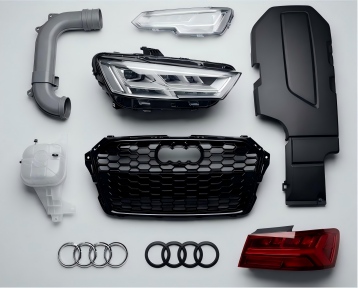
Automotive
Automotive mold applications can include housings and other non-safety-critical plastic components. Material choice, dimensions and inspection requirements are reviewed against the drawing.
→ See our automotive mold expertise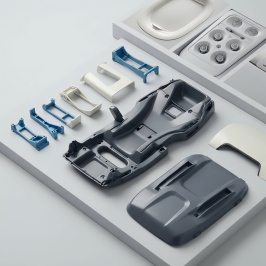
Aerospace
KTM scope is limited to non-flight-critical aerospace applications. Material, traceability and inspection requirements must be confirmed for the specific part; no aviation certification or flight-critical capability is implied.
→ Explore our aerospace tooling
Medical
Confirmed medical scope covers housings and interior components. Drawing, material, finish and inspection requirements are reviewed by project; this does not imply cleanroom manufacturing or medical-device certification.
→ Discover our medical injection molding
CONSUMER ELECTRONICS
Consumer-electronics housings and related parts may call for overmolding or 2K design. The chosen process, equipment and production location are confirmed for each project.

Baby & Personal care
Baby and personal-care components require material and application-specific review. Food-contact or other regulated compliance is not assumed without the applicable project evidence.
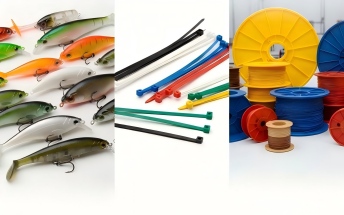
KTM FEATURE PRODUCTS
KTM has mold and molding experience with fishing-lure, reel/spool and cable-tie applications. Sample availability, tooling route and material requirements are assessed for each project.
The mold route and part-production scope are reviewed separately so buyers can approve the appropriate requirements for each.
Injection Mold FAQ
Most buyers reach this point with the same handful of questions. Here are straight answers.
Conventional and rapid tooling are design approaches selected for different production plans. The choice depends on the part, resin, volume, geometry and acceptance requirements; neither has a universal shot-life guarantee.
Injection mold tooling is the mold assembly and its working systems—cavity and core, mold base, inserts, ejection and cooling—designed for the specified part.
KTM does not publish a standard mold price. Steel, cavity count, plastic material, surface finish and mold complexity determine the quotation, together with inspection and delivery scope.
Engineering, moldmaking, mold actions, material selection, trial and inspection contribute to the quotation. We specify the project scope and review any later design change with you.
Mold life depends on steel, resin, part geometry, production conditions and maintenance. No fixed number of shots applies to every mold; the design and maintenance assumptions should be documented for the project.
Steel selection starts with the drawing, resin, expected production conditions, finish and maintenance plan. KTM proposes a grade and any heat-treatment requirements for customer review; a grade alone does not prove a shot-life figure.
This tooling page does not publish molding machine or part-price rates. For production costing and run-size options, see custom injection molding services.
Abrasive and corrosive materials require a project-specific review of steel, processing and maintenance. Share the resin specification so we can assess the suitable mold and production route.
You can request an export tool for your own production or discuss KTM-managed part production. Drawing approval, trial samples, handover records, maintenance and any later tool transfer are specified in the project agreement.
Lead time depends on part geometry, cavities, mold actions, material and the agreed trial and approval process. KTM confirms a project schedule during quotation rather than promising one fixed duration here.
Confidentiality, drawing access, tooling ownership, documentation and transfer terms should be agreed with KTM for the project. An NDA can be discussed before sharing sensitive files.
Have a part that doesn't fit these answers? Send it over and our engineers will review it directly.
Start Your Injection Mold Project —
Engineer to Engineer
Send your drawing or part requirements, material, expected annual volume and critical dimensions. Indicate whether you want an export mold or KTM-managed part production. KTM will review the information and confirm the quotation and next steps.