What Is 2K (Two-Shot) Injection Molding?
2K injection molding combines two material or color shots in one integrated molding process. It is also called two-shot molding, double-shot injection molding or 2K moulding. Two-shot molding is one form of multi-shot injection molding; multi-shot processes can use additional shots.
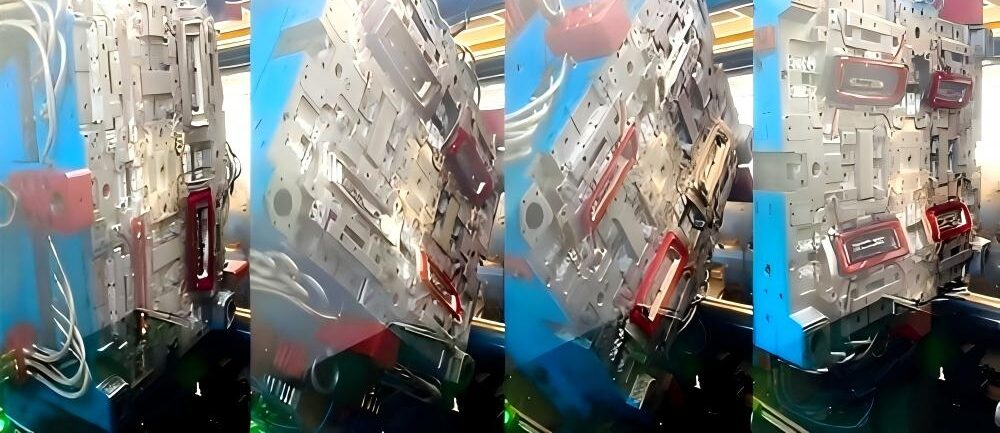
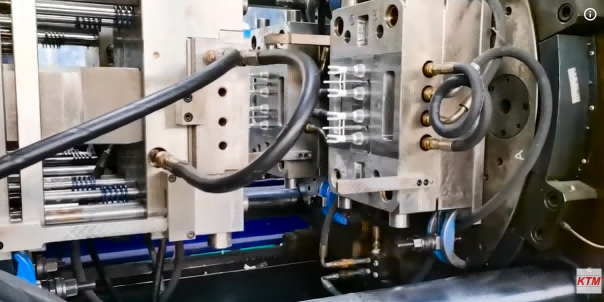
A typical rotary process molds the substrate first, then indexes it to a second cavity and injects the next material while the first shot remains supported; the movement, sequence and temperature settings are specified for the selected grades and press.
The interface may use material adhesion, mechanical interlocks or both. Select exact grades and processing conditions with supplier data, then verify samples against the project’s agreed requirements.
5 Two-Shot Mold Design Risks to Resolve Before Tool Release
A good DFM review identifies the risks that need design changes and the questions that must be tested. Tool design, material preparation, machine condition and process settings all affect the result. The following checks connect each common failure to a practical design or validation task.
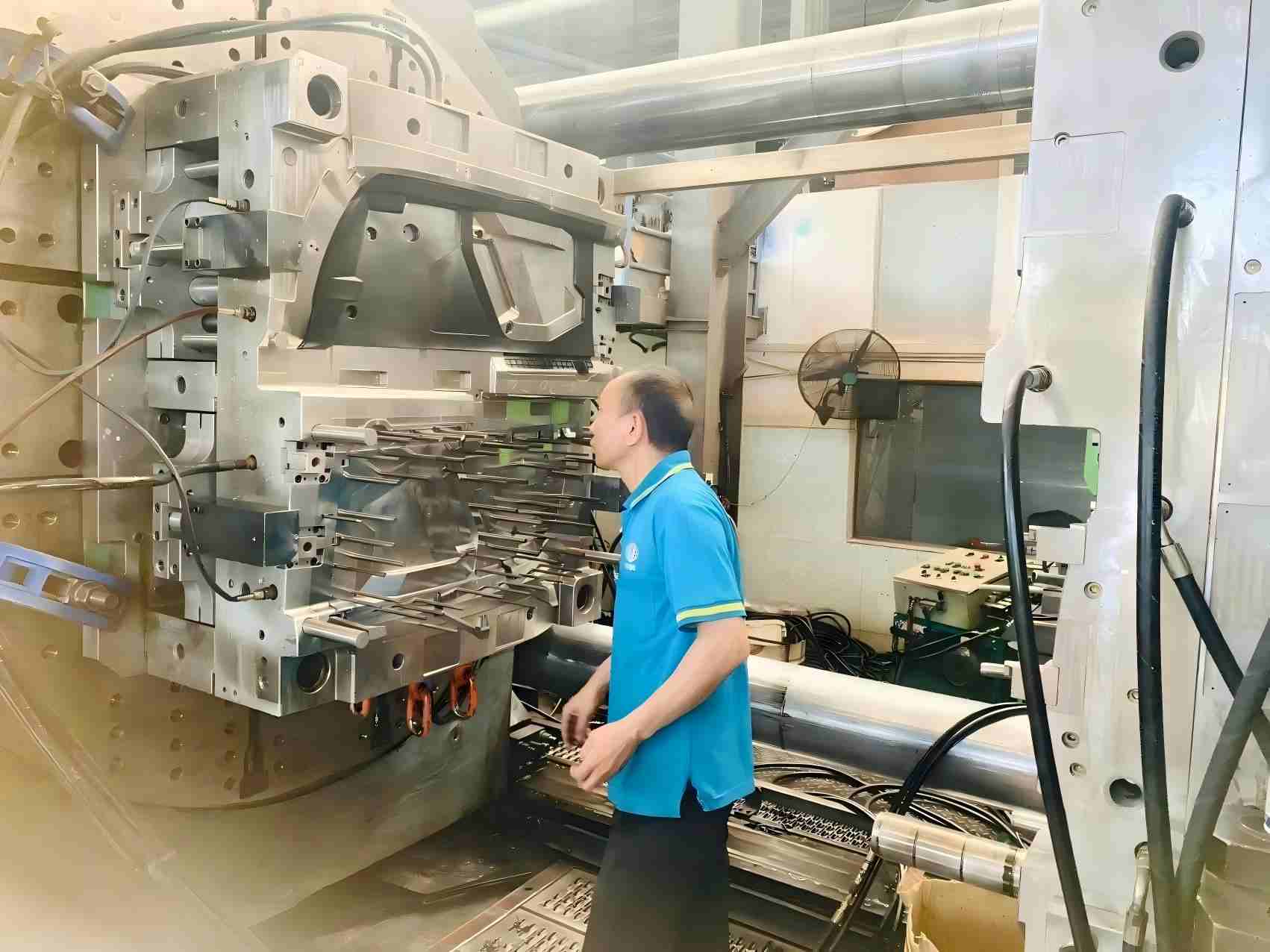
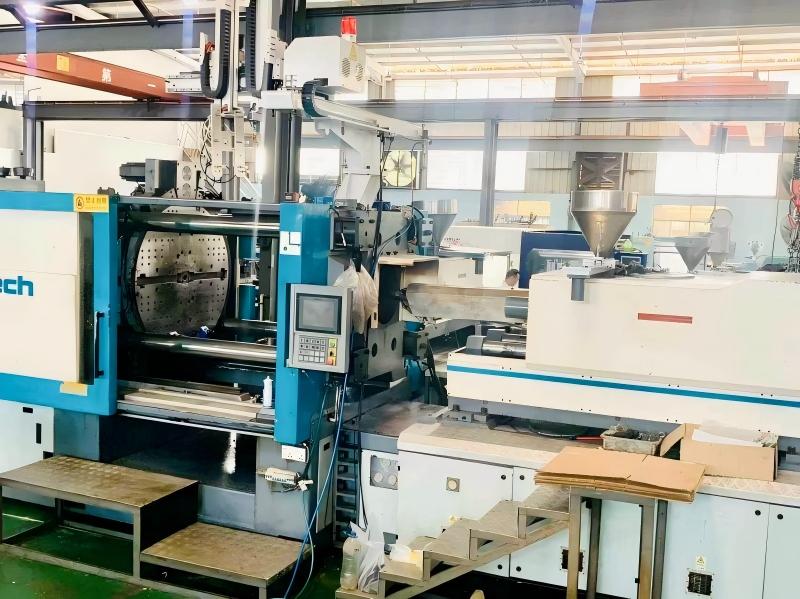
How the Two-Shot Injection Molding Process Works
The sequence below describes a typical indexed two-shot cycle. The actual 2K injection molding machine, mold movement, injection sequence and thermal conditions are selected for the component. KTM manufactures the tooling; the agreed partner operates the trial or production press.
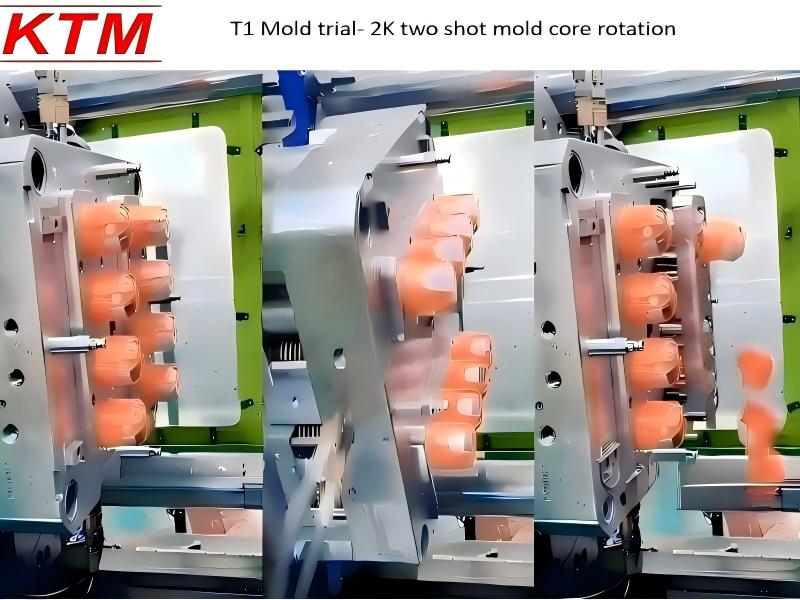


KTM’s initial T1 screen checks for delamination, peeling, severe flash, damage to the first-shot part during the second shot, and indexing or mold-closure mismatch after 180-degree rotation on applicable rotary tools. Passing this screen does not mean the mold needs no further changes: remaining issues are reviewed and corrected after sampling. Final acceptance follows the project’s agreed dimensional, cosmetic and functional requirements.
2K Molding vs Overmolding vs Insert Molding
Overmolding describes molding material over a substrate; it can be performed by two-shot molding or by loading a previously made substrate. This comparison uses “transfer overmolding” for the separate loading route. Insert molding is another overlapping category, commonly involving a metal or other preformed insert. Compare the actual production route, not only its label.
This twelve-factor comparison explains the choice between integrated two-shot molding, transfer overmolding and insert molding. A two-shot route does not automatically deliver the strongest bond or the lowest cost.
| Decision factor | 2K / two-shot molding | Transfer overmolding | Insert molding |
|---|---|---|---|
| Tool arrangement | Two-shot stations or cavities; layout follows the press | Substrate tooling plus an overmold tool if the substrate is molded | Tool designed to locate and retain the specified insert |
| Initial investment | Includes indexing and injection-system integration | Includes substrate handling and overmold tooling | Includes insert supply, loading and retention features |
| Process flow | Two shots integrated in the molding system | Preformed substrate loaded for the next shot | Preformed insert loaded before molding |
| Interface performance | Grade, geometry and process dependent | Grade, cleanliness and process dependent | Adhesion and/or geometric retention, as specified |
| Equipment | Suitable injection units and indexing or transfer system | Compatible press and substrate loading method | Compatible press and insert loading method |
| Time to first trial | Design, components and trial availability dependent | Substrate readiness and tool scope dependent | Insert readiness and tool scope dependent |
| Tool service life | Steel, wear features, resin and maintenance dependent | Steel, handling wear and maintenance dependent | Steel, insert wear and maintenance dependent |
| DFM priorities | Shot interface, indexing, shut-offs and shrinkage | Substrate support, placement and second-shot loading | Insert stability, encapsulation and load transfer |
| Typical fit | Repeated dual-material or two-color part production | Separate substrates, flexible production routes | Threaded inserts, contacts and reinforced assemblies |
| Key constraint | Mold and press must work as a matched system | Substrate must tolerate storage, handling and molding | Insert must remain located under injection pressure |
| Unit economics | Compare cycle, yield, machine rate and automation | Include substrate manufacture and loading cost | Include insert cost, loading and reject exposure |
| Volume decision | Calculate payback from the specific quotation | Compare lifecycle cost at the forecast quantity | Choose around insert function and production economics |
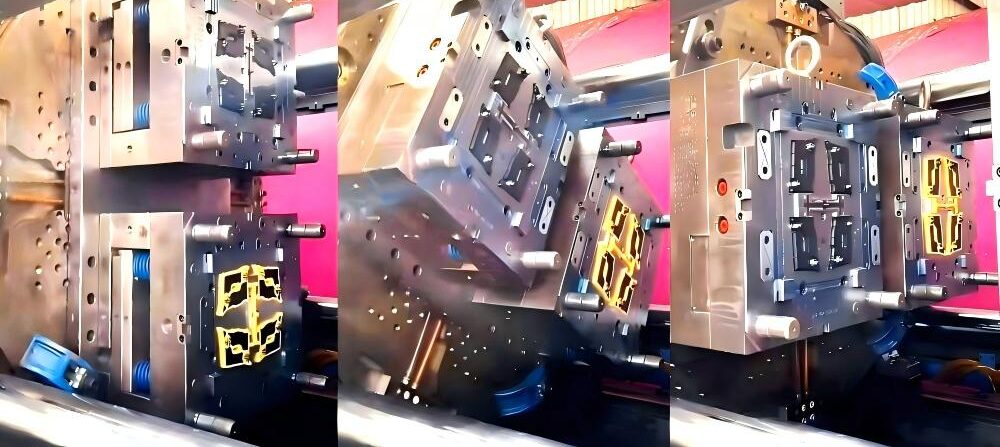
For process-specific detail on volume and bond requirements, see our overmolding services and insert molding pages. Compare the actual grades, press fit, acceptance needs and total project cost; process labels alone do not establish bond performance or payback.
When a Two-Shot Route May Not Fit
A transfer-overmolding or insert-molding route may fit better when forecast volume does not support the added investment, the substrate cannot tolerate second-shot conditions, or a preformed insert suits the geometry.
- Volume forecast: Added tooling and process investment must be justified against the expected quantity and cost.
- Material grades: Confirm the selected pair against supplier guidance and the project interface requirements.
- Substrate limits: Check whether the first-shot part can tolerate the second-shot conditions and processing window.
- Part geometry: A preformed substrate or insert may be more practical to load and retain for this design.
Compare the added tooling and process investment with any verified per-part savings. Include trials, setup, scrap, handling, maintenance and logistics, then weigh any functional or project benefit against the agreed requirements.
Two-Shot Molding Material Compatibility
Specify grades, not just polymer names. Adhesion depends on the compound, substrate, additives, processing and service conditions. TPE is a material family that includes TPU and TPV; these columns separate common commercial choices for selection. The matrix is a screening guide, not a bond-strength rating or production approval.
| Rigid substrate | Styrenic TPE / TPE-S | TPU | TPV | LSR | Validation focus |
|---|---|---|---|---|---|
| PP | PP-bonding grades available | Use supplier-approved PP-bonding grades only | Check grade-specific PP adhesion | Specialized adhesion system; verify heat tolerance | Adhesion vs mechanical retention; final service loads |
| ABS | Choose an ABS-bonding grade | Check supplier adhesion data | Do not infer adhesion from PP-based TPV | Verify cure temperature and adhesion approach | Surface condition, cosmetic marks and distortion |
| PC | Choose a PC-bonding grade | Check supplier adhesion data | Require specific supplier evidence | Selected grade and cure system only | Stress, drying, optical or cosmetic requirements |
| PC/ABS | Select for the exact blend grade | Check the exact blend combination | Require specific supplier evidence | Selected grade and cure system only | Blend, additives, texture and substrate support |
| PA6 / PA66 | Select a nylon-bonding grade | Check the selected nylon and TPU grades | Require specific supplier evidence | Check substrate heat resistance and LSR grade | Moisture conditioning and adhesion after aging |
| Glass-filled PA | Select for the filled substrate grade | Verify adhesion to the filled grade | Require specific supplier evidence | Validate filled-grade and curing compatibility | Fiber content, anisotropic shrinkage and interface |
| PBT | Select a PBT-bonding grade | Require grade-pair evidence | Require specific supplier evidence | Selected grade and cure system only | Drying, crystallization, warpage and conditioning |
| HDPE | Use supplier-supported PE adhesion data | Do not assume general TPU adhesion | Check the specific PE/TPV pairing | Do not assume direct adhesion | Surface energy, retention design and actual testing |
| Material pair | Screening position | Main checks |
|---|---|---|
| PC + PC | Common same-family candidate | Exact grades, colorants, optical stress and interface |
| PC + PMMA | Application-specific candidate | Adhesion evidence, heat exposure, stress and clarity |
| ABS + PC | Application-specific candidate | Grade pair, shot order, temperature and support |
| PC/ABS + PC | Application-specific candidate | Blend grade, interface and differential shrinkage |
| PA66-GF + PA6 | Application-specific candidate | Moisture, fiber content, shrinkage and test conditioning |
| PBT + PC | Supplier validation required | Interface behavior, crystallization and service conditions |
| ABS + ABS | Common same-family candidate | Colorants, additives, interface and cosmetic approval |
| PP + ABS / PC / PA | Do not assume direct adhesion | Evaluate engineered retention or a validated bonding system |
| POM + another rigid polymer | Do not assume direct adhesion | Grade-specific evidence and mechanical retention where appropriate |
2K Molding Applications — 6 Delivered KTM Projects
KTM has delivered two-shot mold projects for the six applications below. KTM manufactures the tools; partners with suitable two-shot presses perform trials and part production. Each card identifies the part function and the engineering checks relevant to a similar new project. Testing and specifications are agreed for that project.

Delivered two-shot tooling for a razor housing that combines a rigid shell with a textured ergonomic grip area. For a similar part, the tooling review focuses on interface retention, cosmetic transitions and support during the second shot. Repeated cleaning exposure and wet-hand grip requirements belong in the acceptance plan.
Delivered two-shot tooling for a toothbrush handle with contrasting grip features. For a similar part, cavity balance, slender substrate support and consistent soft-material thickness and surface coverage drive the mold review. The material grades, specified grip texture and interface test should reflect repeated contact with water and cleaning products.
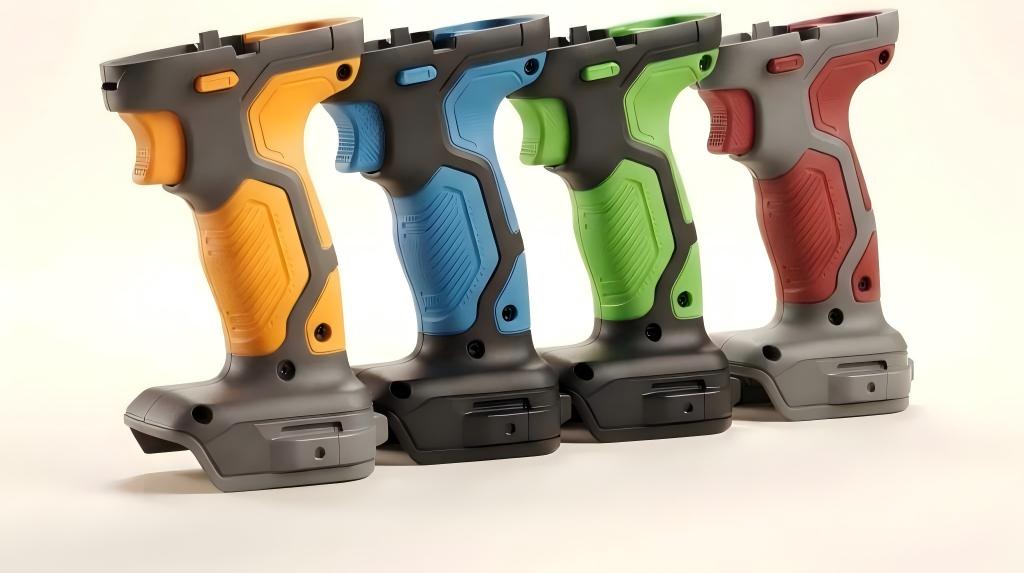
Delivered two-shot tooling for a handle combining structural support with a grip surface. For a similar part, review retention under twisting and repeated gripping loads, local wall sections and shut-off wear. If the substrate contains glass fiber, account for directional shrinkage and wear when specifying gates and replaceable inserts.
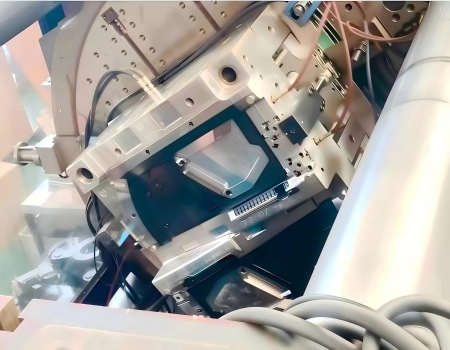
Delivered two-shot tooling for an enclosure with integrated grip features. For a similar part, preserve critical rigid assembly datums while controlling cosmetic transitions, gate marks and distortion from the second shot. Inspect critical rigid features separately from soft surfaces, using agreed fixtures and functional checks for the finished assembly.
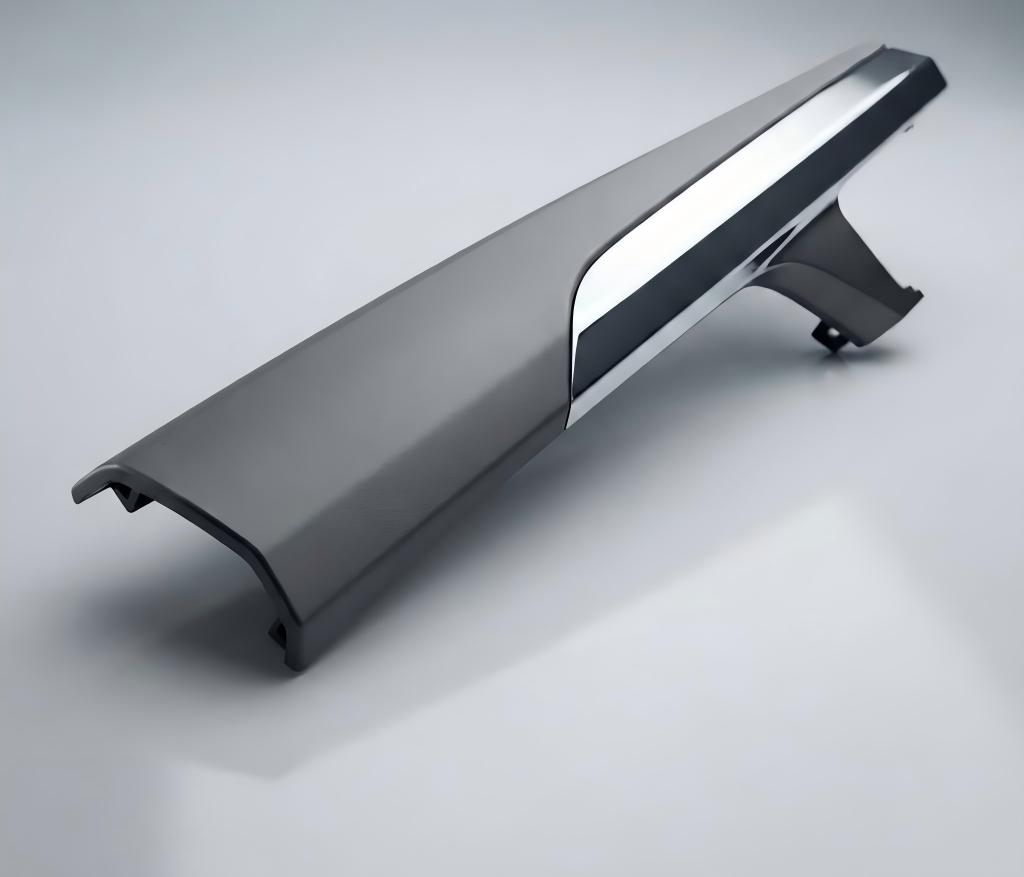
Delivered two-shot tooling for automotive interior trim with contrasting surface functions. For a similar part, coordinate attachment geometry and tolerances, grain appearance and the transition between materials. Define the required thermal, cleaning and appearance checks with the customer; application experience does not replace approval to the vehicle program specification.

Delivered two-shot tooling for a medical device grip. For a similar part, identify the contact type, cleaning or sterilization conditions and required material documentation before selecting grades. Interface and dimensional checks must follow the intended use; this case does not imply device certification or suitability for every medical application.
Two Ways to Work with KTM on Your 2K Project
Choose the delivery route around where the parts will be molded. In both routes, KTM manufactures the two-shot tooling. Partner facilities perform two-shot trials and, when included in the order, part production. Identify the manufacturing location, project responsibilities and acceptance requirements in the quotation.
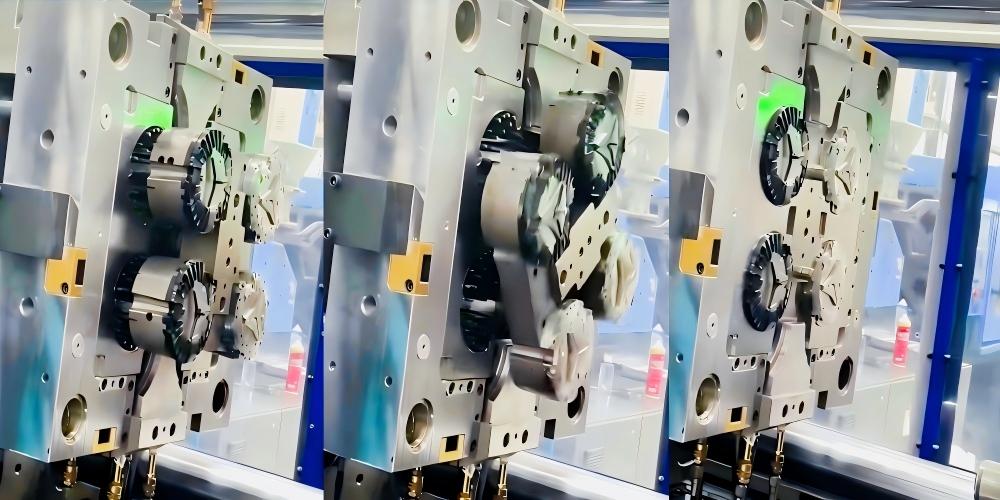
Mold Export to Your Facility
KTM manufactures the tool for your target press. Trial arrangements use a suitable partner machine, with any differences from the production press reviewed before approval. Define sample quantities, inspection reports, drawings, spare parts and operating information in the delivery scope. Approve the tool against agreed sample and functional requirements.
- DFM report, with scope agreed for the project
- Simulation scope and deliverable, when agreed
- Build updates at agreed milestones
- Trial samples and recorded trial conditions
- Dimensional and functional results to the agreed plan
- Applicable material documents in the agreed scope
- Packing and export requirements Partner trial results are reviewed against the intended production press; any machine-interface differences and the sample plan are agreed for the project.
Tooling with Partner Part Production
KTM manufactures the tool, while a partner with suitable two-shot equipment performs trials and production. Define the approved facility, material sourcing, documented quality checks, tool ownership and change-control responsibilities before ordering. Agree sample approval and production release separately so the supply arrangement matches the project’s volume and acceptance requirements.
KTM 2K Tooling Capability and Partner Press Resources
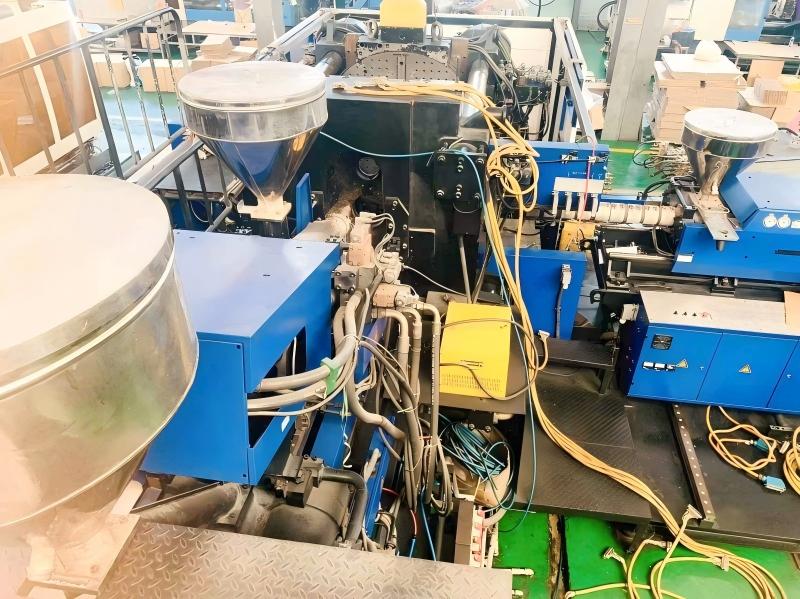
Tool steel, indexing arrangements and injection systems are selected around the actual part and target machine. KTM makes the two-shot molds. The confirmed partner resources include six right-angle 2K presses and two parallel 2K presses, with the individual tonnages listed below, plus one 3K press; project scheduling and machine suitability still need to be checked.
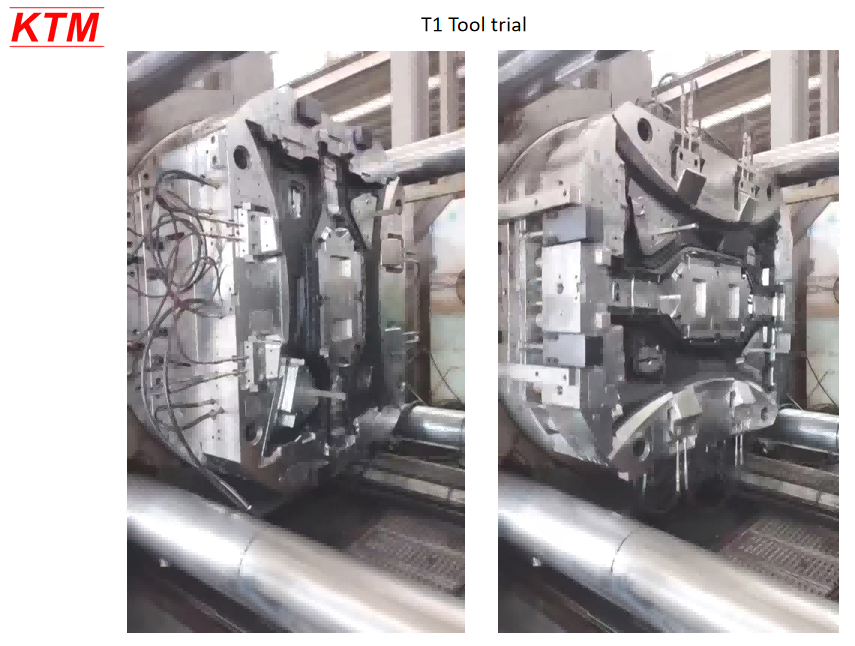
Partner press resources: six right-angle 2K presses and two parallel 2K presses, plus one 3K press. The 2K tonnages are listed below; 3K tonnage is not specified.
2K Mold Cost — What Drives Your Two-Shot Tooling Quote?
Separate the cost of the tool, trials and production parts. A useful two-shot mold quotation connects each cost to the design and supply route. There is no reliable universal “10× a standard mold” rule: cavity layout, indexing, materials, machine requirements and acceptance scope change the comparison.
Send a 3D model or drawing, material grades or performance requirements, quantities, target press details, finish requirements and delivery route. KTM replies to the first customer email within 24 hours; quotation timing depends on the information needed to define the scope.
Why Choose KTM for a Custom Two-Shot Mold?
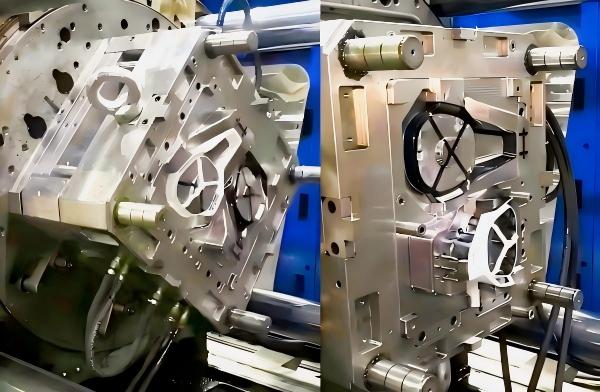
As a two-shot mold manufacturer in China, KTM combines its own tool manufacture with partner molding resources. Choose a supplier whose tooling work, trial arrangements and acceptance plan are clear. The following points help evaluate that fit for your project, from the first drawing review to an exported tool or production order.
Frequently Asked Questions about 2K and Two-Shot Molding
Request a Two-Shot Mold Review and Quote
Tell us the material functions, molding location and acceptance needs for your part. KTM makes the tooling and works with two-shot partners for trials and production. We reply to your first email within 24 hours and offer a free initial assessment. Detailed DFM and Moldflow scope are agreed per project.
Send Us Your Project
