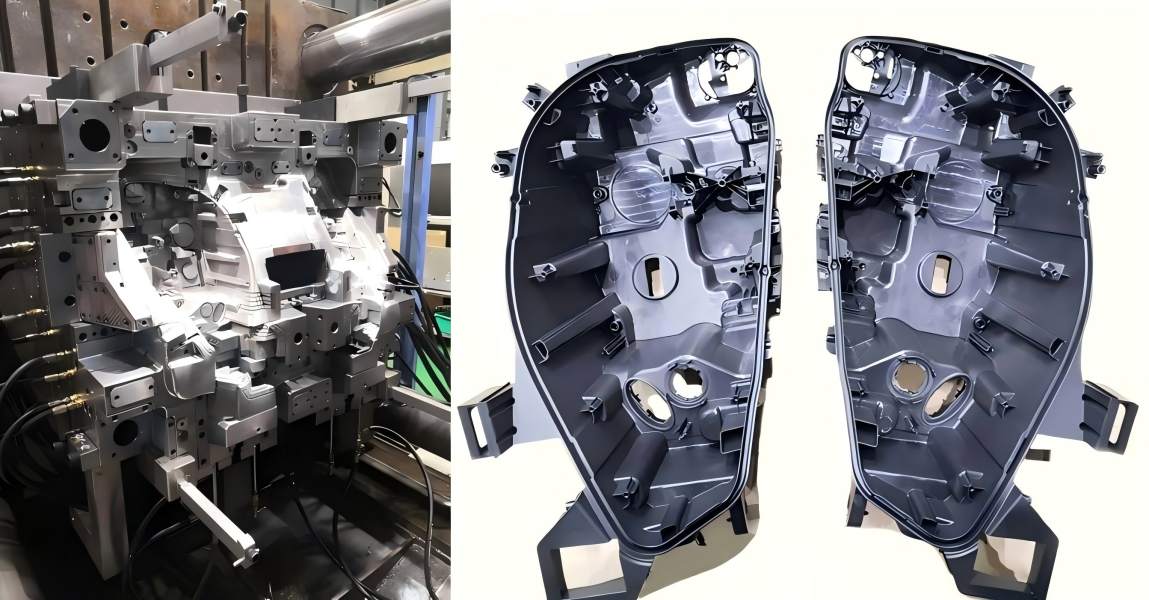
Large Part Injection Molding with KTM-Built Molds
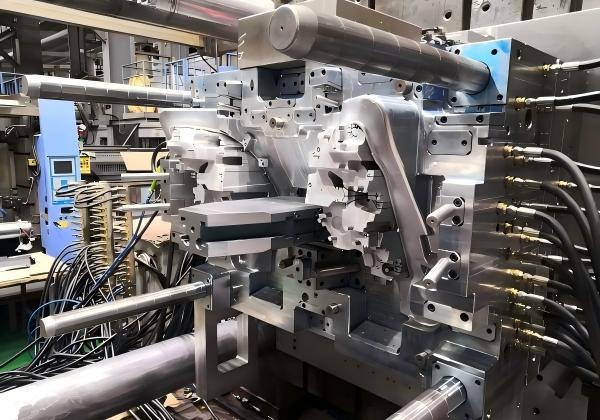
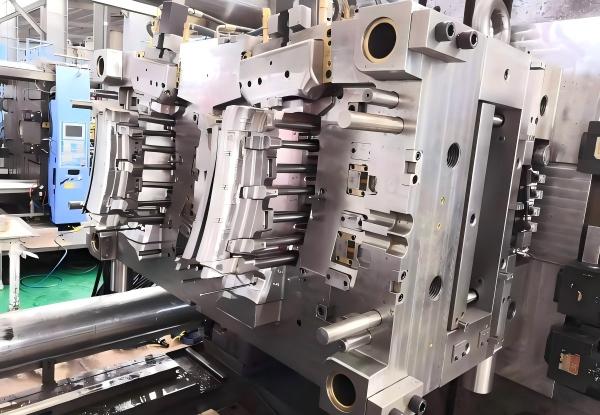
Large part injection molding for wide panels and housings demands the right press, complete filling, balanced cooling and warpage control. KTM builds the mold in Dongguan and molds suitable parts on our 90–400T presses. For larger work, partner factories run trials and production while KTM manages tool changes and mold acceptance.
Send your CAD and drawing for a review of press fit, filling, cooling and critical dimensions before the mold design is approved.
- ✓Large injection molds are built in KTM’s own factory.
- ✓Partner press access: 800 / 1000 / 1300 / 1600 / 2100 / 3300T; fit confirmed per project.
- ✓Press fit checks clamp, shot, mold and ejection limits.
- ✓DFM reviews gate, cooling and warpage risks.
- ✓KTM coordinates trials and mold acceptance.
Large Injection Molds Built by KTM, Trialed on the Right Press
KTM builds the injection mold in our Dongguan factory, then matches the mold and part to a suitable press. Our 90–400T machines cover parts that fit their limits; higher-tonnage trials and production use partner factories, with KTM managing tooling changes and mold acceptance.
Watch a KTM automotive lamp mold trial. Press selection and part acceptance are assessed for each project.
Watch on YouTube →In-House Presses (90–400T)
KTM's in-house molding machines support parts that fit their clamp, shot, mold and ejection limits. Our tooling and molding teams can review the same gate, cooling and dimensional questions after trial parts are measured. Press selection uses the CAD and mold design to check projected area, shot demand and installation clearance together.
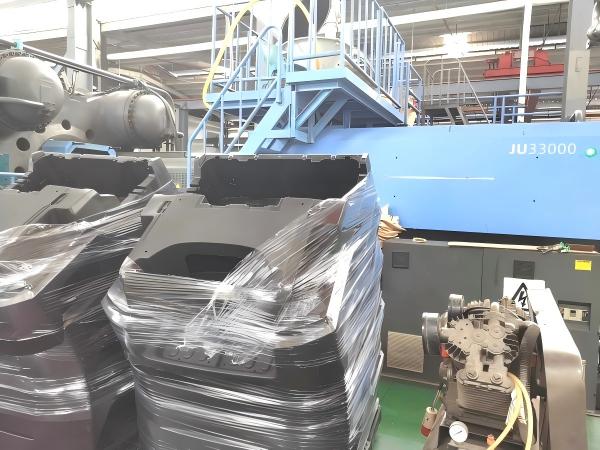
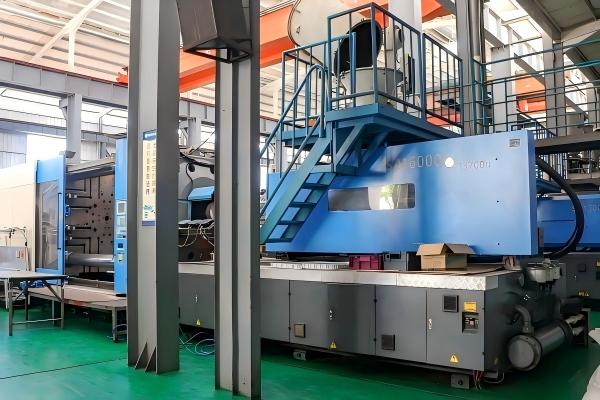
High-Tonnage Partner Presses (450–3300T)
Partner press classes
450 / 600 / 800 / 1000 / 1300 / 1600 / 2100 / 3300T
Clamp and fill check
Clamp force, projected area and resin flow
Mold envelope check
Tie bars, mold thickness and opening stroke
Trial route check
Shot capacity, part removal and press scheduling
Partner press access is confirmed for each project. KTM checks the selected machine’s clamp and shot capacity, mold envelope and part-removal path before scheduling a trial. We build the mold in our factory, coordinate the partner trial and review mold acceptance.
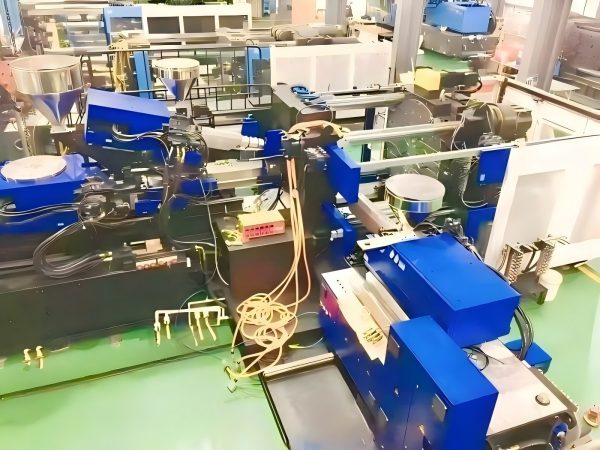
Multi-Shot & Gas-Assist Options
- Two-shot tooling can combine materials or colors when the resin pair and press configuration support it.
- Three-shot tooling is evaluated only when the part design and an available press configuration support it.
- Gas assist can form hollow channels in selected thick sections after a channel-design review.
KTM reviews resin compatibility, venting, tooling movement and trial criteria before recommending any of these processes for a large part.
What Makes a Large Plastic Injection Mold Difficult?
A broad projected area increases clamp-force demand; a long, thin flow path raises filling pressure and weld-line concerns; and uneven cooling can distort a large, flat surface. KTM reviews these interactions against the resin grade, wall sections, assembly datums and cosmetic requirements on your drawing.
Mold and Press Fit
Projected area is only the starting point. A press with enough tonnage may still be the wrong machine for the mold.
- Estimate clamp force from projected area, resin and expected cavity pressure.
- Check resin-specific shot demand, runners, mold dimensions, tie-bar spacing and daylight.
- Confirm opening stroke, handling and clearance to remove the part.
KTM checks the actual mold and part against the selected press before the trial route is approved.
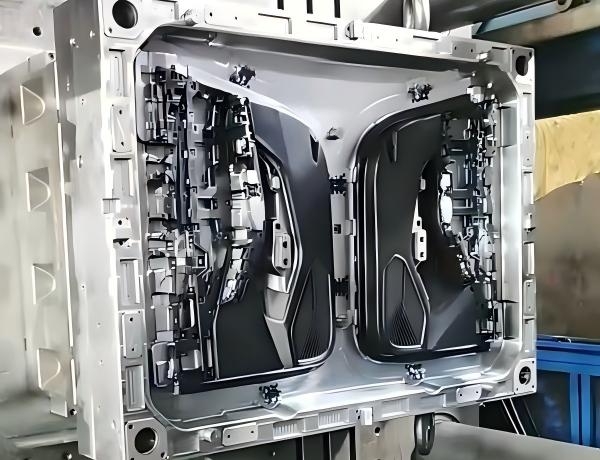
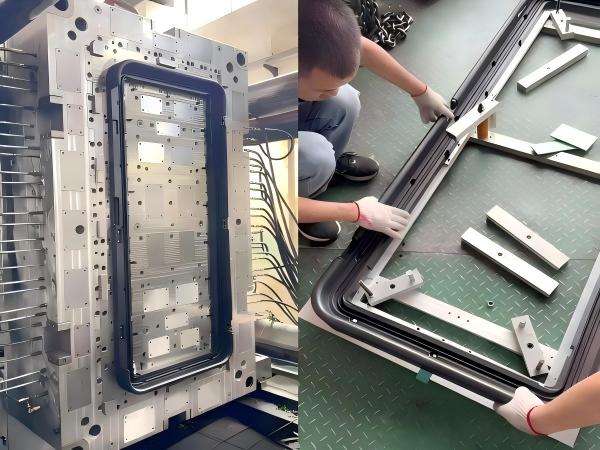
Warpage and Dimensional Review
Broad panels and long beams can change shape as they cool and after ejection. KTM reviews wall transitions, ribs, gate position, cooling and resin grade before tooling. We agree on datums, conditioning time and flatness checks, then use T1 measurements to decide whether the mold or process needs correction. Inspection follows the agreed free-state or assembly-supported condition, with any dimensional deviations recorded for correction.
Filling, Sink Marks and Flash
| Problem | Likely contributors | KTM control |
|---|---|---|
| Sink marks | Thick sections, rib transitions or inadequate packing | Review wall and rib design; assess gas assist if geometry supports it |
| Weld lines | Flow fronts meeting on long paths | Compare gate and runner options, venting and required appearance |
| Flash | Shut-off fit, vent depth or pressure exceeding available clamp force | Inspect shut-offs and revise tool or process after trial evidence |
Long flow paths and thick features must be reviewed with the selected resin. DFM and, where useful, filling analysis compare options before steel is cut; the trial verifies the actual part and guides any correction.
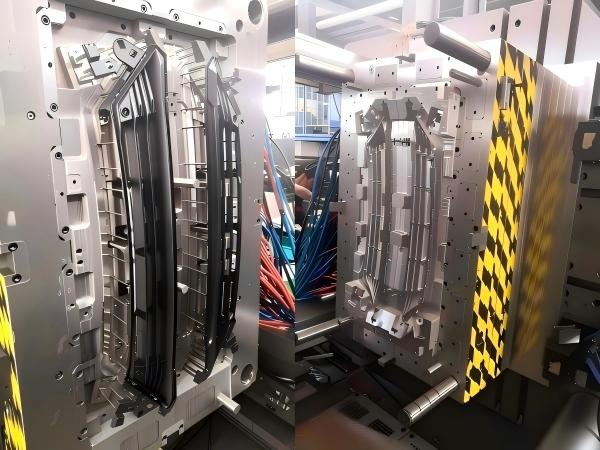
From Large-Part DFM to Mold Acceptance
Before machining, KTM agrees on press fit, gating, cooling, critical dimensions and T1 checks for your actual part. If the design or volume is still open, we can compare prototype injection molding, rapid injection molding and low volume injection molding where the part and press allow. The review establishes whether to validate a feature or a full-size part, and confirms tooling scope, press availability and timing.
Preliminary feasibility at quote
At quotation, we review CAD, drawing, resin, projected area, key dimensions and expected quantity. We identify a likely press route, mold-fit limits, visible fill or warpage risks, and the assumptions behind the quote. The quote identifies the design inputs and open questions to resolve during detailed DFM.
Detailed DFM and mold design
After the project scope is approved, KTM's mold team defines the parting line, gates, runners, ejection, cooling and shrinkage assumptions. We show how those choices affect appearance, flatness and critical interfaces. Customer approval of the DFM and mold design establishes the reference for manufacturing the tool.
Analysis when the geometry needs it
Long flow paths, several gates or demanding flatness can justify a fill, weld-line or warpage study. KTM states the analysis scope in the project plan and uses the results to compare practical tooling choices. The study guides gate and cooling decisions; measured T1 samples then verify the agreed dimensional and appearance targets.
Mold build and press preparation
KTM manufactures and fits the mold in our own factory. For high-tonnage work, we coordinate with the partner factory on press interface, handling, utilities and trial timing. The design is checked against the chosen machine before the mold is sent for its first shots.
T1 trial and corrections
The first trial records molding conditions, sample appearance and the dimensions agreed for initial review. KTM evaluates fill, weld lines, sink, flash and distortion against the acceptance plan, then documents any mold or process changes. A correction list defines the next actions and any repeat sampling needed to reach approval.
Dimensional review and acceptance
We select measuring methods that fit the feature and part size, including gauges, height measurement or coordinate measurement when appropriate. The approved drawing defines the critical dimensions and datums. KTM reviews the results, resolves open issues and accepts the mold before the agreed production release.
Have a large part drawing? Send the CAD, resin and critical dimensions. KTM will review the press route, mold concept and risks that need to be settled before T1.
Get My Large-Part Mold Review →Two-Shot and Gas-Assisted Options for Large Molded Parts
Two-shot molding combines materials or colors in one component; gas assist can hollow out suitable thick sections. KTM evaluates resin compatibility, interface geometry, gas-channel layout and the required press configuration to select a process for your large molded part.
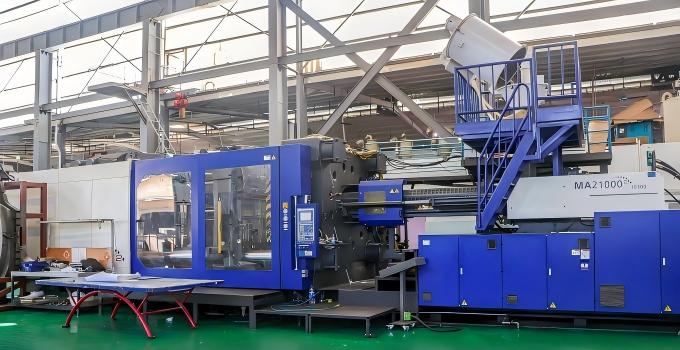
Large Two-Shot / Two-Color Molding
- Use 2K two-shot injection molding to combine compatible materials or colors where the interface and assembly requirements justify the process.
- Review shut-offs, part transfer, registration between shots and the injection units required by the selected resin pair.
- KTM has trialed a large two-color automotive part on a 2100T press; each new mold is checked against the selected machine.
- Validate bonding or mechanical retention, color boundaries, visible surfaces and critical dimensions on trial parts before production release.
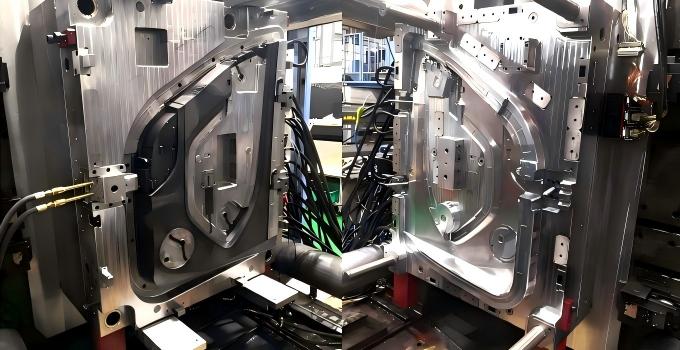
Gas-Assisted Molding for Large Sections
- Use gas-assisted injection molding to form hollow channels in suitable thick sections while retaining the wall thickness required for part function.
- Assess potential sink and weight reduction against stiffness, appearance and assembly requirements for the actual large-part design.
- Review gas entry points, channel continuity, resin flow and venting to control penetration and avoid gas breakthrough into thin walls.
- Check channel formation, remaining wall thickness, sink and dimensions on trial parts; use these results to refine tooling and process settings.
Resin Choices for Large Injection Molded Parts
The specified resin changes how a large part fills, shrinks, cools and holds its shape. KTM reviews the actual grade, filler level, wall and rib layout, appearance target and service environment before fixing gate and cooling details. Use the grade datasheet and application requirements to resolve the checks below before approving the mold design.
View a leather-texture finish on an automotive door-handle part. For your component, define the resin grade, texture reference and visible-surface acceptance criteria together.
Watch on YouTube →| Resin | Large-part mold / part question to review |
|---|---|
| PC | Impact and service temperature, surface requirements, moisture control and stress at thick-to-thin transitions. |
| PC/ABS | Cosmetic appearance and impact targets, weld-line position, gate location and dimensional behavior. |
| ABS | Large housing finish, ribs and bosses, sink risk, warpage and assembly interfaces. |
| PP | Shrinkage and post-mold dimensional change, chemical exposure, stiffness and part support. |
| HDPE | Shrinkage, wall distribution, creep and fit of handling or containment features. |
| POM | Dimensional and wear requirements, section thickness and the specific large-part press/tooling fit. |
| PA6/PA66+GF | Stiffness and load, fiber orientation, differential shrinkage and moisture-conditioned dimensions. |
| PEEK | Temperature and load requirements, processing window and confirmed equipment suitability. |
Glass fill can increase stiffness but can also introduce direction-dependent shrinkage and warpage. The correct grade and gate position depend on the drawing and service conditions. If your resin is not listed, send its grade or datasheet with the CAD file; KTM will review the molding and tooling requirements for your part.
Include the resin datasheet and any color, texture or flame-rating requirements with your drawing so the tooling review uses the intended production material.
Large Part Injection Molding Applications
Large molded panels, housings and handling parts face different loads, surface expectations and assembly conditions. These are application requirements to discuss with KTM; the tooling route is based on your geometry, resin, acceptance drawing and planned quantity.
Automotive
For grilles, lamp housings, panels and structural covers, review visible surfaces, attachment points, weld-line locations and dimensional fit across long spans.
Aerospace Interiors
For cabin panels, ducts and covers, review material specification, assembly interfaces, part weight and the documented acceptance requirements supplied by the customer.
Appliances & Electronics
For large bezels, housings and doors, review flatness, sink near ribs, cosmetic texture and mating features that show distortion during assembly.
Energy Equipment
For battery or inverter enclosures and panels, review stiffness, environmental exposure, mounting features and the exact material and compliance requirements in the drawing.
Logistics
For pallets, crates and large bins, review load paths, corners, rib thickness, stacking fit and the wear or impact expected in handling.
Medical Equipment Covers
For covers and equipment housings, review cleaning-agent exposure, surface finish, fastener locations, assembly dimensions and customer-defined material specifications for the intended service conditions.
KTM Makes the Mold and Owns Its Acceptance
KTM keeps responsibility for mold design, manufacture and corrective work with one tooling team. For large-press trials at a partner factory, we coordinate the machine interface, review samples and measurements, and agree on corrections and acceptance with the customer before production release.
Inspection Matched to a Large Part
Before trial, KTM and the customer identify critical datums, long-axis dimensions, flatness and surface criteria on the drawing. The inspection plan defines conditioning time, support points and whether each feature is measured in the free state or in its assembly position.
- Identify the drawing features and datums that decide acceptance.
- Select measurement methods appropriate to the part size and feature.
- Record T1 findings and unresolved items for mold or process correction.
KTM reviews the measured results against the agreed criteria and accepts the mold only after the required issues are closed.
One KTM Team Owns the Tooling Decision
KTM’s founder brings more than 20 years of mold-engineering experience to the team. After tool acceptance, our custom injection molding route is planned around the selected press, resin and inspection scope. KTM reviews gate, cooling, venting, ejection and trial evidence before production release.
- The large injection mold is designed and manufactured in KTM’s own factory.
- A partner factory supplies the high-tonnage press for trial and production.
- KTM coordinates mold changes, sample review and acceptance with the customer.
The project plan identifies the partner trial location and approval steps before production starts.
If your part has a long span, broad projected area or demanding flatness, share the drawing. We will review the mold and press route against your actual acceptance criteria.
Send My Large-Part Drawing for Review →Large Part Injection Molding FAQ
Does KTM build the large mold itself? ▼
Where are large-part trials and production run? ▼
How do you select a press for my large part? ▼
How will KTM control warpage on a large flat part? ▼
Which reports will I receive? ▼
Can KTM make large two-shot or gas-assisted parts? ▼
How long until the first large-part samples? ▼
What can change the quoted mold price? ▼
How is a large mold accepted? ▼
What should I send for a quote? ▼
Send the drawing to compare the mold, press and acceptance route for your actual part.
Get a Large-Part Mold and Press Feasibility Review
Send 3D CAD and a 2D drawing with your resin grade, quantities, target date and critical dimensions. KTM will review mold feasibility, press fit, filling and warpage risks, then define the tooling scope, T1 plan and inspection requirements for your quote. Include assembly datums and cosmetic surfaces so we can focus on the features that decide acceptance. KTM builds the mold and coordinates any required partner-press trials.